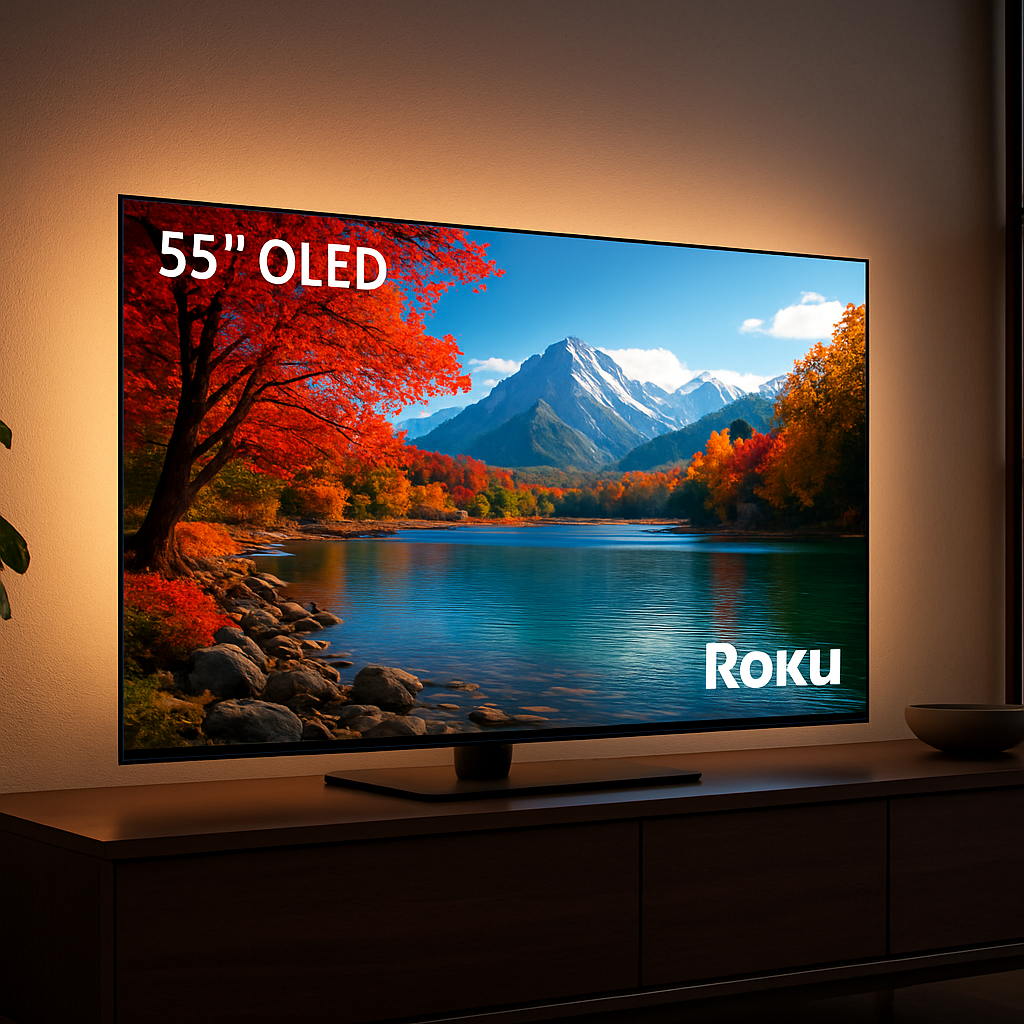
Roku has entered the OLED TV market with its first ever first-party models: the Roku Pro Series OLED TV and the Roku Pro Series LX OLED TV. Both models are designed to deliver deeper blacks, more vivid colors, and wider viewing angles — features that OLED panels are known for compared to traditional LED TVs. The standard Pro Series is available now, while the LX version arrives in October.
Specs & Features
The base Pro Series OLED starts at $999 for a 55-inch screen, with a 65-inch version also launching immediately. The LX variant begins at $1,299 and is expected to hit shelves next month. Roku highlights include an ultra-thin profile, a slim metal bezel, and integrated cable management built into the back to clean up setup clutter. For gamers, there’s an Automatic Game Mode that works alongside a 144Hz refresh rate to reduce input lag and improve responsiveness.
On the software side, Roku implemented Smart Picture Max, a tool that autoadjusts settings to suit what you’re watching — be it an intense movie scene, live sports, games, or animated content — eliminating the need for manual calibration. The included remote features backlit buttons, customizable shortcuts, Bluetooth headphone mode, and even a remote-finder function for convenience.
What This Means for Roku
Prior to this release, Roku’s TV offerings relied heavily on third-party hardware partners. Introducing its own OLED line represents a major leap — putting Roku in direct competition with brands already offering premium OLEDs. With prices starting at $999 for the Pro Series, Roku is aiming to balance cost with OLED performance, potentially capturing buyers who want high-end visuals without the top-tier price tag.
Releasing the standard Pro Series now establishes initial footing in the OLED space, while the delayed LX model offers a higher-end alternative later this fall. This dual-tier strategy lets Roku test the waters at multiple price points.
From a broader perspective, Roku’s move taps into two major TV trends: increasing demand for OLED and the value of integrated smart TV platforms. As content ecosystems grow and visual standards rise, more viewers expect premium display tech paired with thoughtful software. Roku is now poised to offer both in a package that could shift how consumers think of its brand.