Apple just unveiled the M6 chip, and it breaks new ground: it brings features once confined to its higher-tier chips into a base model. This marks a significant move in Apple Silicon evolution, signaling that even entry-level machines are now getting access to the company’s most advanced CPU core design.
Breaking Down the M6 Architecture
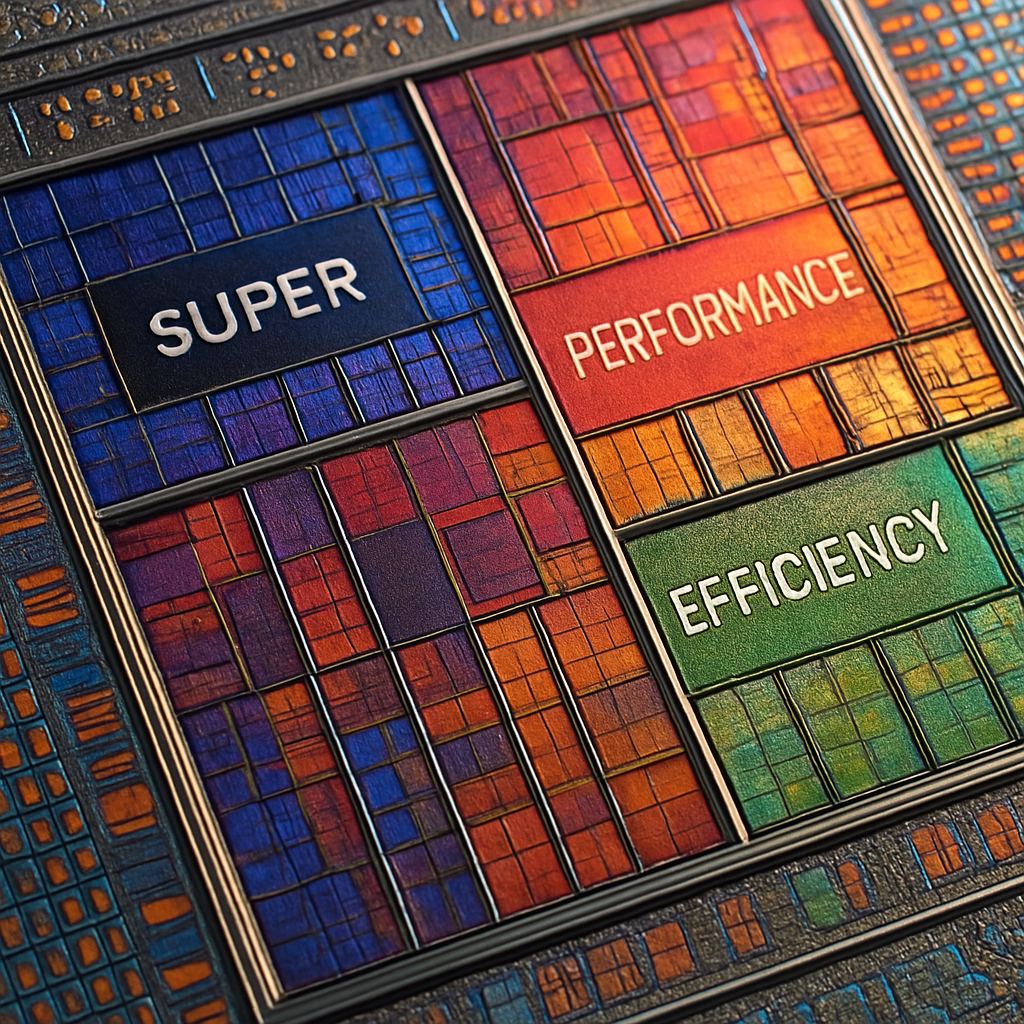
The M6 has been engineered with a total of 12 CPU cores—comprised of 2 “super” cores, 4 “performance” cores, and 6 “efficiency” cores. Previous base chips, like the original M5, only had two core types: performance and efficiency. The higher-end M5 Pro and M5 Max introduced a “super” core class—the fastest design—while also adding a third tier labeled “performance.” The M6 is the first base chip to include all three core types. This upgrade aligns the M6 more closely with those premium-model chips in terms of core diversity and performance potential.
Why Super + Performance Cores Matter
Super cores deliver the furthest-reaching single-thread performance, handling the most demanding tasks like complex computations or high-speed gaming. The newly defined performance cores act as a middle ground—they’re built for strong multi-threaded workloads without the power draw of a super core. Efficiency cores manage background tasks economically, helping battery life and thermal control. The inclusion of all three in the M6 base chip suggests base devices will feel markedly more responsive under load.
Beyond its redesigned CPU structure, the M6 also represents a leap in chip process technology—it’s Apple’s first 2-nanometer chip. On the other end of the spectrum, Apple is also rolling out the M5 Ultra, which boasts a quad-die architecture. These two chips represent the latest advancements in Apple’s lineup. Together they push performance, efficiency, and architectural complexity in key directions.
Previously, only the Pro and Max variants of the M5 delivered both super and performance cores. Now that base M6 has joined their ranks, these premium architectural features are no longer restricted strictly to higher-end hardware.
This shift is most visible in the newly released Mac mini powered by the M6, which will be the first device to officially house the chip. It stands as an example of how Apple is leveling up its base-tier offerings.
What this means: users investing in M6-equipped Macs should expect significant gains in demanding tasks—editing, software compilation, and multitasking should all benefit. On the chip design front, this move aligns Apple with broader trends of heterogeneous CPU architecture, where combining varied core types within a single chip delivers smart performance scaling.
Apple’s introduction of core tiers—super, performance, and efficiency—is part of its ongoing strategy to balance raw power with energy efficiency. Each tier is optimized for different workloads, from sprint performance to background task management. With the M6 now featuring all three, the base chip’s versatility just matched what used to be Pro-level material.
Expect this to drive further shifts in the market as competitors respond. For buyers, the M6 brings more value in the entry-level segment—especially in Mac minis—without needing to upgrade to Pro-level machines to access elite-level core designs.
Why it matters: The M6 signals a maturation in Apple’s architecture strategy. Advanced core designs across base and premium lines help streamline Apple’s chip portfolio and raise the performance floor for all users. Watch what this does to pricing, performance benchmarks, and how other chipmakers react in the desktop and laptop space.