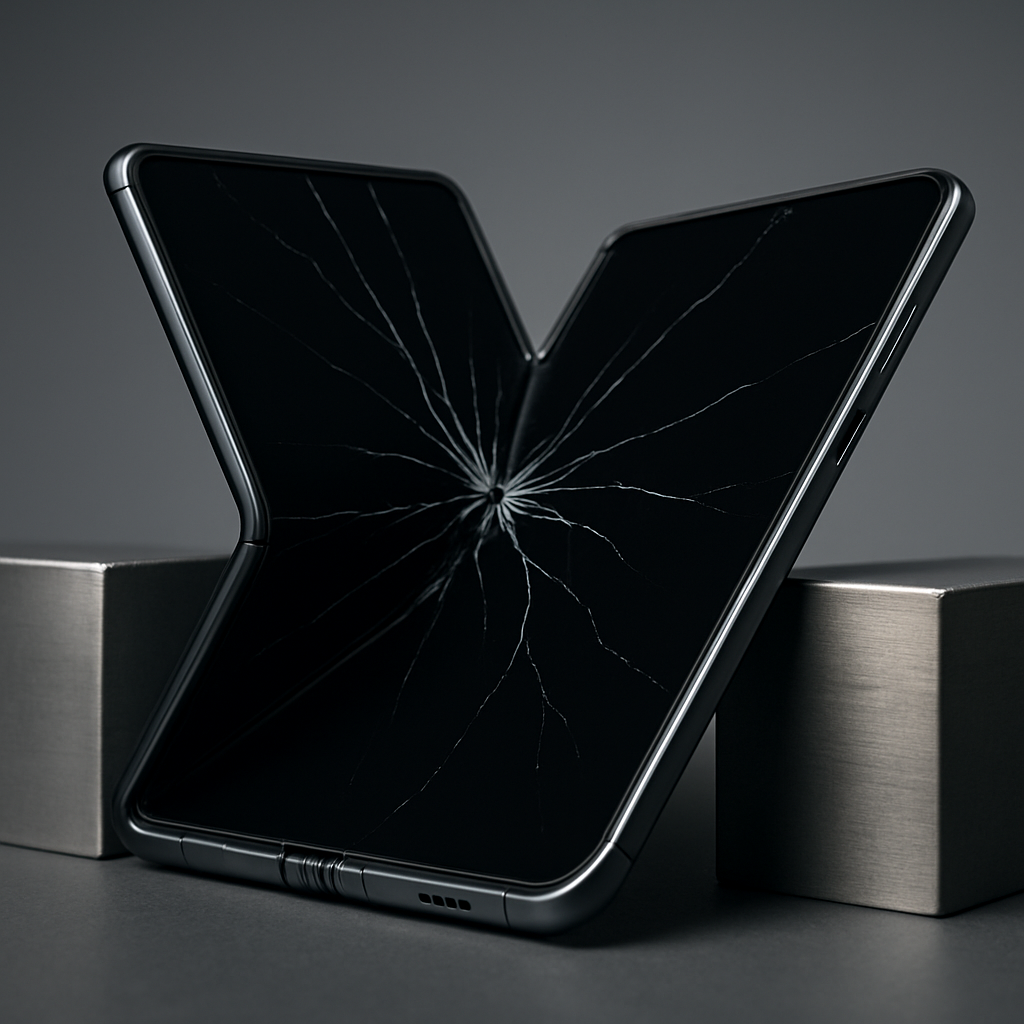
Samsung’s thinnest foldable yet, the Galaxy Z Fold 8 Ultra, has succumbed in a durability test that its predecessors survived. In a recent bend test by popular YouTube channel JerryRigEverything, the Fold 8 Ultra failed in a way unseen in earlier Samsung foldable releases. While the outer display remained intact and the hinge and frame showed no catastrophic damage, the inner screen finally cracked beyond repair under sufficient bending force.
Previous Galaxy Z Fold models have repeatedly proven resilient to extreme stress in similar torture trials—even when designs got sleeker. The standard Fold 8 model weathered the same bend test successfully, despite a slight reduction in thickness compared to the earlier Fold 7. That makes the Ultra’s failure notable: it appears to be the first time a mainstream Samsung foldable has fully died this way, excluding special case designs like the very limited Galaxy Z TriFold.
In the test, the Ultra gave the familiar performances in the scratch, dust into hinge, and outer display durability categories that Samsung fans have come to expect. Scratches ran deep on the internal screen, and dust infiltration around the hinge created disturbing crunching noises. But once enough bending stress was applied, the inner foldable panel gave out—it stopped functioning completely, while core structural elements like the frame and hinge survived.
This marks a clear departure from past Fold designs, including the Fold 7 and standard Fold 8, which all survived bending force without breaking the internal display. Even though Samsung continues to slim down foldables for aesthetics and portability, this incident suggests there may be a limit to how thin a device like this can go before durability is compromised.
Both the Galaxy Z Fold 8 and Fold 8 Ultra are currently on sale. The Ultra’s failure under the bend test raises questions that prospective buyers might want answered: how much deformation will the inner display tolerate before damage sets in, and what’s the trade-off between design slimness and real-world reliability?
Why This Matters: Foldable phones are defined by how well they endure folding cycles, daily wear, and stress. Seeing the Ultra’s inner screen fail under extreme bending doesn’t necessarily mean everyday use is unsafe, but it does hint at potential vulnerabilities for users who carry their foldable in tight spaces or treat it roughly. Moving forward, Samsung and competitors will need to balance thinner form factors with materials, hinge engineering, and structural support to avoid repeat incidents.
Analytical Angle: The Fold 8 Ultra’s failure in a bend test doesn’t rewrite Samsung’s durability narrative entirely, but it pulls back the curtain on the fragility that lurks behind sleek industrial design. In a hyper-competitive foldables market, this could become a turning point. Engineers may need to reinvest in thicker or strengthened internals, hinge redesigns, or even new materials to prevent similar failures. Buyers who prioritize durability might lean toward the standard Fold 8 or wait for revised Ultra models that explicitly address these weak spots.