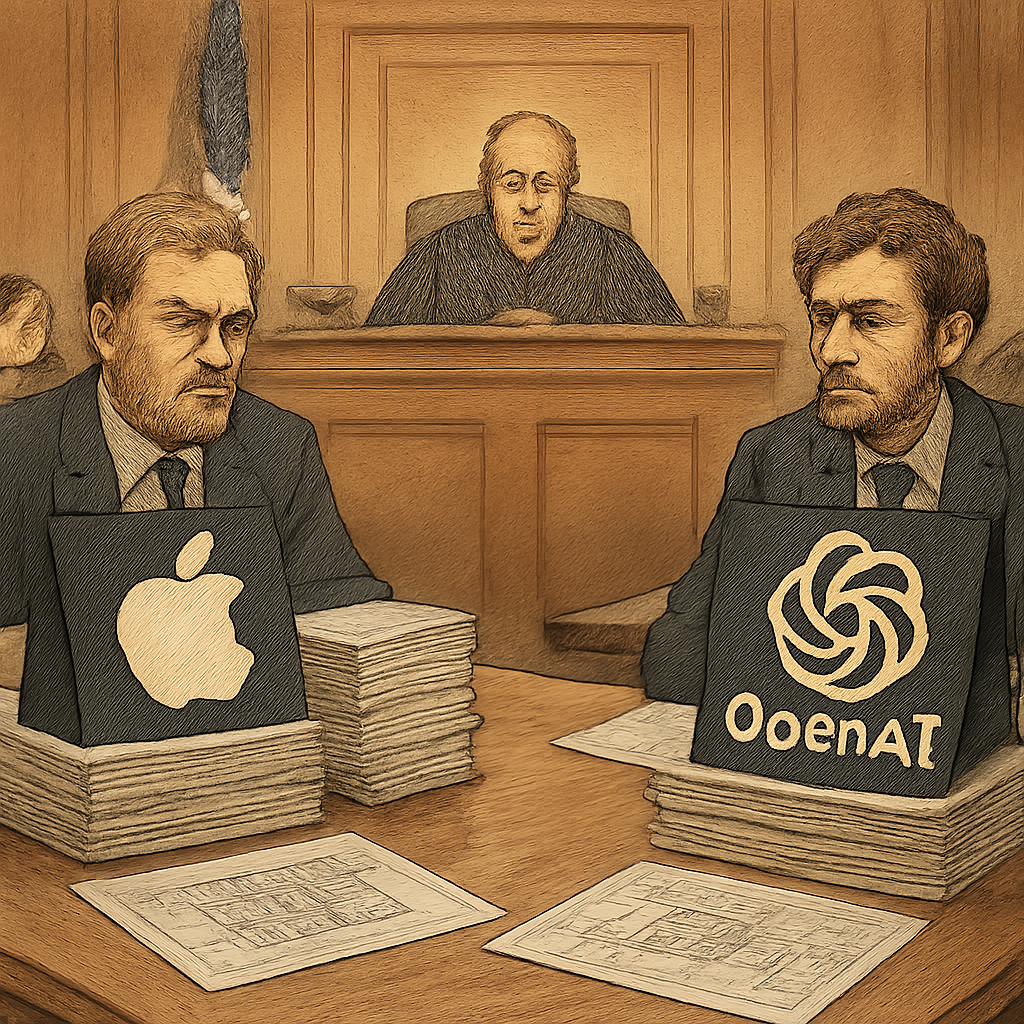
Apple is pushing back aggressively in its trade secrets lawsuit against OpenAI, accusing the AI firm of deliberately delaying discovery to continue profiting from allegedly misappropriated hardware information. The case, originally filed in July 2026, centers on Apple’s claim that OpenAI acquired internal hardware design details and intellectual property connected with Apple’s device operations. Apple now insists that it must move faster to access vital documents and witness testimony that could prove or disprove those allegations.
Discovery Dispute: What Each Side Wants
At the heart of Apple’s motion is a demand for expedited discovery, which includes early depositions of key witnesses and production of internal documents. Apple argues delays would allow OpenAI to dodge accountability and continue using the information in question, potentially launching its own hardware device using secrets it allegedly obtained. According to Apple, the usual discovery timeline could leave serious gaps in evidence and hinder its ability to protect proof from being destroyed.
OpenAI’s response is that accelerated discovery is unnecessary, asserting that much of what Apple seeks will naturally come out in the ordinary course of litigation. OpenAI also objects to Apple’s proposal for immediate depositions, preferring them to be deferred until later in the discovery phase—potentially months or years down the line.
Points of Contention
Apple’s filing rejects what it calls OpenAI’s “misdirection,” especially over a mistaken email recipient issue. Apple claims OpenAI has emphasized this single error to distract from broader claims, including allegations related to ignored warnings about trade secret theft. Additionally, OpenAI has challenged whether Apple has even properly identified certain information as trade secrets. Apple counters by saying OpenAI wants entire documents released just because they contain any public-facing element—even when the rest of the content is deeply confidential.
One of the major debates is over timing. Apple has asked that discovery be allowed to cover all documents and communications dated from August 1, 2023 onward—this is about six months prior to a key employee, Tang Tan, departing Apple to join OpenAI. OpenAI claims Apple has not sufficiently defined what periods it intends to investigate. According to Apple, though, it is willing to clarify those ranges if necessary. A hearing on Apple’s request for urgent discovery is currently set for October 1, 2026.
Parallel to its court filings, OpenAI has responded in public, suggesting Apple’s claims are driven by competitive motivations rather than legitimate legal concerns—that Apple is acting because it can’t keep up rather than purely because of harm allegedly suffered.
Why This Matters
If Apple is correct, OpenAI may be exploiting Apple’s trade secrets to build hardware, potentially creating a competitive threat grounded in allegedly unlawful conduct. The delays in discovery obstruct Apple’s ability to uncover evidence, protect its interests, and stop further alleged misuse. The legal outcome could set precedents for how quickly tech firms must share internal information during active lawsuits involving AI, hardware, and trade secrets.
OpenAI, for its part, could face serious exposure if the expedited discovery uncovering trade-secret misuse is sanctioned by the court. But the firm argues that premature legal demands could violate due process or result in overreaching discovery burdens, perhaps requiring court oversight to balance the interests.
Context and Broader Implications
This dispute lands against the backdrop of ongoing tensions between legacy hardware manufacturers and AI companies over data, IP, and competitive fairness. Apple has repeatedly warned about companies using its confidential designs and know-how to build rival hardware without compensation or acknowledgment. Meanwhile, courts are increasingly under pressure to adapt procedures to fast-moving technologies where delays can mean irreversible harm to security, privacy, or market position.
Expedited discovery is not common—it risks imposing heavy burdens, may yield more evidence than necessary, and can impact competitive confidentiality. But for Apple, the risk may be worth taking if it’s trying to prevent further alleged exploitation of trade secrets before launch of competitive products.
What to watch: Whether the court sets a deadline for accelerated discovery, whether key documents from OpenAI are produced early, and whether depositions are scheduled in the near term. These outcomes could determine what is considered fair in trade-secret cases involving AI hardware, with consequences for both product security and innovation pace.