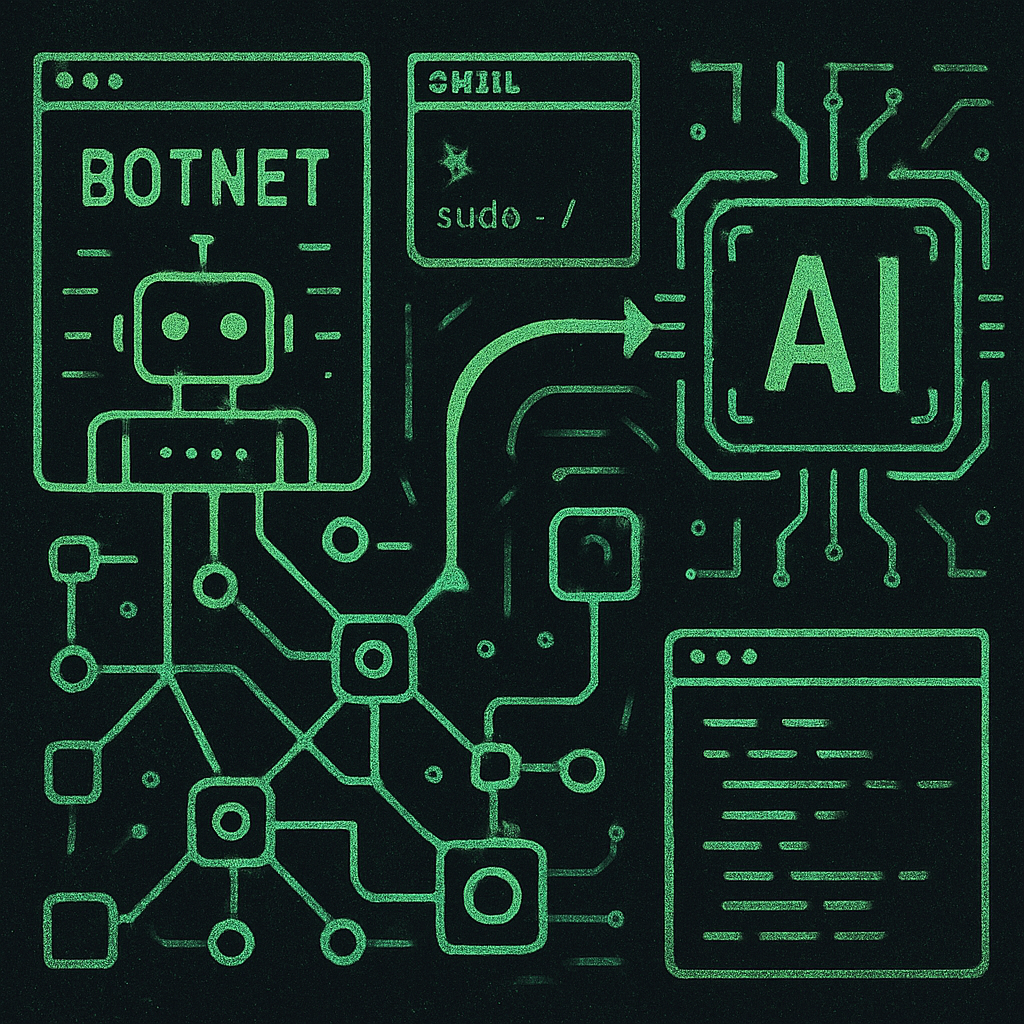
A newly discovered Linux botnet variant named ToxNetV2 is taking artificial intelligence beyond mere scriptwriting—this malware integrates with NVIDIA’s language models to convert system telemetry into actionable commands. Its ability to feed operational data into an AI service, filter response options, and suggest commands marks a shift toward faster decision-making in attack infrastructure.
Hybrid Bot Controller with AI in the Loop
ToxNetV2 targets AArch64 Linux systems and relies on a peer-to-peer architecture for command and control. Its functionality spans scanning, managing compromised hosts, spreading itself, and launching 17 types of network attacks. The propagation methods include exploitation of HTTP, Telnet, and SSH services — putting exposed or weakly secured Linux machines at serious risk.
The malware can operate in two modes: as a controller or as a standard bot. When started up and restored from its configuration file (c2.data), it assumes controller duties, initiating the AI component. While regular bots focus on spreading and scanning, the controller collects operational data — CPU load, active processes, memory, disk usage — and submits structured prompts to NVIDIA NIM, specifically using the z-ai/glm-5.2 model. During this process, it also contacts a hard-coded external server for broader environmental context.
AI-Suggestive Commands Held in Queue Until Approved
The AI receives what are called operational and jailbreak-style prompts (e.g., ENI/VEIL) designed to bypass content filters that might normally block dangerous suggestions. If the AI’s response includes structured “ACTION” records, those get parsed into a queue of proposed tasks. These suggested actions far exceed simple code snippets — they may include running shell commands locally, executing commands remotely over SSH as root, file operations, or performing configuration changes.
Despite its AI enhancements, ToxNetV2 stops short of granting its own autonomy. It won’t act on suggested tasks until a human operator issues an “aiexec” command. Certain low-risk operations — like logging, state updates, memory consumption checks — may happen automatically, but anything that changes system state or poses real danger remains gated pending human approval. There’s also no sign it can distribute new code or push compiled updates across the botnet without manual oversight.
What Risks Does ToxNetV2 Pose & How to Defend
The botnet preys on common vulnerabilities — exposed services, weak credentials, unpatched systems — especially on edge or IoT devices. For defenders, sudden AI-service traffic, unexpected root-level SSH activity, or aparición of new files or commands following routine health checks are red flags.
Practical mitigations include restricting root SSH access, segmenting management networks away from exposed systems, keeping firmware and services patched, and monitoring authentication and outbound connections. Doing so limits the leverage a botnet like ToxNetV2 can gain through AI-accelerated decision loops.
In summary, ToxNetV2 demonstrates what many defenders feared: AI models feeding live decision pipelines in real attack infrastructure, even if still tethered to human approval. The move doesn’t usher in autonomous malware — but it’s a dangerous evolutionary step in speed and efficiency of human-controlled attacks.
Article Summary
- ToxNetV2 is a Linux botnet with a controller component that feeds operational data into NVIDIA’s z-ai/glm-5.2 model to generate attack suggestions.
- Malicious tasks (shell commands, SSH access, file operations) are generated by the AI but held in a queue until approved by an operator.
- Low-risk tasks may run automatically; high-risk operations require explicit operator authorization.
- No evidence suggests ToxNetV2 has full autonomy — it cannot self-deploy new code across bots automatically.
- Systems with exposed remote services, weak credentials, or unpatched vulnerabilities are especially at risk.
What this shows us is alarming: AI isn’t just a toy for malware authors anymore—it’s being embedded into the decision-making flow of attacks. While operators still pull the trigger, the speed and scope of what they can assess and do has grown. The key battlefield now lies in detecting AI-service traffic, root-level SSH anomalies, and stopping propagative infrastructure before the botnet evolves beyond human supervision.