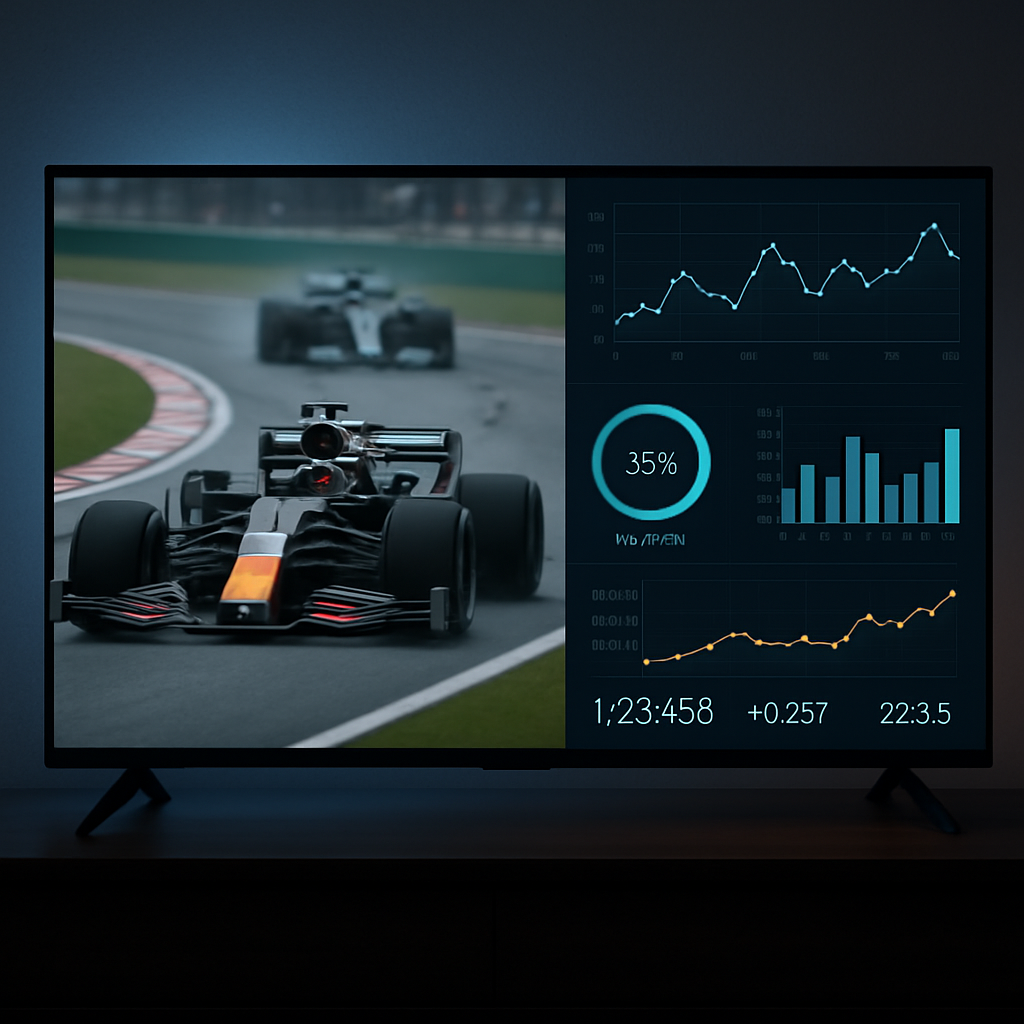
When Apple took over streaming rights for Formula 1 in the U.S. this season, expectations were high. But recent third-party analytics from Samba suggest those hopes may have been overly optimistic, showing sharp year-over-year drops in viewer numbers for marquee races such as Miami, Monaco, and Canada. Still, experts warn that the picture painted by this data is incomplete, especially when it comes to Apple’s own ecosystem.
Samba, an analytics firm embedded in many smart TVs, published figures comparing F1 race viewership between 2025 and 2026. The data indicates that the Miami race in May fell by around 68%, Monaco in June dropped by roughly 66%, and Canada saw a more modest decline of about 23% compared with the previous year. Many of the remaining races also showed double-digit year-over-year drops. On the surface, this appears troubling. However, the way Samba collects data leaves large blind spots. ([appleinsider.com](https://appleinsider.com/articles/26/08/25/smart-tv-analytics-provide-dire-numbers-for-apple-tv-f1-viewership-but-not-whole-story/))
Why the Numbers Look Worse Than Reality
A major factor behind Samba’s figures is the way viewership is tracked. Their system works only on smart TVs connected to the internet and running Samba at the operating-system level. That means any viewers watching via Apple-branded hardware—such as Apple TV boxes or the Apple TV app on devices like iPhones, Macs, or Android phones—aren’t captured. Nor are users watching on smart TVs that aren’t online or with Samba disabled. ([appleinsider.com](https://appleinsider.com/articles/26/08/25/smart-tv-analytics-provide-dire-numbers-for-apple-tv-f1-viewership-but-not-whole-story/))
Further complicating comparisons, in 2025 some races—in particular Miami, Canada, and Monaco—were simulcast on ABC, a free-to-air broadcaster. That gave those broadcasts a viewership boost that was fully visible to Samba’s tracking methods. Without the same broadcast mix this year, even if the actual number of people watching didn’t decline dramatically, Samba’s measured viewership would likely look worse. ([appleinsider.com](https://appleinsider.com/articles/26/08/25/smart-tv-analytics-provide-dire-numbers-for-apple-tv-f1-viewership-but-not-whole-story/))
Other Considerations & What We Know for Sure
Other variables muddy the comparison: international races held at odd hours for the U.S. audience, scheduling gaps caused by geopolitical instability, and how many casual fans may have tuned in via free trials but did not continue subscription coverage. All could contribute to lower visible numbers without necessarily signaling a collapse in engaged viewership. ([appleinsider.com](https://appleinsider.com/articles/26/08/25/smart-tv-analytics-provide-dire-numbers-for-apple-tv-f1-viewership-but-not-whole-story/))
Despite Samba’s data showing declines, Apple claims its 2026 inaugural season coverage of the Australian Grand Prix surpassed ESPN’s viewership for that race. Meanwhile, ESPN’s 2025 F1 output—including ABC and ESPN networks—pulled in average audiences of roughly 1.3 million viewers per race. This raises the possibility that although Samba sees a drop, Apple’s total numbers might not match that view entirely. ([appleinsider.com](https://appleinsider.com/articles/26/08/25/smart-tv-analytics-provide-dire-numbers-for-apple-tv-f1-viewership-but-not-whole-story/))
Apple’s contract for U.S. streaming rights runs through 2030, so the company has plenty of time to grow its audience and adapt its strategy. What’s clear is that Samba’s snapshots should be treated with caution, not least because much of Apple’s audience – especially those watching via its own platforms – remains invisible to these third-party tools. ([appleinsider.com](https://appleinsider.com/articles/26/08/25/smart-tv-analytics-provide-dire-numbers-for-apple-tv-f1-viewership-but-not-whole-story/))
Ultimately, while there’s evidence of viewership softening, it’s far from definitive proof that Apple is losing the F1 audience. What we need are official numbers from Apple or F1, or at least broader data sets that include streaming plus TV plus ABC broadcasts, to really understand how this partnership is faring.