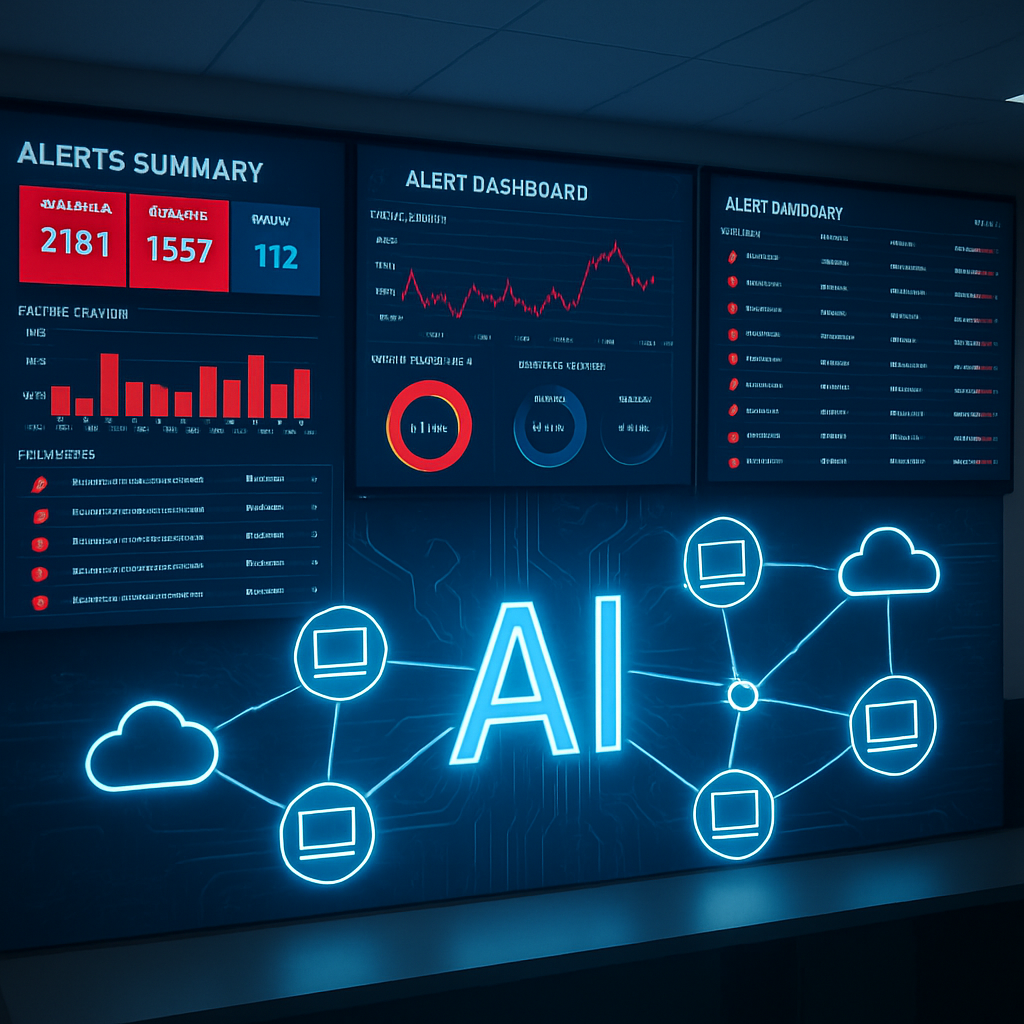
Security Operations Centers (SOCs) face mounting pressure as threat actors unleash increasingly complex attacks and defenses become stretched thin. Analysts routinely juggle enormous volumes of alerts from cloud infrastructure, endpoints, identity systems, and more—spending valuable hours correlating events, digging through documentation, and assembling context across multiple platforms. This friction drains effectiveness and increases the odds that serious incidents slip through the cracks. Modern SOCs today need more than traditional SIEM and XDR tools—they need intelligent support that lightens the load without diluting oversight.
The Promise and Pain Points of AI in SOC Environments
With the rise of distributed architectures—spanning on-premise servers, cloud workloads, and hybrid configurations—SOC-resistant threats have multiplied. Analysts must maintain full situational awareness despite disparate systems and widely divergent data sources. Compounding this, alert fatigue is real: when logs are cluttered with low-risk noise, high-priority issues can get overlooked and investigations become slow.
AI offers a path forward: by automating routine tasks, aggregating insights, and accelerating investigations, it provides invaluable support. But it’s not about replacing analysts; it’s about enabling them to focus on decision points where human judgement is indispensable. Key capabilities needed include contextualization, threat summarization, and guidance on remediation—visions that match what many security teams have been attempting to build or buy.
Wazuh’s AI-Driven Tools Tailored to SOC Needs
Wazuh is deepening its AI integrations in two paths: its own managed cloud service and externally managed/self-hosted options. For organizations using Wazuh Cloud, the Wazuh AI Analyst delivers hands-off, automated analytics. It pulls together security posture metrics—including alert volume, active vulnerabilities, endpoint coverage, and environment summaries—into PDF-based reports sent on a regular schedule. These AI-powered summaries are produced via Amazon Bedrock and Anthropic’s Claude, with encrypted handling of data and no use of customer inputs for model training. ([thehackernews.com](https://thehackernews.com/2026/08/wazuh-and-ai-for-enhanced-soc-workflows.html))
Those with greater privacy or data residency constraints can opt for self-hosted AI integrations. One option uses the open-source Llama 3 model run locally via the Ollama stack: logs are archived, vectorized with FAISS, and accessed internally through a LangChain-powered chatbot—ensuring nothing leaves the organization’s network. ([thehackernews.com](https://thehackernews.com/2026/08/wazuh-and-ai-for-enhanced-soc-workflows.html))
Another alternative is the externally managed integration involving Anthropic’s Claude 3.5 Haiku model, hosted on Amazon Bedrock. It’s embedded directly into the Wazuh dashboard using an OpenSearch Assistant via a custom connector. This setup lets analysts query the system—asking about investigations, remediation steps, or configuration advice—without leaving the interface. ([thehackernews.com](https://thehackernews.com/2026/08/wazuh-and-ai-for-enhanced-soc-workflows.html))
Each path offers trade-offs: Wazuh Cloud’s AI Analyst prioritizes ease and schedule-based insights, while self-hosted and external integrations grant more control, privacy, and interactivity. But in every case, recommendation outputs remain advisory—intended to inform, not dictate, action. ([thehackernews.com](https://thehackernews.com/2026/08/wazuh-and-ai-for-enhanced-soc-workflows.html))
Wazuh is joining others in the shift toward smarter SOC tools—aiming to lighten analysts’ burdens while preserving rigorous oversight. The company’s latest enhancements show that AI can help cut down on repetitive research and dashboard-switching, provide timely threat summaries, and suggest concrete next steps—all while respecting privacy and compliance priorities. ([thehackernews.com](https://thehackernews.com/2026/08/wazuh-and-ai-for-enhanced-soc-workflows.html))
What this means in practice: SOC teams can move from reactive firefighting toward proactive threat identification and mitigation. Automated reporting can streamline stakeholder updates, while policy-sensitive integrations let organizations define the boundaries of AI use. Going forward, teams should watch how well these tools adapt to false positives, adjust to emerging threat patterns, and stay aligned with evolving regulatory demands.