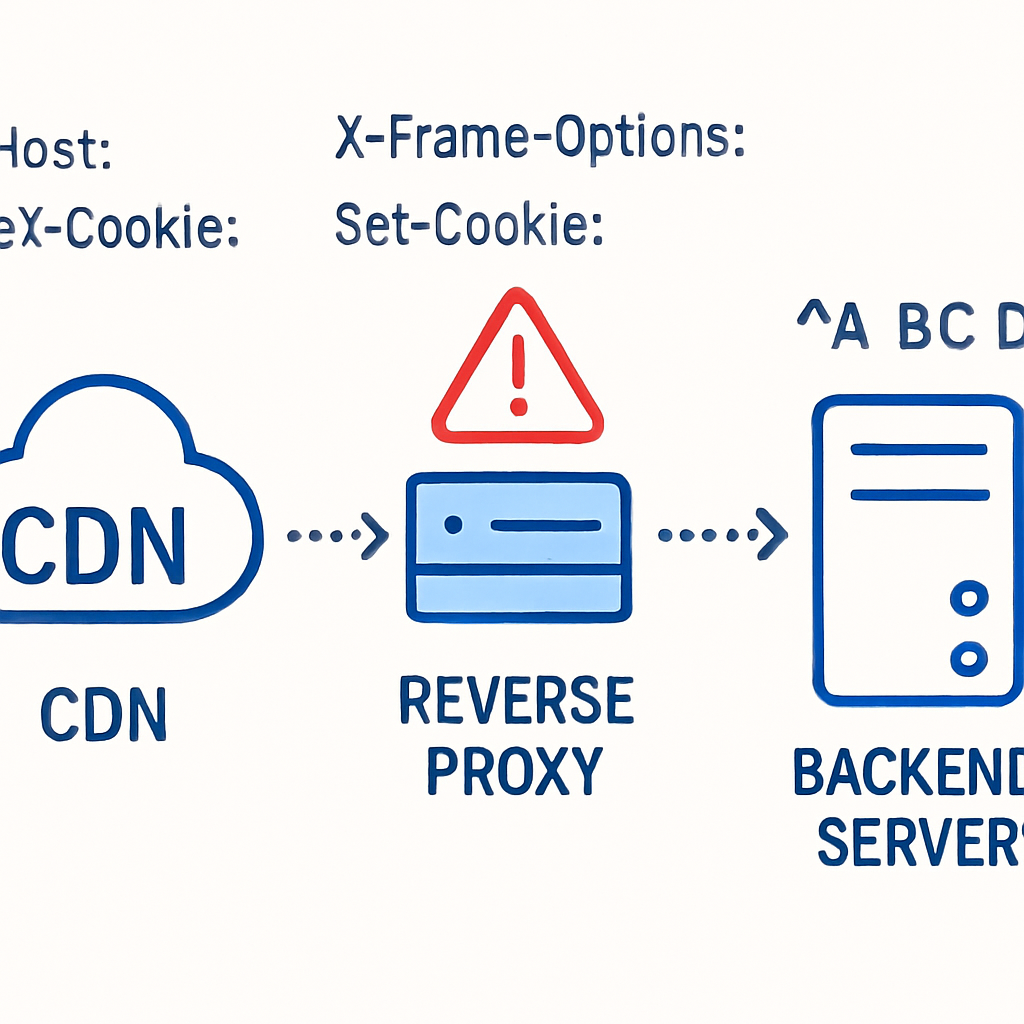
A newly disclosed security flaw, dubbed “CRLF-Powered Desync,” reveals how a subtle misconfiguration in HTTP handling can be weaponized to compromise CDNs and deliver cross-site scripting (XSS) attacks to real users. The vulnerability begins with a CRLF injection issue — when an application incorrectly decodes encoded carriage return/line feed characters (%0d%0a) and allows them into HTTP request headers. What seems like a minor input-validation oversight can snowball into full-blown HTTP desynchronization attacks. ([cybersecuritynews.com](https://cybersecuritynews.com/crlf-powered-desync-attack/))
From CRLF Injection to HTTP Desync
In many web server environments, especially with Nginx, using variables such as $uri in proxy_pass directives can cause trouble. Nginx often normalizes and decodes the URL path before sending the request upstream, converting encoded CRLF sequences into actual line breaks. That opens the door for malicious header injection. When different parts of the infrastructure (frontend proxy, CDN, backend) interpret the boundary between requests differently, a mismatch arises—this is HTTP request smuggling, or desynchronization. ([cybersecuritynews.com](https://cybersecuritynews.com/crlf-powered-desync-attack/))
Cache Poisoning & XSS as a Result
One of the gravest consequences involves CDN cache poisoning. Attackers can craft HEAD requests in a way that tricks the CDN into caching a malicious response. Once cached, that resource is blindly served to all users. Malware inline scripts injected this way execute in victims’ browsers. These attacks aren’t confined to odd corner cases—some are fully browser-compatible, with JavaScript fetch() or normal navigation able to carry the encoded payloads that trigger desync. In one fearsome potential chain, a “desync worm” could auto-proliferate by repeatedly invoking the same malformed requests from each infected client. ([cybersecuritynews.com](https://cybersecuritynews.com/crlf-powered-desync-attack/))
Aside from stealing session cookies or exposing authorization tokens, the threat can even cross tenant boundaries when unrelated sites share CDN infrastructure. Failed request isolation, response queue poisoning, and other downstream effects all multiply risk. ([cybersecuritynews.com](https://cybersecuritynews.com/crlf-powered-desync-attack/))
Mitigation Strategies
Organizations are urged to treat CRLF injection and header injection flaws with high severity. A few practical steps include: avoid using decoded URI variables like $uri with proxy_pass or return in Nginx; maintain consistent HTTP parsing rules across all infrastructure layers; reject encoded control characters early in request handling; and isolate backend connections. Testing for request smuggling across CDN, proxy, load balancer, and origin server configurations is critical. Switching where feasible to HTTP/2 can also help, as well as reinforcing strict reverse-proxy rules. ([cybersecuritynews.com](https://cybersecuritynews.com/crlf-powered-desync-attack/))
The core takeaway: a single CRLF sequence embedded in a request can cascade into far-reaching vulnerabilities when parts of the HTTP stack misinterpret it. What begins as encoded control characters can end as infrastructure-wide cache poisoning and live XSS.
This issue amplifies a longstanding tension in web security: the need for strict specification adherence across every component of the path from client to origin. As CDNs and edge-proxied infrastructure become more complex and widespread, tiny parsing differences that once seemed academic are now decisive security risks.