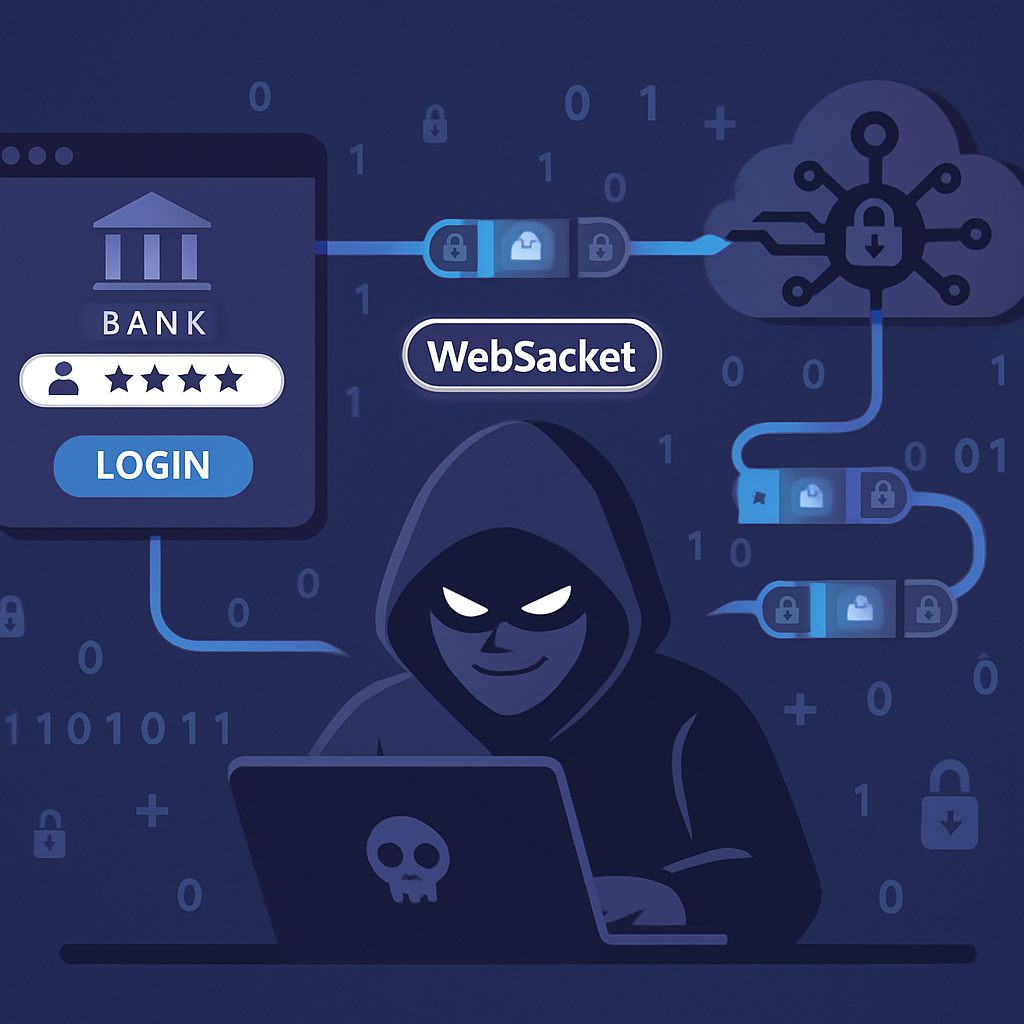
A sophisticated phishing framework known as JWR has emerged, enabling cybercriminals to conduct real-time fraud by intercepting sensitive banking information as victims input their data. This tool transforms counterfeit payment or banking pages into live channels, allowing attackers to monitor and capture details such as card information, account credentials, and verification codes instantaneously.
The JWR campaign primarily employs SMS-based phishing (smishing) tactics, sending messages that masquerade as unpaid toll notices, parcel delivery charges, or courier alerts. These messages contain links that direct recipients to convincing fake login pages. Once victims enter their information, the framework collects a comprehensive set of data, including card details, personal identification documents, and one-time passwords.
Real-Time WebSocket Control and AES Encryption
JWR utilizes a persistent WebSocket connection to maintain continuous communication between the victim’s browser and the attacker’s server. This connection is encrypted using AES-CTR, effectively concealing the data exchange and enabling the attacker to control each stage of the fraudulent session in real time. The framework assigns a unique session ID to each victim and employs background processes to keep the connection active as the victim navigates through the fake site.
With over 40 operator commands at their disposal, attackers can guide victims from initial login screens through to personal information requests, card data entry, SMS code submissions, PIN inputs, and even banking app approval prompts. Notably, the operator can display fake decline messages to prompt victims into providing additional card information, thereby extracting more data without raising immediate suspicion.
Throughout the session, JWR captures partial passwords, card numbers, and one-time codes as they are entered. Upon completion, the collected data is transmitted to the attackers, and victims are often redirected to legitimate websites. This redirection can delay the realization of the fraud, granting criminals valuable time to exploit the stolen information.
Smishing Lures and Global Reach
Security researchers have observed JWR being disseminated through text messages that impersonate toll authorities and postal or courier services, particularly targeting regions in Southeast Asia and the Middle East. These deceptive messages create a sense of urgency by referencing small unpaid fees or delayed parcels, prompting recipients to act hastily without verifying the authenticity of the request.
The comprehensive data collection facilitated by JWR poses significant risks, including account takeovers, payment fraud, and identity theft. The framework’s ability to capture a wide array of personal and financial information underscores the evolving sophistication of phishing attacks.
To mitigate the threat posed by JWR and similar phishing frameworks, individuals are advised to avoid clicking on links in unsolicited messages related to tolls, deliveries, or account issues. Instead, they should access official services directly through known websites or applications. Organizations should enhance their security measures by monitoring for unusual browser connections, rapid navigation through authentication pages, and requests to unfamiliar domains. Implementing transaction alerts, risk assessments for atypical sign-ins, and clear communication about ongoing scams can further help in reducing potential harm.
The emergence of JWR highlights the need for continuous vigilance and adaptation in cybersecurity practices. As phishing techniques become more sophisticated, both individuals and organizations must stay informed and proactive to effectively counter these evolving threats.