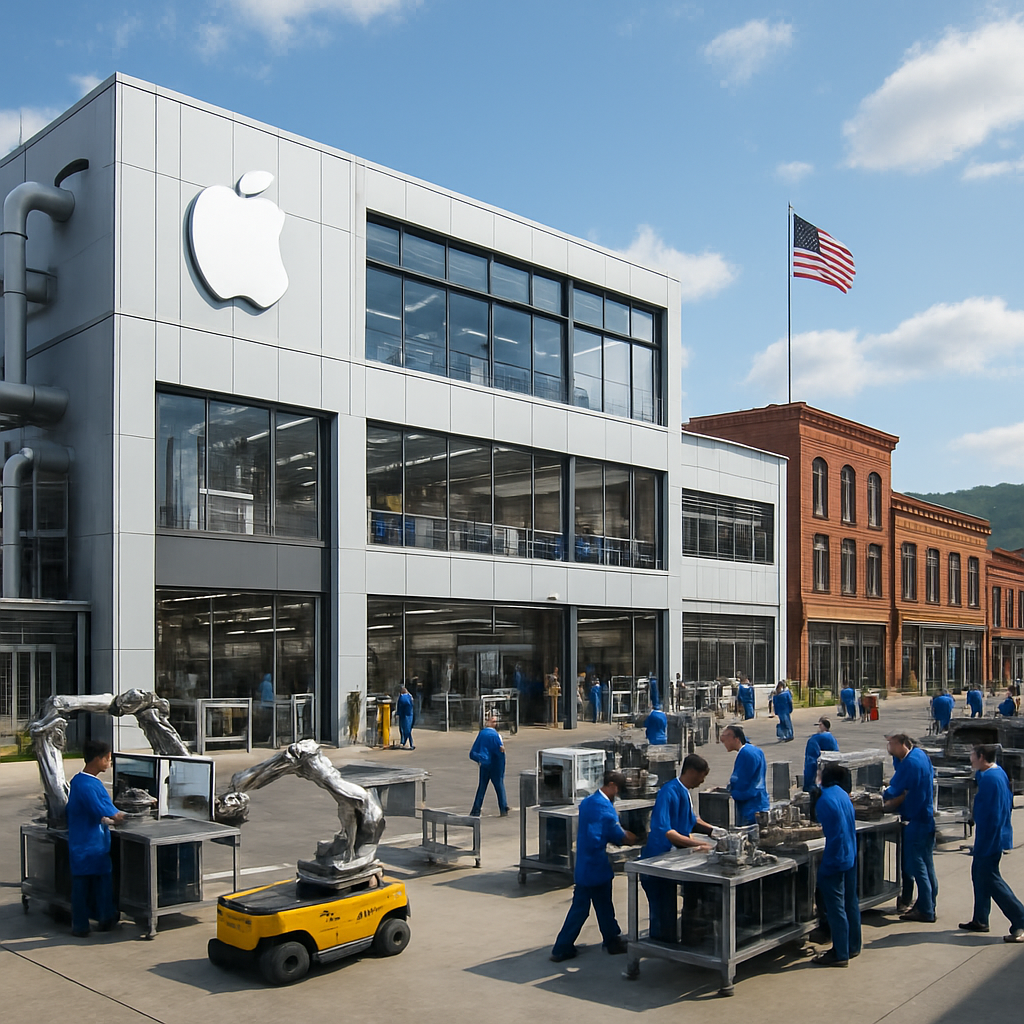
Apple CEO Tim Cook has unveiled plans to establish new manufacturing facilities in U.S. towns that have suffered economic decline due to the closure of major factories. This initiative is part of Apple’s broader strategy to bolster domestic manufacturing and stimulate local economies.
During a recent interview on CNBC’s “Mad Money,” Cook highlighted the significance of economic hubs in small communities. Reflecting on his upbringing in Alabama, he emphasized the importance of sustaining local economies when major employers depart. Cook stated that Apple is actively seeking opportunities to invest in such communities to foster economic revitalization.
Apple’s commitment to U.S. manufacturing is not new. In 2013, the company announced a $100 million investment to produce a line of Macs domestically. This move was followed by the creation of a $1 billion advanced manufacturing fund in 2017, aimed at stimulating job growth and innovation within the United States. More recently, in 2025, Apple pledged an additional $100 billion investment to enhance its U.S. manufacturing capabilities, focusing on existing partners and facilities.
One notable example of Apple’s domestic manufacturing efforts is the Advanced Manufacturing Center in Houston, Texas. This facility serves as a hub for innovation and collaboration, supporting the development of advanced technologies and providing training opportunities for the local workforce. Cook praised the center as a testament to the potential of U.S. manufacturing and a model for future investments.
Apple’s strategy also includes partnerships with American companies to source components domestically. For instance, the company has collaborated with Corning in Kentucky to produce glass for iPhones and Apple Watches. Additionally, Apple has committed to purchasing chips from TSMC’s Arizona plant, further solidifying its investment in U.S. manufacturing infrastructure.
By focusing on revitalizing communities that have experienced economic downturns due to factory closures, Apple aims to create sustainable economic growth and job opportunities. This approach not only benefits the local populations but also strengthens Apple’s supply chain resilience by diversifying its manufacturing base.
Apple’s ongoing investments in U.S. manufacturing reflect a strategic effort to balance global production with domestic capabilities. As the company continues to expand its manufacturing footprint within the United States, it sets a precedent for other tech giants to consider similar initiatives, potentially leading to a broader resurgence of American manufacturing.