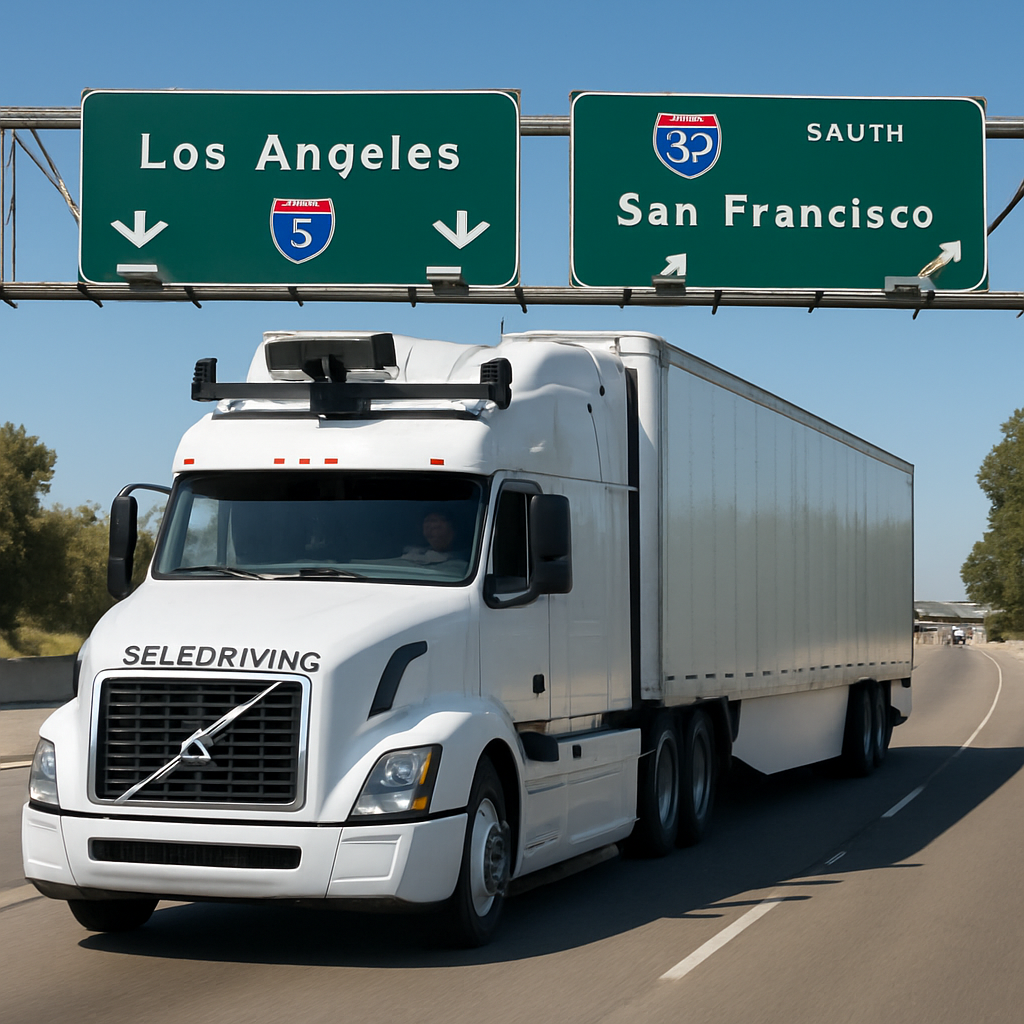
California has officially commenced testing of self-driving trucks on its highways, marking a significant milestone in autonomous vehicle development. Aurora Innovation and Kodiak AI, both leaders in autonomous trucking technology, have secured permits from the California Department of Motor Vehicles (DMV) to conduct these tests. Kodiak AI has already initiated trials, deploying a limited number of test trucks primarily around its Mountain View office.
This development follows the California DMV’s recent regulatory update on April 28, which lifted the previous ban on testing driverless vehicles exceeding 10,000 pounds on public roads. The new regulations establish a framework for companies to test and eventually deploy autonomous heavy-duty vehicles, provided they meet specific criteria. These include safety protocols, insurance coverage, vehicle registration, and qualifications for safety drivers. Notably, the permits mandate the presence of a human safety operator behind the wheel and restrict operations on roads with speed limits of 25 miles per hour or less, except when on a direct route between destinations.
Despite these advancements, the introduction of self-driving trucks has sparked opposition. The Teamsters California recently filed a lawsuit against the state’s DMV, alleging that the agency bypassed laws requiring comprehensive studies and public disclosure of the potential economic impacts of autonomous trucks on public roads. The lawsuit also raises concerns about the safety risks posed to motorists.
For companies like Aurora and Kodiak, the updated regulations offer an opportunity to test and deploy their technologies within California, their home state. Previously, both companies concentrated their testing and deployment efforts in Texas due to California’s restrictions on autonomous heavy-duty trucks. Aurora launched a self-driving truck service in Texas in May 2025, starting with a Dallas-to-Houston route and subsequently expanding to include routes between Fort Worth and El Paso, El Paso and Phoenix, Fort Worth and Phoenix, and Laredo and Dallas. Similarly, Kodiak began commercial driverless truck operations in January 2025 in West Texas’ remote Permian Basin and has since expanded to on-highway operations, including a route between Dallas and Houston.
The initiation of self-driving truck tests in California signifies a pivotal moment in the evolution of autonomous transportation. While the potential benefits include increased efficiency and addressing driver shortages, the concerns raised by labor unions and safety advocates highlight the need for a balanced approach. As testing progresses, it will be crucial to monitor the outcomes and address any challenges to ensure the safe and equitable integration of autonomous trucks into the transportation ecosystem.