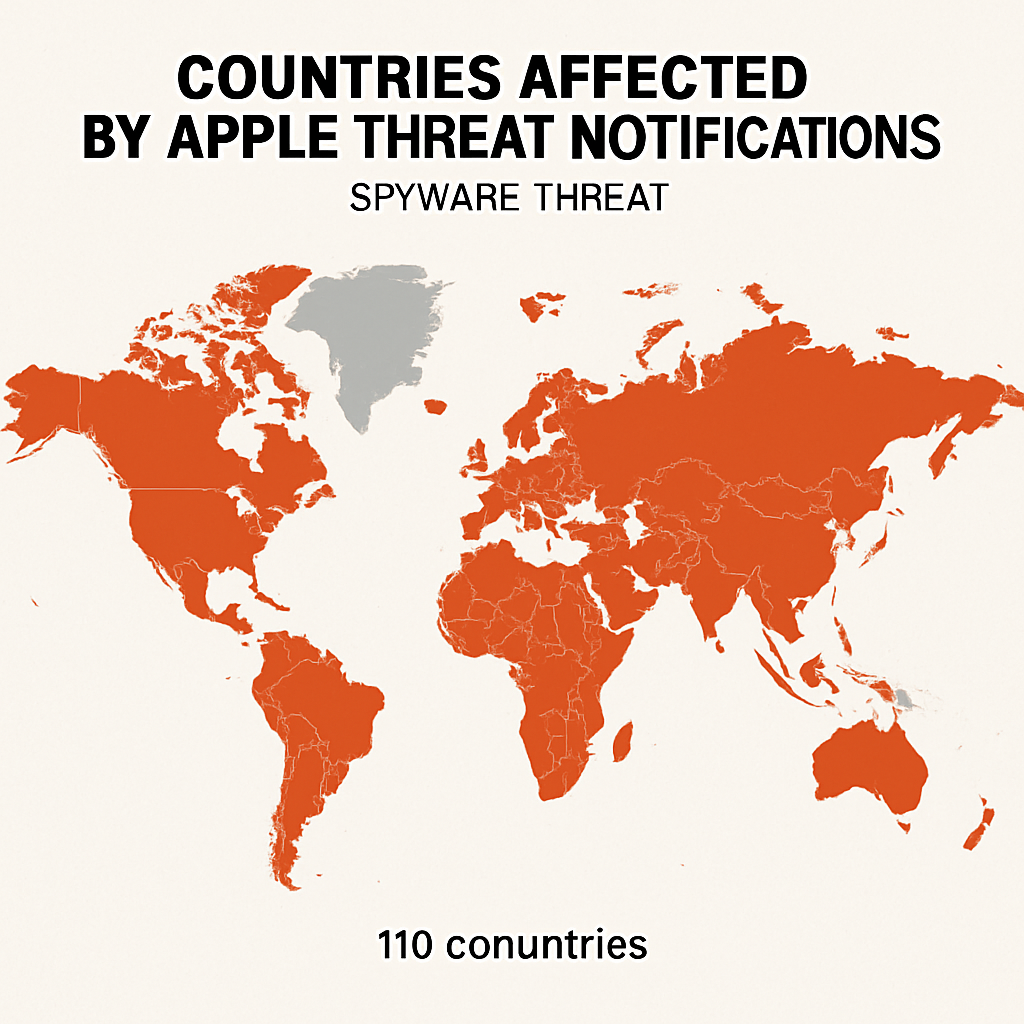
Apple has recently dispatched threat notifications to users across 110 countries, alerting them to potential targeted attacks. This initiative is part of Apple’s ongoing efforts to inform users about possible security breaches involving mercenary spyware.
In a newly released support document, Apple elaborates on the nature of these threat notifications and provides guidance on the steps users should take upon receiving such alerts. The company emphasizes that these notifications are designed to inform and protect users who may have been specifically targeted due to their identity or activities.
Apple’s threat notifications are part of a broader strategy to combat state-sponsored spyware attacks. In November 2021, Apple announced its commitment to alert users exposed to such threats. Since then, the company has sent warnings to users in over 150 countries, underscoring the global nature of these security challenges.
While the exact number of users affected in this latest wave of notifications remains undisclosed, the widespread distribution across 110 countries highlights the pervasive risk posed by mercenary spyware. These sophisticated tools are often employed to infiltrate devices, compromising personal data and communications.
Apple advises users who receive these notifications to take them seriously and follow the recommended steps outlined in the support document. This includes updating devices to the latest software versions, enabling two-factor authentication, and being vigilant about unsolicited communications.
It’s important to note that while these threat notifications are significant, the average user is unlikely to be targeted by such sophisticated attacks. However, for individuals in sensitive positions—such as journalists, activists, and government officials—the risk is considerably higher.
Apple’s proactive approach in issuing these notifications reflects the company’s commitment to user security and privacy. By keeping users informed about potential threats, Apple aims to empower them to take necessary precautions to safeguard their information.
In the broader context, the rise of mercenary spyware underscores the evolving landscape of cybersecurity threats. As these tools become more advanced and accessible, both companies and individuals must remain vigilant. Regular software updates, strong authentication measures, and user education are crucial components in defending against such threats.
Looking ahead, it will be essential for tech companies to continue developing robust security measures and for users to stay informed about potential risks. Collaboration between industry leaders, governments, and cybersecurity experts will play a pivotal role in mitigating the impact of these sophisticated attacks.