Twitch, the popular live-streaming platform owned by Amazon, has introduced a new feature allowing streamers to prevent their content from being used to train Amazon’s generative AI models. This change, announced on August 12, 2026, requires users to actively opt out if they do not want their streams, videos on demand (VODs), clips, highlights, chat logs, text, and images utilized for AI training purposes.
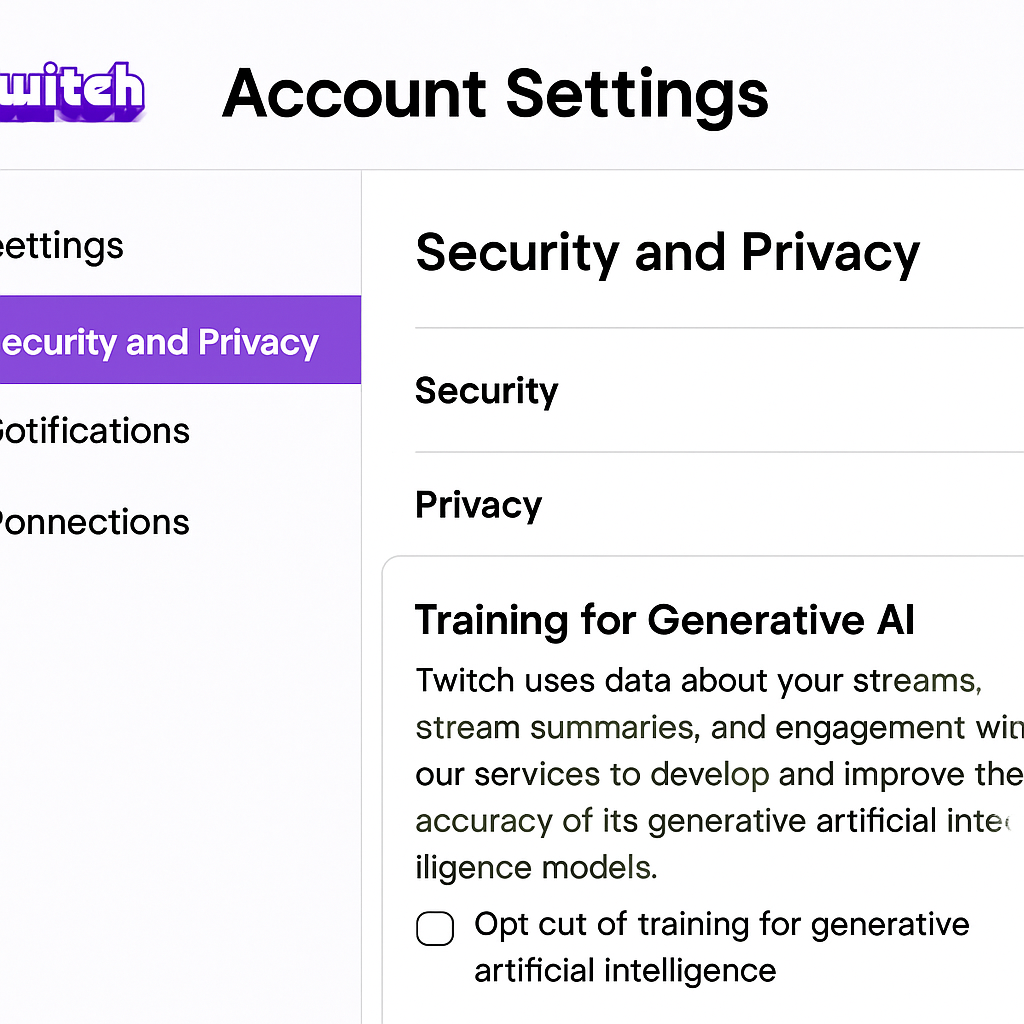
To exercise this option, streamers can navigate to the ‘Security and Privacy’ section within their Twitch account settings. There, they will find a setting labeled ‘Training for Generative AI.’ By disabling this setting, users can ensure that their channel’s content is excluded from Amazon’s AI training datasets.
It’s important to note that the default setting permits Amazon to use streamers’ content for AI training. Therefore, those who prefer to keep their content out of these datasets must proactively opt out.
This development comes amid growing concerns about privacy and data usage in the realm of artificial intelligence. Content creators are increasingly seeking control over how their material is utilized, especially when it comes to training AI models that can generate or synthesize text, audio, images, or video.
For streamers who wish to opt out, the process is straightforward:
- Log in to your Twitch account.
- Go to ‘Settings’ and select the ‘Security and Privacy’ tab.
- Locate the ‘Training for Generative AI’ option.
- Toggle the setting to ‘Off’ to prevent your content from being used in AI training.
By providing this opt-out feature, Twitch acknowledges the importance of user consent in the use of personal content for AI development. This move aligns with broader industry trends where platforms are offering more transparency and control to users regarding their data.
As AI technologies continue to evolve, the balance between innovation and user privacy remains a critical discussion. Twitch’s implementation of an opt-out mechanism reflects a step toward respecting content creators’ rights and preferences in the digital age.