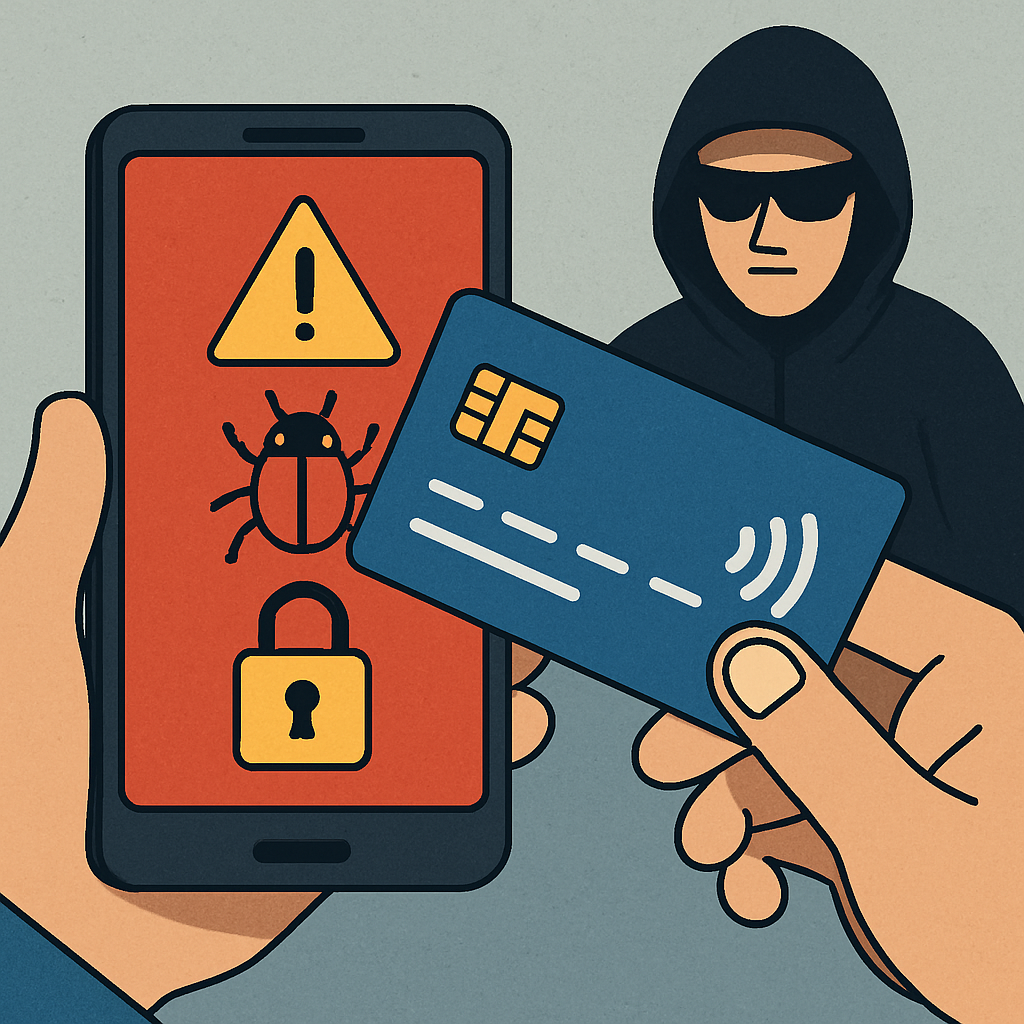
A recent Android-based fraud operation has demonstrated the alarming speed at which cybercriminals can exploit victims, combining social engineering with sophisticated malware to execute financial theft in mere minutes.
Attack Methodology
The attack initiates with a phone call from an individual impersonating a bank representative, claiming issues with the victim’s payment card. The caller persuades the victim to install an application, purportedly to resolve the problem. This application is a variant of the SpyNote Remote Access Trojan (RAT), which grants the attacker extensive control over the device.
Once installed, SpyNote exploits Android’s Accessibility Service to install a secondary malware, WindRelay, without the victim’s knowledge. WindRelay is designed to intercept Near Field Communication (NFC) data in real-time. The attacker then instructs the victim to tap their payment card against the phone and enter their PIN, under the guise of verifying the card.
Execution and Impact
With both malware components active, the attacker can perform several malicious actions:
- Access the victim’s banking application to initiate unauthorized transactions, such as taking out loans in the victim’s name.
- Utilize WindRelay to capture live NFC data from the victim’s card and relay it to another device controlled by the attacker.
- Use the relayed NFC data to conduct fraudulent transactions at physical payment terminals, making the transactions appear legitimate.
In a documented case, the entire process—from the initial phone call to the execution of fraudulent transactions—was completed in just 13 minutes. This rapid sequence leaves minimal time for victims or financial institutions to detect and prevent the fraud.
Geographical Reach and Implications
Research indicates that this malware pairing has been deployed in campaigns targeting countries such as Czechia, Slovakia, and Slovenia. The combination of remote device control and real-time NFC data relay represents a significant evolution in cybercriminal tactics, blending digital and physical fraud methods to bypass traditional security measures.
Preventative Measures
To mitigate the risk of such attacks, users should exercise caution when receiving unsolicited calls claiming to be from financial institutions, especially those requesting the installation of applications or disclosure of sensitive information. Verifying the legitimacy of such requests through official channels is crucial.
Financial institutions and security professionals should monitor for signs of this attack pattern, including the installation of applications from unofficial sources during active calls, requests for extensive device permissions, and closely timed loan applications followed by physical card transactions. Enhanced user education and robust monitoring systems are essential to detect and prevent such sophisticated fraud schemes.
The emergence of the WindRelay malware underscores the need for continuous vigilance and adaptation in cybersecurity practices. As attackers develop more integrated and rapid methods to exploit victims, both individuals and organizations must stay informed and proactive to safeguard against these evolving threats.