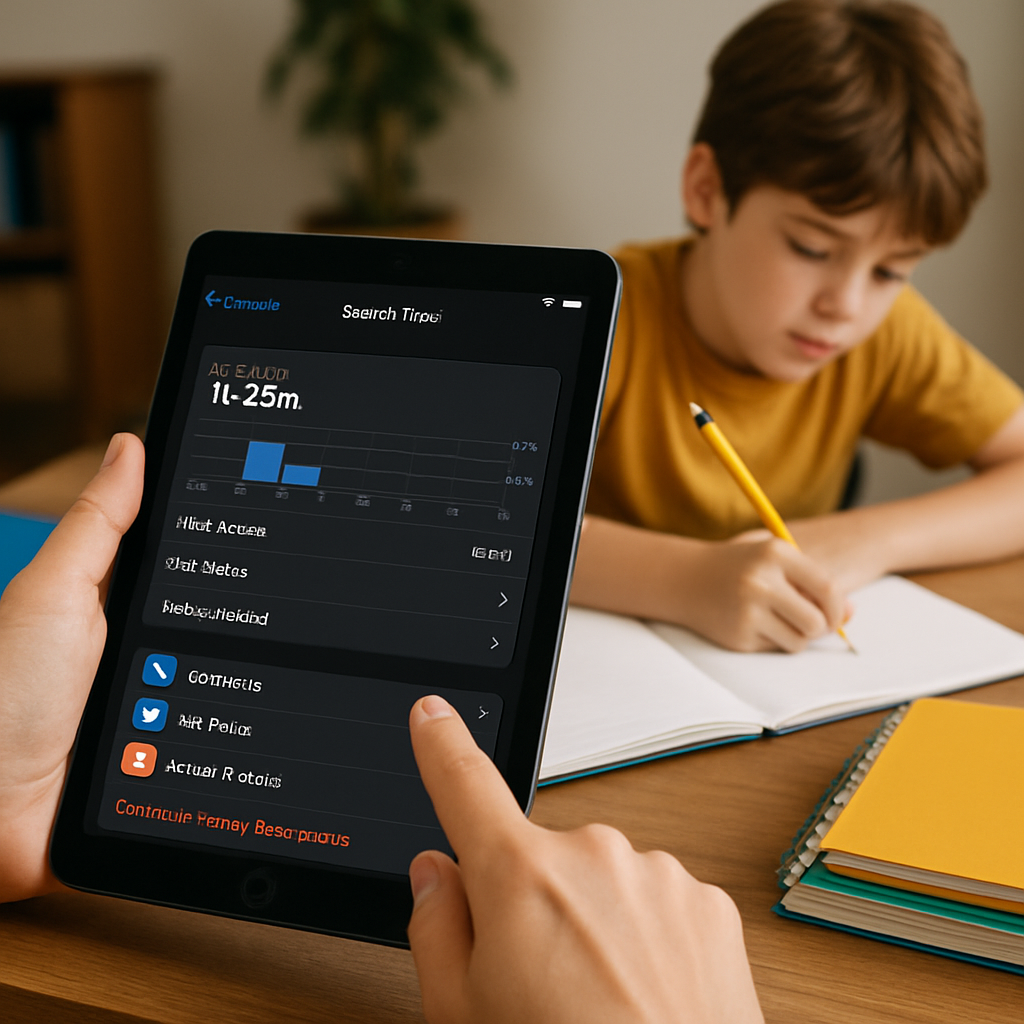
As the new school year begins, parents are encouraged to reassess the screen time guidelines established for their children. During the summer months, it’s common for families to adopt a more relaxed approach to device usage, allowing children increased access to screens. However, maintaining these lenient habits into the academic year can negatively impact children’s educational performance and overall well-being.
Research indicates that excessive screen time is associated with diminished academic achievement, reduced attention spans, and impaired cognitive functions. To address these concerns, experts recommend that parents develop dynamic media plans that adapt to the changing demands of the school year. This approach involves setting clear boundaries for screen use during weekdays and allowing more flexibility on weekends and holidays.
Traditional guidelines, such as the two-hour daily screen time limit, are now considered outdated. Instead, the American Academy of Pediatrics suggests a more nuanced strategy based on the “5 Cs” of media use: Child, Content, Context, Communication, and Consistency. This framework encourages parents to consider the individual needs of their child, the quality of the content consumed, the context in which media is used, open communication about media habits, and consistent enforcement of rules.
To assist parents in implementing these strategies, the American Academy of Pediatrics offers resources like the Family Media Plan and detailed information on the 5 Cs of Media Use. These tools provide guidance on creating personalized media plans that align with each family’s values and the specific needs of their children.
In response to the evolving digital landscape, Apple has introduced significant enhancements to its Screen Time and parental control features in iOS 27. The redesigned Screen Time interface offers parents a more intuitive overview of their child’s device usage, including weekly summaries and insights into the most frequently used apps. New features such as Time Allowances allow parents to set daily limits across major app categories like Entertainment, Games, and Social Media. Additionally, the Schedules feature enables parents to designate specific times when certain apps are accessible, facilitating better management of screen time during school hours and other critical periods.
As children transition back to school, it’s crucial for parents to proactively adjust screen time policies to support their academic success and overall health. By leveraging updated guidelines and utilizing advanced parental control tools, families can foster a balanced approach to technology use that aligns with educational goals and promotes healthy development.