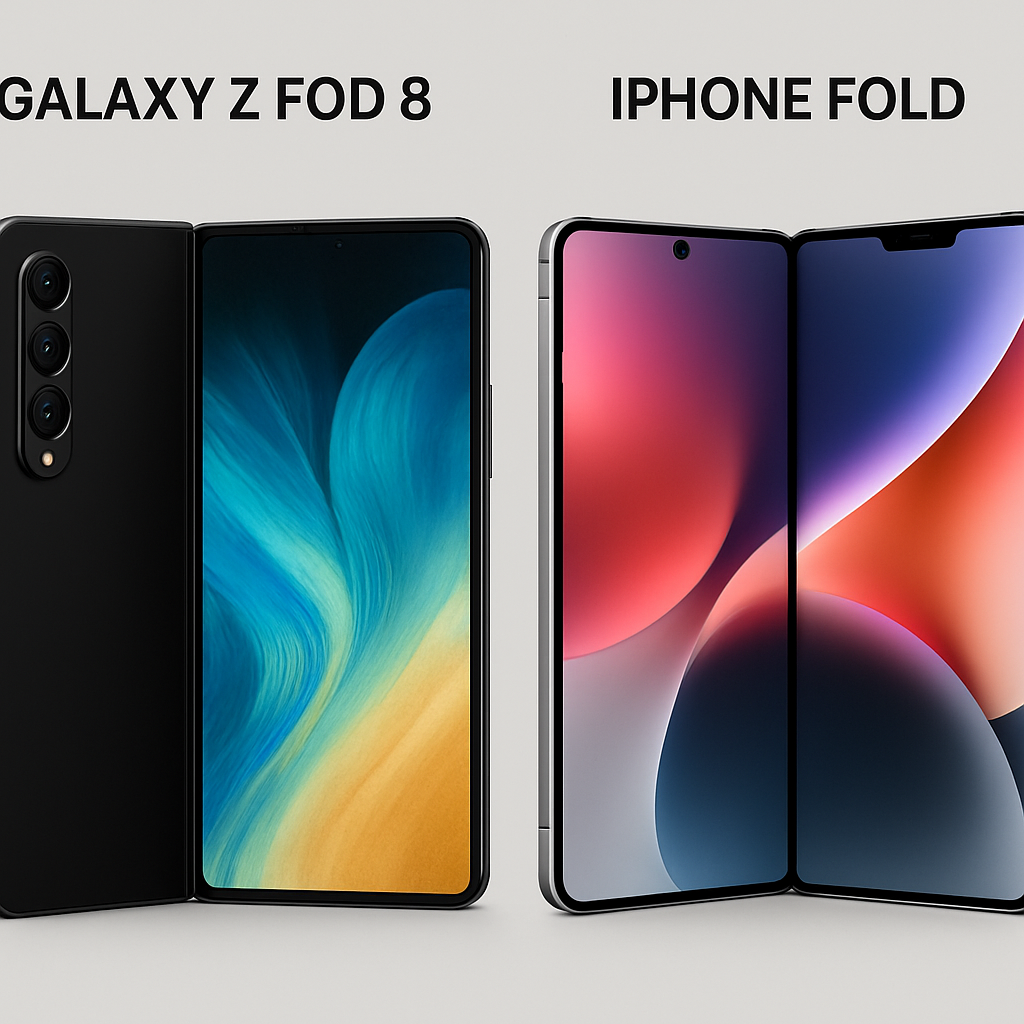
Apple’s anticipated entry into the foldable smartphone market with the iPhone Fold is set to face significant competition from Samsung’s latest offering, the Galaxy Z Fold 8. Samsung’s new device has garnered substantial consumer interest, with pre-orders surpassing expectations and indicating a strong market presence.
The Galaxy Z Fold 8, unveiled on July 22, 2026, introduces a wider, passport-sized design that differentiates it from its predecessors. This model features a 5.5-inch cover display and a 7.6-inch inner OLED screen, both supporting a 120Hz refresh rate. Powered by the Snapdragon 8 Elite Gen 5 processor, it offers configurations up to 16GB of RAM and 1TB of storage. Notably, the device boasts a peak brightness of 3000 nits and a significantly reduced crease visibility, enhancing the user experience. The matte-finish body also minimizes fingerprints, adding to its aesthetic appeal.
In terms of photography, the Galaxy Z Fold 8 is equipped with a 50MP main camera and an ultra-wide lens. While it lacks a telephoto lens and exhibits average low-light performance, it compensates with advanced features such as RAW shooting and 8K video recording. The device’s compact form factor makes it convenient for daily use, appealing to users who prioritize portability without compromising on functionality.
Samsung’s strategic pricing for the Galaxy Z Fold 8 starts at $1,899 for the base model with 256GB storage, positioning it competitively in the premium smartphone segment. The company has reported a 70% increase in pre-orders compared to the previous year’s model, with the Galaxy Z Fold 8 accounting for 40% of these orders. This surge underscores a growing consumer interest in foldable technology and suggests a shift towards mainstream adoption.
On the other hand, Apple’s iPhone Fold is rumored to feature a 7.8-inch crease-free inner display and a 5.4-inch cover screen, housed in a titanium and aluminum body for durability and reduced weight. Speculations point to dual 48MP rear cameras, 24MP front cameras, and the integration of Touch ID. Powered by the A20 chip built on TSMC’s 2nm process and equipped with 12GB of RAM, the device is expected to deliver robust performance. However, the anticipated price range of $2,400 to $2,500 may pose a challenge in attracting a broad consumer base.
As the foldable smartphone market evolves, Apple’s entry with the iPhone Fold will be closely watched. The success of Samsung’s Galaxy Z Fold 8 highlights a growing acceptance of foldable devices, setting a high benchmark for Apple. To capture market share, Apple will need to offer compelling features and competitive pricing to appeal to consumers who are increasingly embracing this innovative form factor.