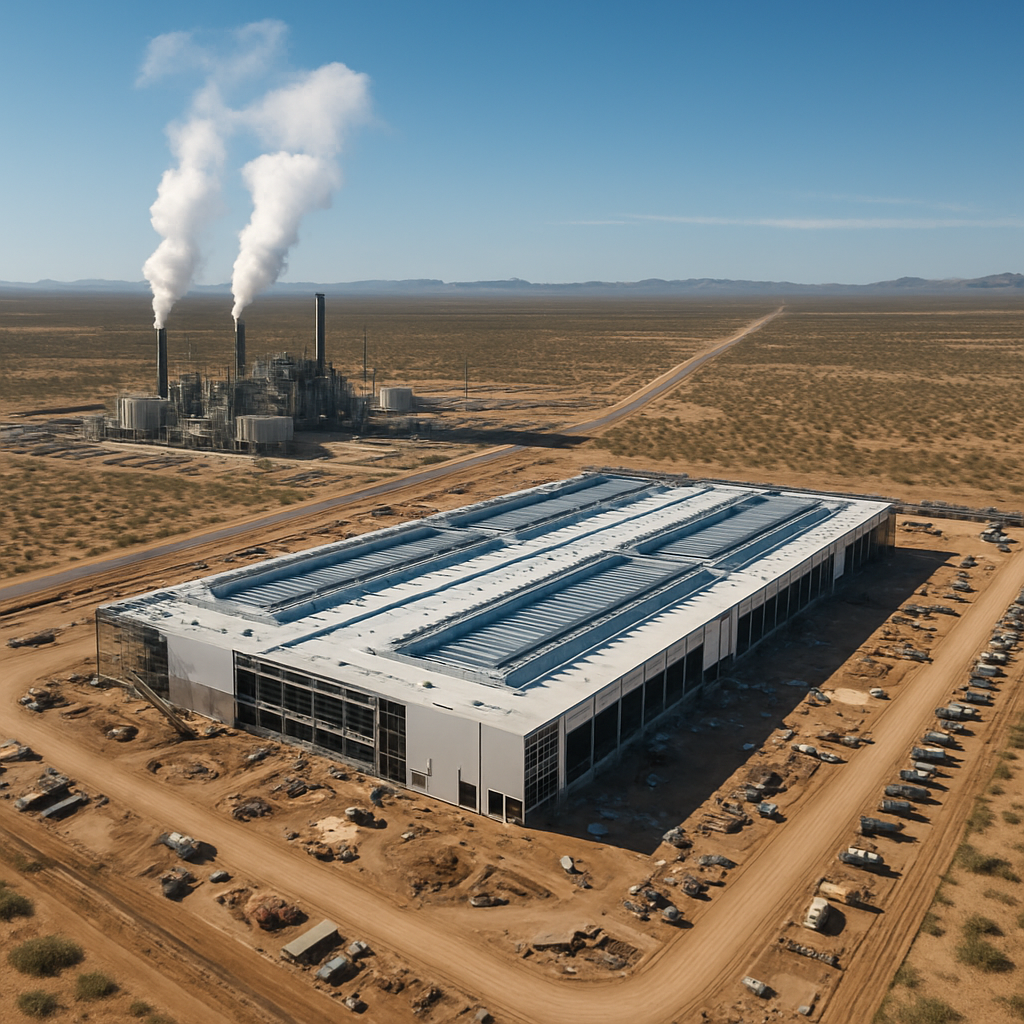
Amazon is planning to build a new data center in Pecos County, Texas, which includes an on-site natural gas power plant. This facility is permitted to emit up to 33 million tons of carbon dioxide annually, potentially making it the largest single source of climate pollution in the United States.
The company asserts that the on-site power generation will prevent increases in electricity costs for Texas residents. However, this development raises questions about Amazon’s environmental commitments, especially considering the company’s pledge to achieve net-zero carbon emissions by 2040.
In 2025, Amazon reported a 16% increase in carbon emissions, reaching 80.85 million tons of CO₂ equivalent. This surge was largely attributed to the rapid expansion of data centers, which are energy-intensive facilities essential for cloud computing and AI services. The growing demand for such services has led to significant increases in electricity consumption and associated emissions.
To address environmental concerns, Amazon has implemented measures to improve the efficiency of its data centers. For instance, the company reported a global average power usage effectiveness (PUE) of 1.14 in 2025, which is better than the industry average of 1.25 but still behind competitors like Google, which reported a PUE of 1.09. Additionally, Amazon has been working on reducing water usage in its data centers by utilizing air-based cooling systems and raising the safe operating temperatures for equipment.
Despite these efforts, the planned Texas data center underscores the challenges Amazon faces in balancing rapid technological expansion with environmental sustainability. The reliance on natural gas for power generation at this facility highlights the tension between meeting the growing energy demands of data centers and adhering to climate commitments.
As Amazon continues to expand its data center operations, it will be crucial for the company to invest in renewable energy sources and innovative technologies to mitigate environmental impacts. The tech industry as a whole must address the sustainability challenges posed by the increasing demand for data processing and storage, ensuring that growth does not come at the expense of the planet’s health.