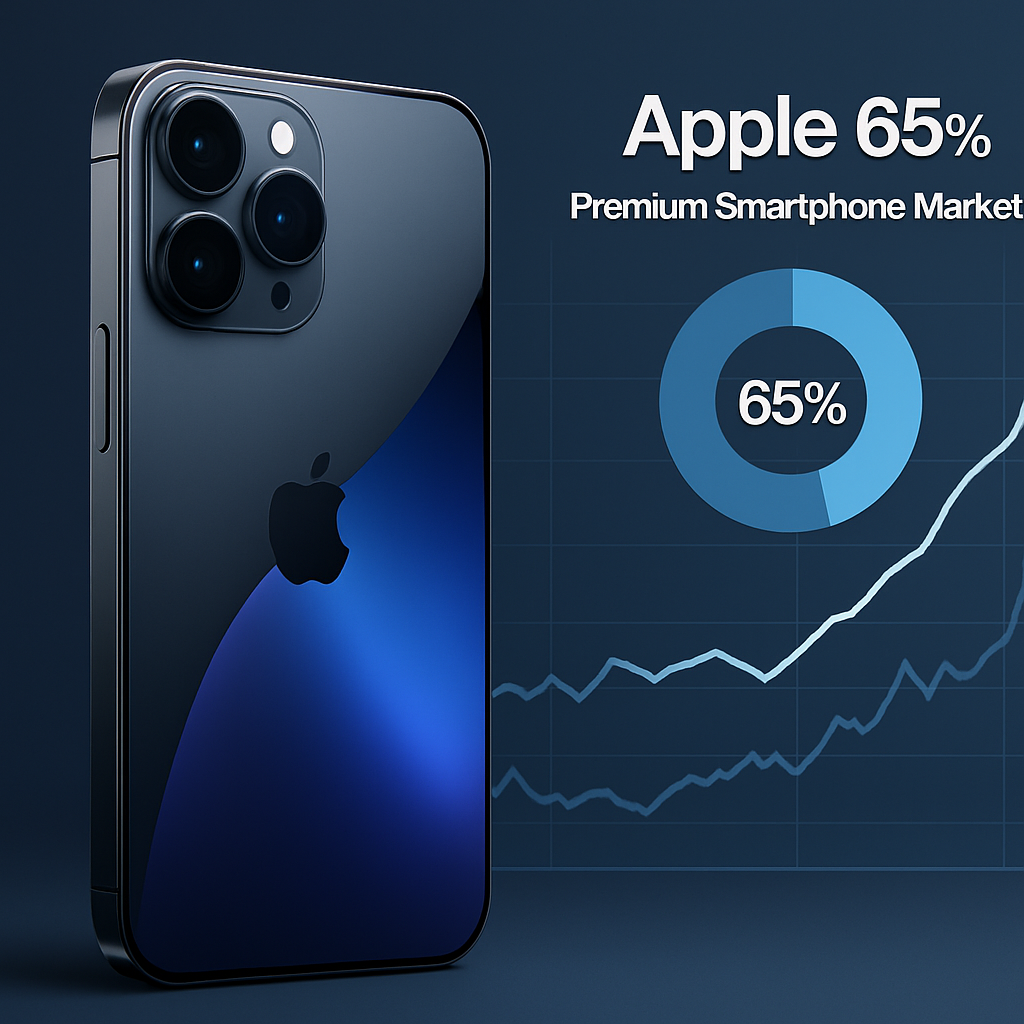
In the first half of 2026, Apple secured 65% of the global premium smartphone market, as the segment’s share of overall smartphone sales reached a record 29%. This data comes from Counterpoint Research’s Handset Model Sales Tracker, which monitors smartphones with a wholesale average selling price of $600 or more.
Apple’s premium segment revenue experienced a 9% year-over-year increase during this period, largely driven by robust sales of the iPhone 17 lineup, particularly the base model. However, this 65% share marks a decline from the 74% Apple held in the first half of 2022. The decrease is attributed to intensified competition in China—the largest premium smartphone market—where domestic brands like Huawei, Xiaomi, OPPO, and vivo have enhanced their flagship offerings, attracting more Chinese consumers.
Overall, the premium segment saw unit sales grow by 5% year-over-year in the first half of 2026. Its market share rose from 25% in the first half of 2025 and 20% in the first half of 2022. This growth is primarily due to rising memory and component costs, which have impacted low- and mid-tier phones more significantly than flagship models. Premium brands, including Apple, have been better positioned to absorb these higher costs through wider margins and fewer promotions, sustaining demand even as the broader market faces challenges.
The narrowing price gap between mid-tier and premium phones is accelerating consumer shifts toward higher-end devices. As mid-segment Android smartphone prices rise, the difference in cost with premium devices, especially older or discounted flagship models, is decreasing. This trend makes flagship smartphones a more attractive upgrade option for consumers. To support this shift, manufacturers are expanding financing, trade-in, and buyback programs to improve affordability. For instance, Samsung has extended its Galaxy Forever program to several markets to make flagship devices more accessible.
Samsung remains the only other brand in Apple’s league, holding 19% of the premium segment after a 3% year-over-year growth, despite a later launch for the Galaxy S26 series. Behind the two leaders, Chinese brands continue to strengthen their positions in the premium market.
Apple’s dominance in the premium smartphone market underscores its ability to maintain consumer loyalty and command higher price points, even amid increasing competition and market challenges. The company’s focus on delivering high-quality products and services continues to resonate with consumers, solidifying its position as a leader in the premium segment.