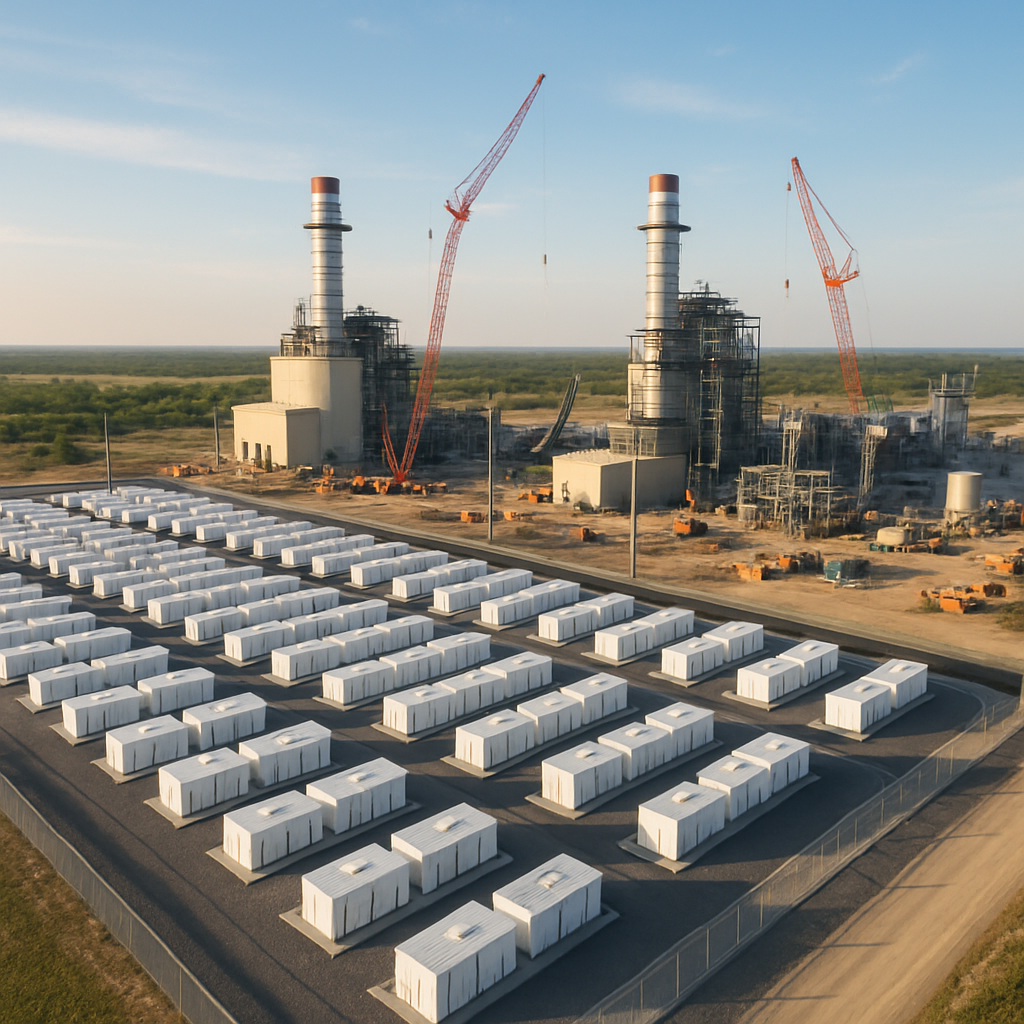
SpaceX has announced plans to construct natural gas power plants to supply electricity to its upcoming Terafab semiconductor manufacturing facility in Texas. Riley Trettel, leading energy and data center development at SpaceX, stated that the company will be “bringing our own power” for the project, which will also incorporate substantial battery storage systems.
Notably, there has been no mention of utilizing solar power from Tesla, a partner in the Terafab project and a prominent solar energy developer. This decision aligns with recent trends within Elon Musk’s ventures, where there has been a significant shift towards natural gas. For instance, xAI’s data centers in Memphis predominantly operate on natural gas, and SpaceX has plans to invest $2.8 billion in gas turbines over the next three years.
Terafab is set to be located in Grimes County, approximately 45 miles northwest of Houston. SpaceX, which recently went public, has secured a 100% tax abatement from the county, contingent upon investing at least $5 billion by 2030 and creating a minimum of 1,800 full-time jobs by 2035. Additionally, Texas is providing $30 million in incentives to support the project.
The initial phase of the Terafab facility is projected to cost $16.8 billion, a reduction from earlier estimates of $55 billion. The plant aims to produce chips for data centers operated by SpaceX and its subsidiary, xAI.
The surge in AI data centers has led to a significant increase in proposals for new natural gas power plants across the tech industry. This trend has contributed to a 66% rise in the costs associated with building such facilities. Major companies like Google, Meta, and Microsoft have all announced substantial projects in recent months.
Texas has become a focal point for these “bring your own power” data centers, with over 70 gigawatts of capacity planned. While these initiatives aim to expedite project development and mitigate rising electricity costs for consumers, the reliance on natural gas turbines raises environmental concerns due to potential pollution. Notably, SpaceX’s subsidiary, xAI, has faced legal action over the use of unpermitted natural gas turbines in areas already burdened with pollution.
SpaceX’s decision to power Terafab with natural gas rather than renewable sources like solar reflects a broader industry trend of prioritizing immediate energy needs over environmental considerations. As the demand for AI and data processing grows, the tech sector faces the challenge of balancing rapid infrastructure expansion with sustainable energy practices. Monitoring how companies navigate this balance will be crucial in assessing the industry’s commitment to environmental responsibility.