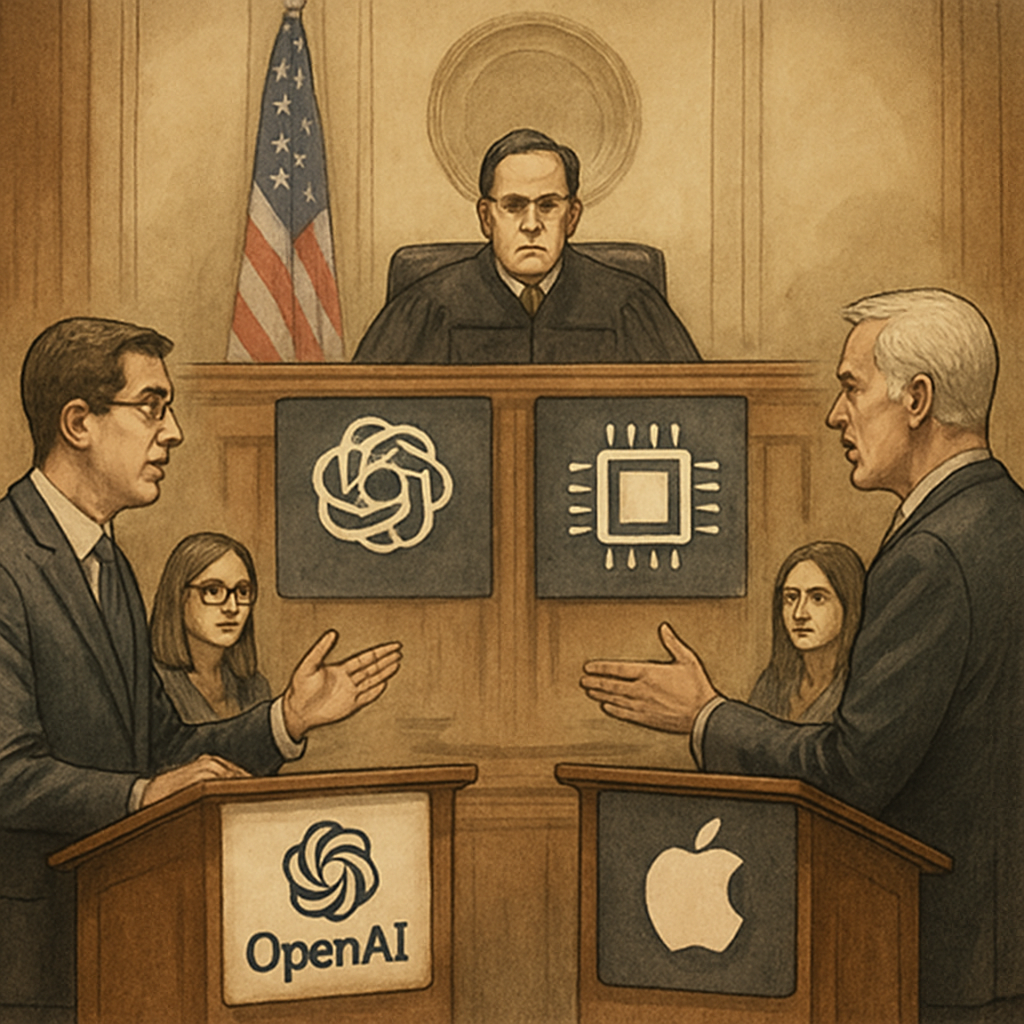
OpenAI has filed a motion to dismiss Apple’s recent trade secrets lawsuit, arguing that Apple’s own security practices undermine its claims. The lawsuit, initiated by Apple in July 2026, accuses OpenAI of orchestrating a scheme to obtain confidential hardware information through former Apple engineers.
In its defense, OpenAI highlights several points:
Apple’s Security Practices Under Scrutiny
OpenAI contends that Apple’s internal security measures are insufficient to support its trade secrets claims. The AI company points out that Apple permitted employees to use personal iCloud accounts for work-related tasks and failed to revoke access promptly after their departure. This oversight allegedly led to situations where former employees, like Chang Liu, remained connected to Apple’s systems post-employment. OpenAI submitted text messages indicating that an Apple manager continued to access Liu’s personal iCloud account to transfer files and sought his assistance on technical matters related to Apple projects.
Questioning the Definition of ‘Trade Secrets’
OpenAI argues that Apple has not clearly defined the specific trade secrets purportedly misappropriated. Instead, Apple refers to broad categories such as component manufacturing, product testing, vendor and supplier relationships, and distribution channels. OpenAI suggests that without precise identification, these claims lack merit.
Allegations of Competitive Motives
OpenAI posits that Apple’s lawsuit is a strategic move to impede competition in the AI-powered hardware sector. The motion states that OpenAI has no interest in Apple’s trade secrets, emphasizing that the company is developing products distinct from Apple’s offerings. OpenAI asserts that its focus is on attracting top talent, many of whom have chosen to leave Apple for the innovative opportunities at OpenAI. The filing suggests that Apple’s legal action aims to compensate for its challenges in talent retention and integrating AI into its products.
This legal battle underscores the intensifying competition in the AI and hardware industries. As companies vie for top talent and technological advancements, the outcome of this case could set significant precedents for how trade secrets are defined and protected, especially in environments where employee mobility is high, and security practices are under scrutiny.