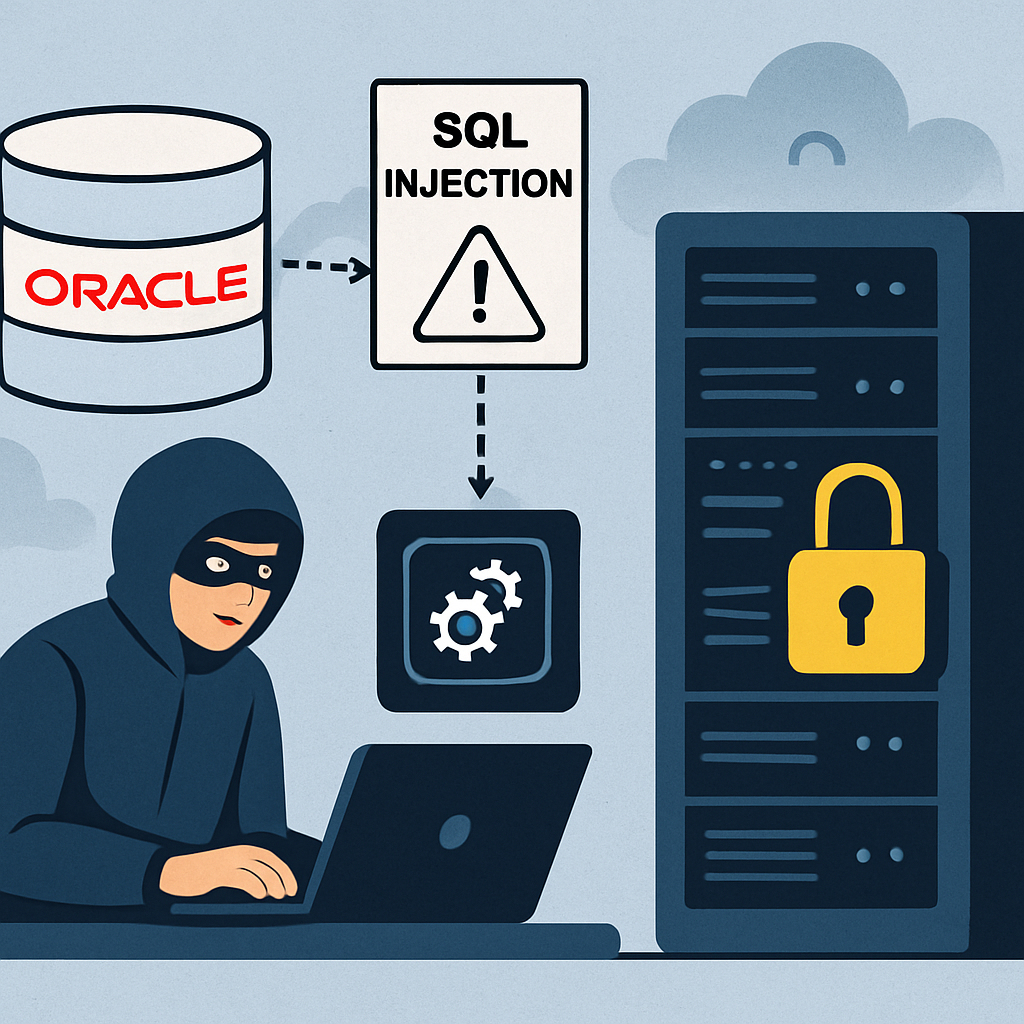
In a recent security incident, attackers exploited a SQL injection vulnerability in a public-facing Java and Tomcat application connected to an Oracle database, leading to the deployment of a remote-control toolkit within the database itself. This breach underscores the critical need for robust input validation and database security measures.
The attackers targeted an autocomplete search feature that lacked proper input validation, allowing them to execute arbitrary database commands. By leveraging Oracle’s embedded Java capabilities, they created Java source objects directly within the database. These objects were compiled as stored schema entities, effectively transforming the database into a launchpad for further malicious activities.
Security researchers identified this activity after detecting attempts to extract credential data from a server hosting the Oracle database. The investigation revealed copies of Windows SAM, SECURITY, and SYSTEM registry hives—sensitive files that can be used to recover password hashes and escalate access privileges.
Notably, the malicious code was stored and compiled within the Oracle database, rather than being placed on disk as a typical malware file. This method can evade detection by endpoint-focused monitoring tools, as the code resides within the database until execution.
The deployed toolkit, named ‘khunt,’ included components for executing Windows commands, collecting Oracle usernames and passwords, browsing files, verifying the toolkit’s operational status, and unpacking files. This database-resident approach provided the attackers with tools to explore the server without relying on conspicuous malicious executables.
One component of the toolkit opened a command shell and executed a command to identify the current user, confirming that the attacker had obtained SYSTEM-level permissions. This escalation from database access to operating-system control highlights the potential severity of such vulnerabilities.
The initial access was achieved through SQL injection, a common web application vulnerability, rather than exploiting a newly discovered software flaw. This emphasizes the importance of secure application design and stringent database permissions, in addition to regular patching.
To mitigate such risks, organizations should thoroughly review all public-facing forms and search fields that interact with databases, especially legacy features that may be overlooked during security assessments. Implementing input sanitization and parameterized queries can prevent user-supplied text from being interpreted as executable SQL commands. Additionally, database accounts should be granted the minimum necessary privileges to perform their functions, reducing potential damage if an injection vulnerability is exploited.
Security teams should also extend their monitoring beyond traditional file scans when assessing Oracle servers. Examining database objects for unexpected Java classes, reviewing PL/SQL wrappers, and analyzing web and SQL logs for unusual commands can uncover activities that standard endpoint tools might miss. Staying current with security updates for both database systems and supporting operating systems is crucial in maintaining a robust defense against such threats.
This incident serves as a stark reminder of the importance of comprehensive security practices, including secure coding, regular vulnerability assessments, and least-privilege access controls. As attackers continue to develop sophisticated methods to exploit common vulnerabilities, organizations must remain vigilant and proactive in their security efforts.