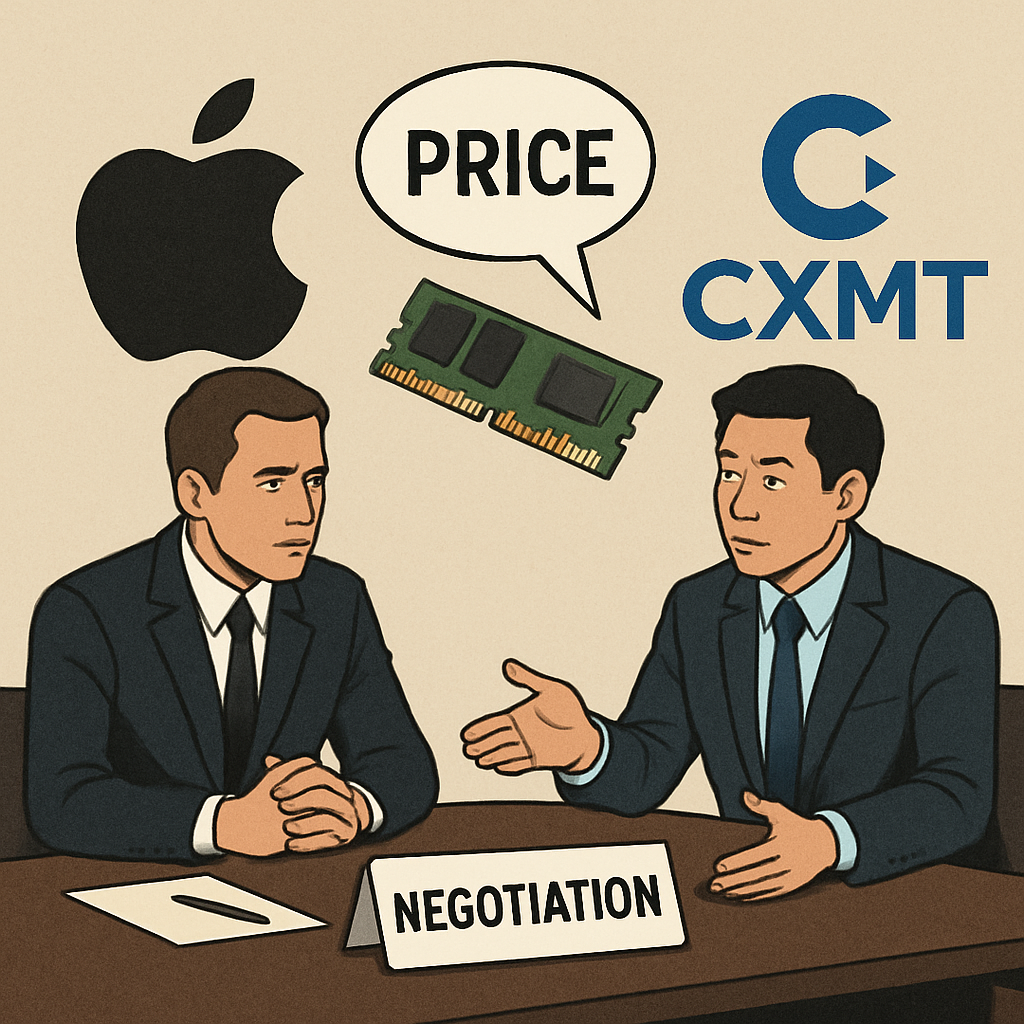
Apple’s efforts to mitigate escalating memory costs by sourcing RAM from China’s ChangXin Memory Technologies (CXMT) have encountered a significant setback. CXMT has reportedly declined Apple’s request for discounted pricing, insisting on compensation equivalent to that received by established suppliers like Samsung.
In response to a global memory shortage and rising prices, Apple had been exploring alternative suppliers to alleviate cost pressures. This initiative included testing DRAM chips from CXMT, a Chinese firm previously blacklisted by the U.S. government due to alleged ties to the People’s Liberation Army. Despite the blacklisting, Apple sought permission from the Trump administration to procure memory from CXMT, aiming to stabilize its supply chain and manage expenses.
However, CXMT’s refusal to offer lower prices complicates Apple’s strategy. The Chinese supplier’s stance suggests a reluctance to undercut market rates, potentially due to its own production costs and market positioning. This development underscores the challenges Apple faces in diversifying its supplier base amid geopolitical tensions and supply chain disruptions.
Apple’s pursuit of alternative memory sources has not been without controversy. U.S. lawmakers and domestic memory manufacturers have expressed concerns over national security implications and the potential impact on the U.S. tech industry. For instance, Micron Technology, a leading American memory producer, has lobbied against Apple’s plans to engage with blacklisted Chinese suppliers, arguing that such moves could destabilize the domestic tech sector.
Moreover, the global memory market is experiencing unprecedented demand, driven in part by the rapid expansion of artificial intelligence applications. This surge has led to increased competition for memory components, further complicating procurement strategies for companies like Apple. The situation is exacerbated by allegations of price-fixing among major memory suppliers, including Samsung, SK Hynix, and Micron, which are currently facing legal scrutiny over coordinated production cuts that have driven up prices.
In light of these challenges, Apple may need to reassess its supply chain strategies. Strengthening relationships with existing suppliers, investing in long-term contracts, or exploring partnerships with emerging memory manufacturers could be potential avenues. Additionally, Apple’s significant purchasing power might enable it to negotiate more favorable terms, albeit within the constraints of current market dynamics.
This development highlights the complexities of global supply chains, especially in the tech industry, where geopolitical factors, market demand, and supplier relationships intertwine. As Apple navigates these challenges, its approach to supplier diversification and cost management will be closely watched by industry observers and stakeholders.