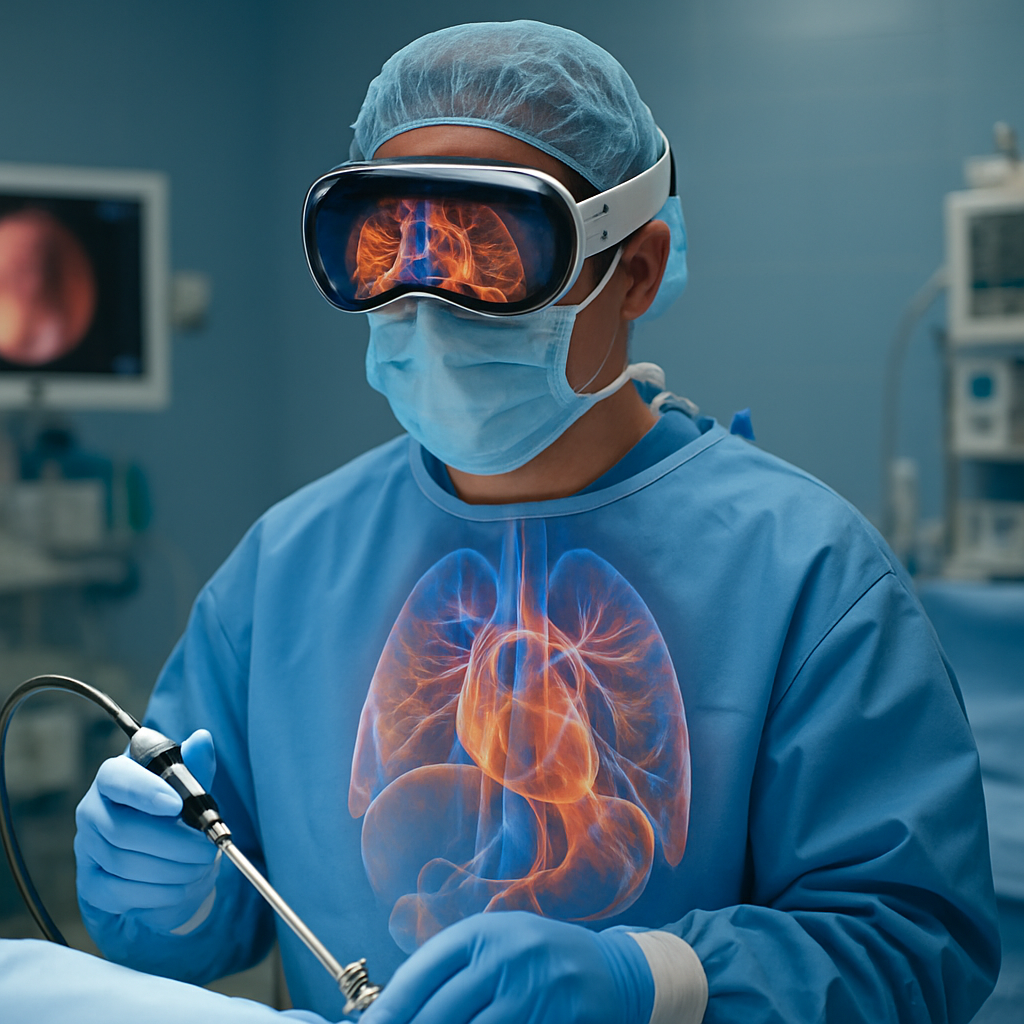
Apple’s Vision Pro headset, while acknowledged as a niche product, has demonstrated significant value in specialized fields, particularly in the medical sector. Its application in surgical procedures has led to notable improvements in both efficiency and ergonomics.
Endoscopic surgeries, which involve minimal incisions and the use of tiny instruments guided by camera feeds, traditionally rely on external monitors for visualization. However, some surgeons have adopted the Vision Pro headset to replace these monitors. This shift has been observed in various surgical disciplines, including neurosurgery and orthopedic procedures.
For instance, a renowned neurosurgeon utilized the Vision Pro during multiple spine reconstruction surgeries, highlighting its potential to enhance surgical precision. Additionally, the headset has been employed by surgical team members, such as senior scrub nurses, to anticipate and prepare the necessary instruments, thereby reducing the likelihood of human error.
Beyond direct surgical applications, the Vision Pro has been instrumental in preoperative planning. Surgeons have used the device to visualize and strategize complex procedures, including those involving surgical robots, enhancing overall surgical outcomes.
From a financial perspective, the Vision Pro’s price point of $3,500 is relatively economical compared to traditional operating room monitors, which can cost upwards of $20,000 each. This cost-effectiveness, combined with its functional benefits, makes the Vision Pro a valuable asset in surgical settings.
A peer-reviewed study conducted by UC San Diego, with contributions from analyst Horace Dediu, compared surgeries performed using traditional monitors to those utilizing the Vision Pro headset. The findings revealed several advantages:
- A 19% reduction in operative times.
- 100% functional success with no intraoperative or postoperative complications.
- Significantly lower surgeon-reported workload, with all participating surgeons expressing a preference for the Vision Pro experience.
- Improved ergonomics, allowing surgeons to maintain a natural, forward-facing posture during procedures.
While the Vision Pro may not have achieved widespread consumer adoption, its impact in specialized fields like surgery underscores its potential to revolutionize professional practices. This case exemplifies how targeted technological applications can lead to substantial improvements in efficiency, safety, and cost-effectiveness within niche markets.