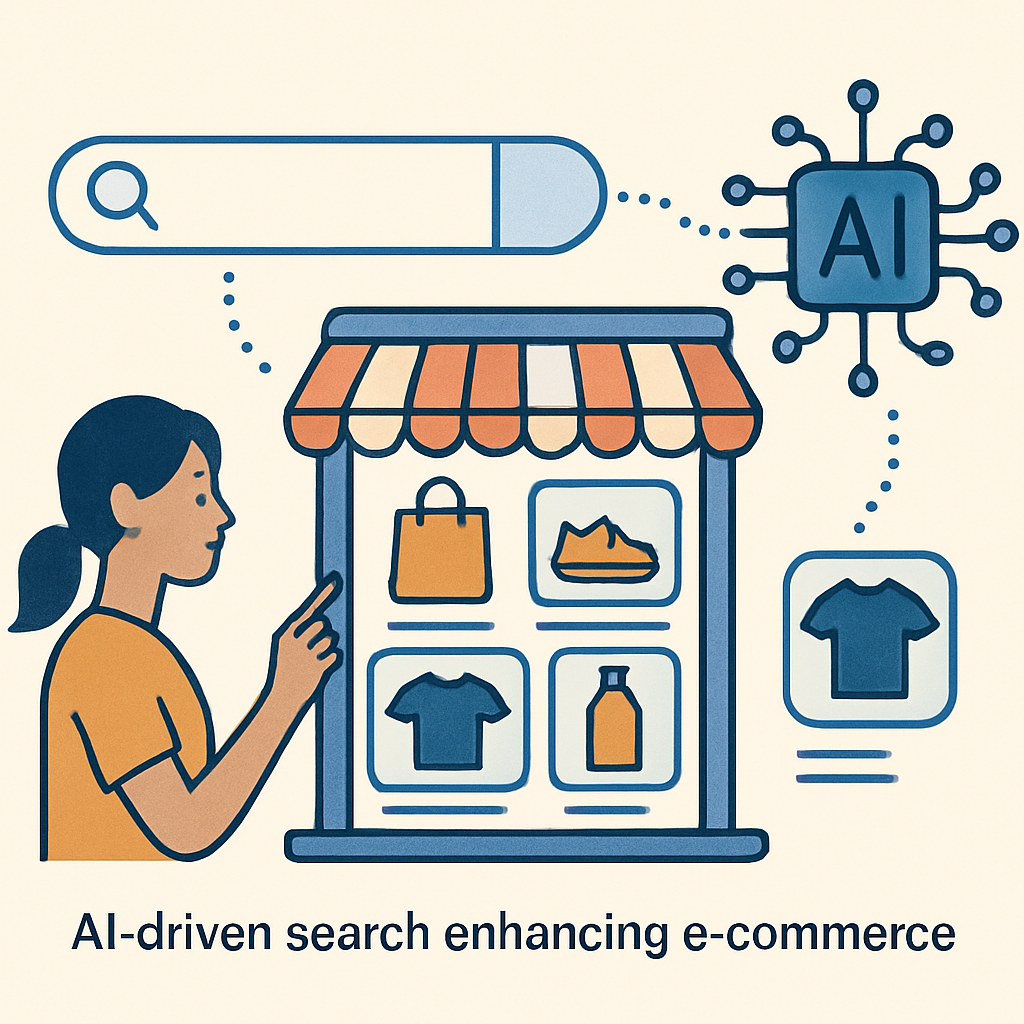
Shopify, the leading e-commerce platform, has observed a significant uptick in traffic and sales attributed to AI-driven search, without diminishing the role of traditional search engines like Google. During its second-quarter earnings call, Shopify President Harley Finkelstein highlighted that AI functions as a complement to conventional search methods, particularly benefiting smaller merchants that constitute the majority of Shopify’s clientele.
The company reported a threefold increase in AI-driven traffic and orders year-over-year in the second quarter. Notably, this surge did not come at the expense of traditional search traffic. Finkelstein stated that traditional search sessions have increased by 1.3 times over the past two years, maintaining approximately one-third of all storefront sessions.
Shopify’s financial performance reflects this positive trend, with a 36% rise in revenue to $3.6 billion from the previous year, surpassing Wall Street’s forecast of $3.4 billion. Gross operating profit also rose by 31% to $1.71 billion, exceeding analysts’ expectations of $1.63 billion.
The effectiveness of AI search lies in its ability to process complex queries by understanding specific buyer intents and constraints. Unlike traditional search engines that rank results based on keyword popularity, AI agents analyze structured data to match products with the buyer’s precise needs. For instance, when a buyer seeks a car seat that fits three across a sedan, an AI agent considers dimensions, vehicle type, and quantity to find the most suitable product, rather than focusing solely on the keyword ‘car seat.’
This nuanced approach leads to more direct shopping experiences. Finkelstein noted that half of all AI-referred sessions land directly on a product description page, which is 2.5 times more than what is observed with traditional search. Additionally, 75% of AI-attributed purchases in the second quarter occurred outside the top 100 categories, indicating that AI search is effectively driving sales across a diverse range of products.
Shopify is also enhancing its platform by integrating with various AI tools and agents, including Claude, ChatGPT, Perplexity, Manus, Replit, and Vercel. This integration allows merchants to build and customize their stores using AI, further leveraging the benefits of AI-driven search.
The integration of AI search into e-commerce platforms like Shopify signifies a transformative shift in online shopping. By understanding and responding to complex buyer intents, AI enhances the shopping experience, leading to increased conversions and sales. This development underscores the importance for merchants to adapt to AI technologies to remain competitive in the evolving digital marketplace.