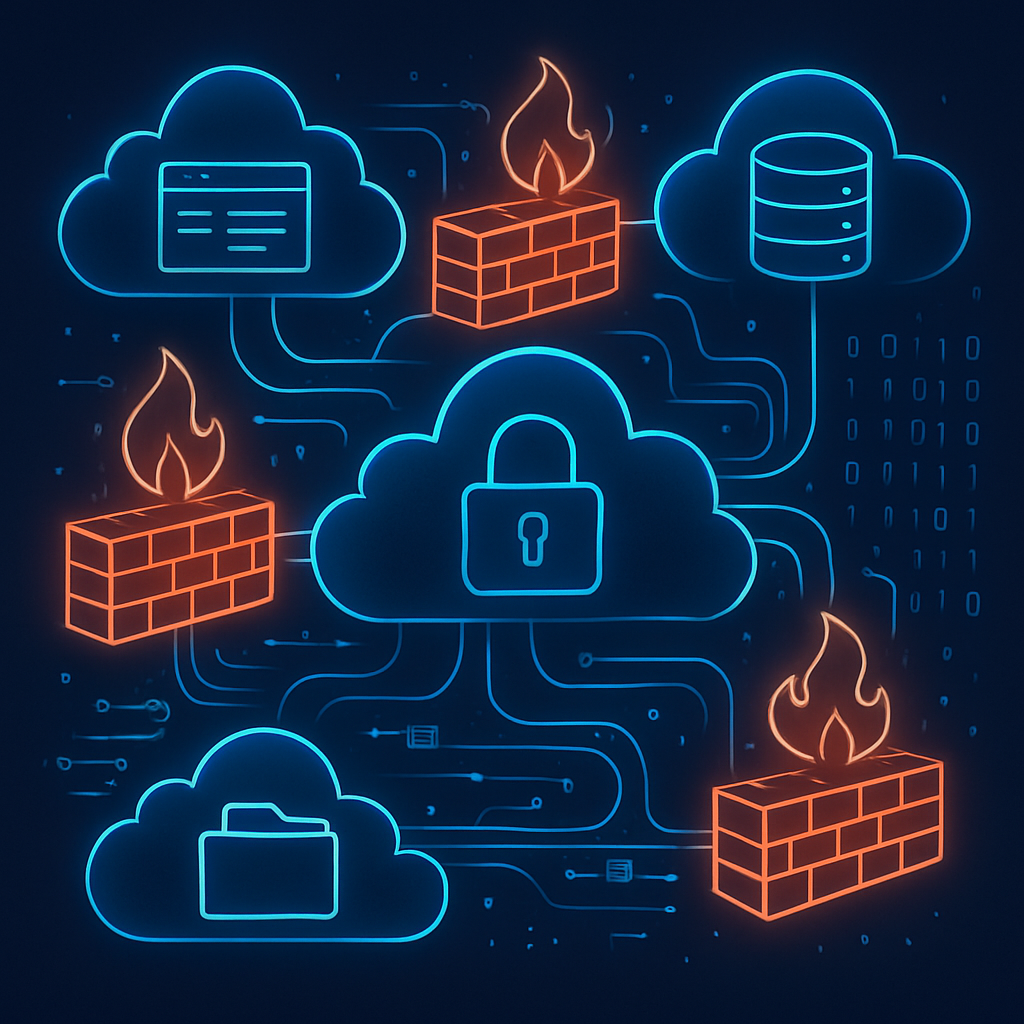
As organizations increasingly migrate workloads to the cloud, traditional data center firewalls often fall short in providing comprehensive protection. Cloud firewalls have emerged as essential tools, inspecting and controlling traffic to, from, and between cloud workloads, including VPC-to-VPC, workload-to-internet, and cloud-to-on-premises communications.
Palo Alto Networks Cloud NGFW
Palo Alto Networks’ Cloud NGFW offers managed next-generation firewall services with deep inspection capabilities. Integrated with native cloud constructs like AWS Gateway Load Balancer and Azure Virtual WAN, it provides unified policy management through Panorama/Strata. This service delivers advanced threat prevention without the need for organizations to manage firewall infrastructure.
Fortinet
Fortinet’s FortiGate-VM operates across major cloud platforms, available via Bring Your Own License (BYOL) or hourly Pay-As-You-Go (PAYG) models. The FortiGate Cloud-Native Firewall (CNF) offers a managed service on AWS, while FortiManager ensures unified policy management across both cloud and on-premises environments. This approach delivers consistent security policies and cost-effective performance.
Check Point CloudGuard
Check Point’s CloudGuard provides robust multi-cloud threat prevention with a tested 100% block rate. It integrates seamlessly with various cloud platforms, offering centralized management and automated policy enforcement. CloudGuard’s capabilities include advanced threat prevention, compliance monitoring, and real-time visibility into cloud assets.
Cisco
Cisco’s cloud firewall solutions leverage Talos threat intelligence and the Multicloud Defense platform to secure multi-cloud environments. These solutions offer comprehensive protection, integrating with existing Cisco infrastructures to provide consistent security policies and streamlined management across diverse cloud deployments.
AWS Network Firewall
AWS Network Firewall is a managed service designed for AWS-native environments. It supports Suricata-compatible rules and integrates with Infrastructure as Code (IaC) tools, enabling automated deployment and management. This service provides scalable protection for AWS workloads, ensuring compliance with organizational security policies.
Microsoft Azure Firewall
Microsoft Azure Firewall is a managed, cloud-based network security service that protects Azure Virtual Network resources. It offers high availability and scalability, with built-in threat intelligence and real-time monitoring. Azure Firewall’s usage-based pricing model allows organizations to scale security measures in line with their needs.
Aviatrix
Aviatrix’s Distributed Cloud Firewall integrates security directly into the cloud network fabric, providing embedded enforcement across multi-cloud environments. This approach ensures consistent security policies and simplifies management, offering centralized visibility and control over cloud traffic.
Sophos
Sophos Central offers cloud firewall solutions tailored for small and medium-sized businesses (SMBs) and organizations utilizing the Sophos security stack. It provides centralized management, advanced threat protection, and seamless integration with other Sophos products, delivering a comprehensive security solution.
Zscaler
Zscaler’s cloud-native security platform enables secure, fast access to internet, SaaS, and private applications for users anywhere, on any device. Built on zero trust principles, Zscaler verifies user identity and device posture, enforces least-privileged access, and inspects all traffic, including SSL, in real time to prevent threats, data loss, and lateral movement.
Valtix (Cisco)
Valtix, now part of Cisco, offers the Multicloud Defense control plane, providing a cloud-agnostic policy layer for managing security across multiple cloud platforms. This solution enables organizations to implement consistent security policies, automate deployments, and gain real-time visibility into cloud traffic.
In conclusion, selecting the right cloud firewall solution depends on an organization’s specific needs, including cloud platform preferences, desired inspection depth, and management capabilities. As cloud environments continue to evolve, these solutions play a critical role in safeguarding digital assets against increasingly sophisticated cyber threats.