Apple has recently introduced the Apple Upgrade program, leading to the discontinuation of the iPhone Upgrade Program. While both programs offer pathways to acquire Apple devices through monthly payments, they differ significantly in structure and terms.
Ownership: Leasing vs. Financing
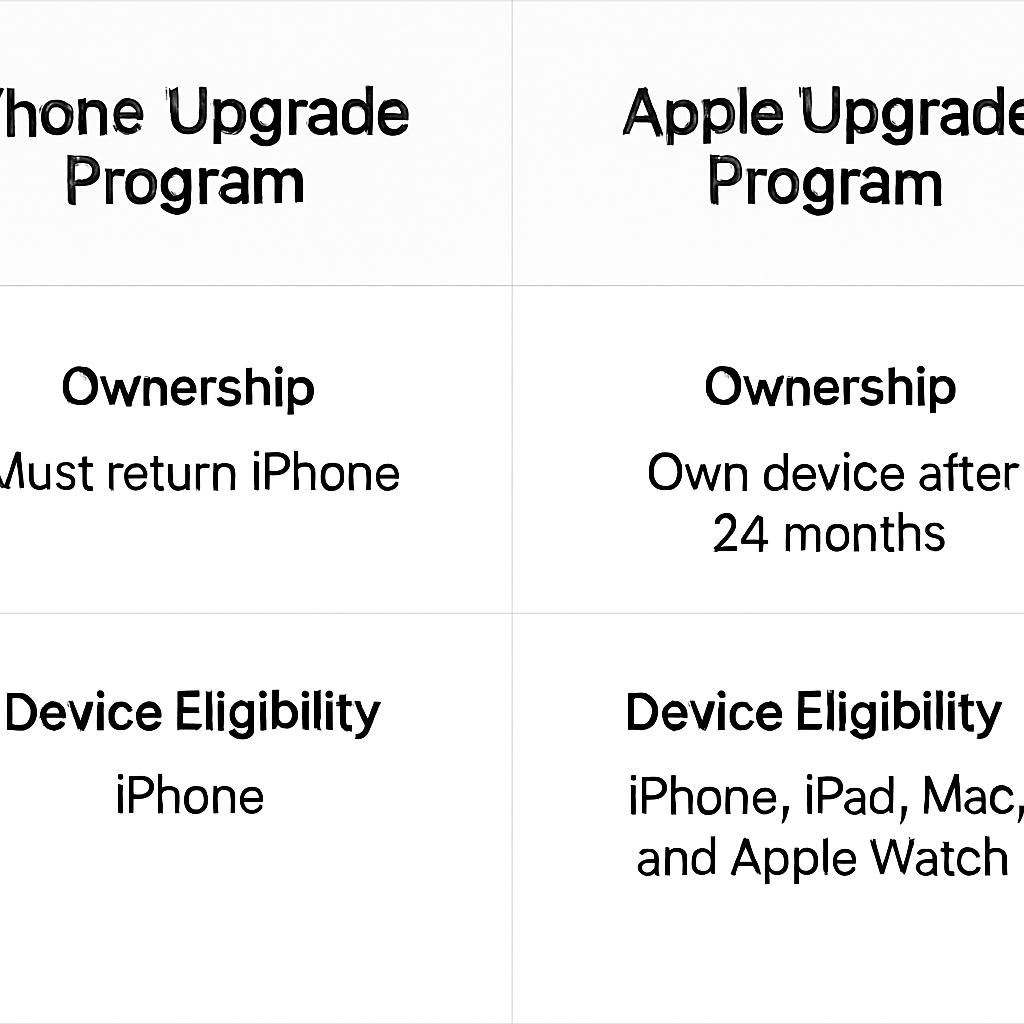
The primary distinction lies in ownership. The iPhone Upgrade Program was a financing plan where customers made monthly payments toward owning the device. After completing the payment term, the device became the customer’s property. In contrast, Apple Upgrade operates on a leasing model. Customers make monthly payments for a set term—either 12 or 24 months—but do not own the device during this period. At the end of the lease, options include returning the device, exchanging it for a new model, or paying a buyout fee to retain ownership.
Monthly Payments and AppleCare Coverage
Apple Upgrade offers lower monthly payments compared to the iPhone Upgrade Program. This reduction is partly because AppleCare coverage is not included by default in Apple Upgrade, whereas it was mandatory in the iPhone Upgrade Program. Customers can opt to add AppleCare to their Apple Upgrade plan, which may be advisable to protect the leased device. Additionally, the lower monthly payments in Apple Upgrade result from not covering the device’s full value during the lease term. To own the device at the end of the lease, customers must pay an additional buyout fee.
Device Eligibility
Another significant difference is the range of devices covered. The iPhone Upgrade Program was exclusive to iPhones. Apple Upgrade, however, extends to a broader array of Apple products, including iPhones, iPads, Macs, and Apple Watches. This expansion allows customers to lease multiple Apple devices under the same program, with separate applications required for each product.
In summary, while both programs facilitate access to Apple’s latest devices through monthly payments, Apple Upgrade’s leasing model introduces different considerations regarding ownership, costs, and device eligibility. Prospective customers should carefully evaluate these factors to determine which program aligns best with their needs and financial preferences.
The shift from a financing to a leasing model reflects a broader trend in consumer electronics toward subscription-based access. This approach can lower upfront costs and provide flexibility but may lead to higher long-term expenses and lack of ownership. Consumers should assess their priorities—whether immediate affordability or eventual ownership—to make informed decisions in this evolving marketplace.