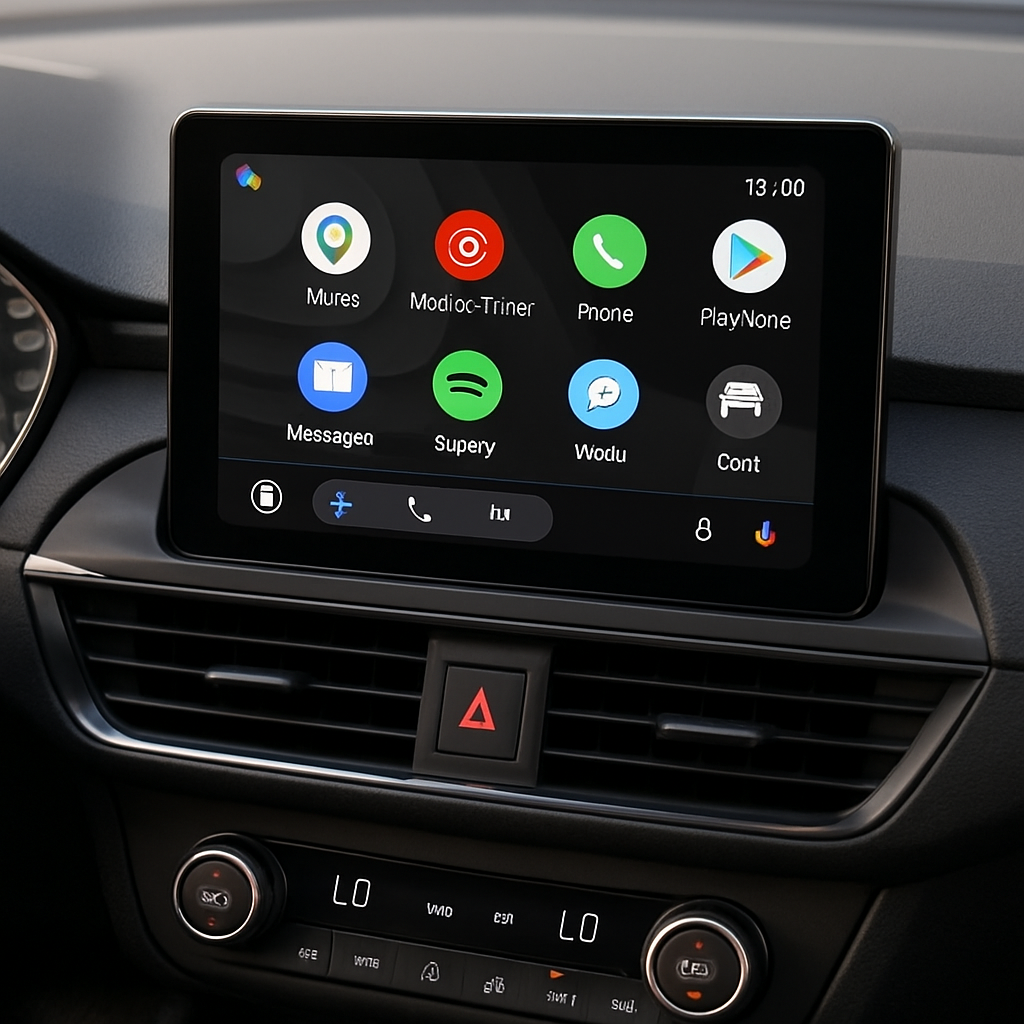
Over the past five years, the integration of Android Automotive into vehicles has offered a novel approach to in-car entertainment. However, despite its innovative features, many users find that Android Auto provides a more seamless and user-friendly experience.
Android Automotive, now rebranded as “Google built-in,” aims to make the vehicle’s infotainment system an extension of the user’s smartphone. While this concept is appealing, it often falls short due to infrequent updates from car manufacturers, inconsistent visual interfaces, and limited integrations. These factors can hinder the overall user experience, making it less intuitive and responsive.
In contrast, Android Auto leverages the processing power and regular updates of the user’s smartphone, ensuring a more dynamic and up-to-date interface. This approach mitigates concerns about hardware obsolescence in vehicles, as the smartphone handles the heavy lifting, leaving the car’s system to function primarily as a display. This setup not only enhances performance but also simplifies the process of keeping the system current.
Another advantage of Android Auto is its straightforward connectivity. Users can easily pair their phones without the need to sign into the car’s system, reducing the risk of personal information being accessible to others who might use the vehicle. This ease of connection and disconnection adds a layer of privacy and convenience that is often lacking in systems like Android Automotive.
Despite its benefits, Android Auto is not without its issues. The rollout of Gemini, for instance, introduced some frustrations among users. Additionally, certain applications, such as WhatsApp, offer limited functionality within the Android Auto interface, potentially causing more distraction than convenience. Improvements in these areas are anticipated, with updates expected to enhance app performance and user experience.
Media applications like YouTube Music also require enhancements to their search functionalities to match the efficiency found on mobile devices. Improved search capabilities would allow users to access their desired content more quickly and safely while driving.
In summary, while Android Automotive presents an ambitious vision for integrated in-car entertainment, Android Auto currently offers a more reliable and user-friendly experience. Its reliance on the smartphone’s capabilities ensures better performance, regular updates, and a more intuitive interface, making it the preferred choice for many drivers.
Looking ahead, the evolution of in-car entertainment systems will likely depend on the ability of platforms like Android Automotive to address current limitations and enhance user experience. Until then, Android Auto remains the superior option for those seeking a seamless and efficient in-car entertainment solution.