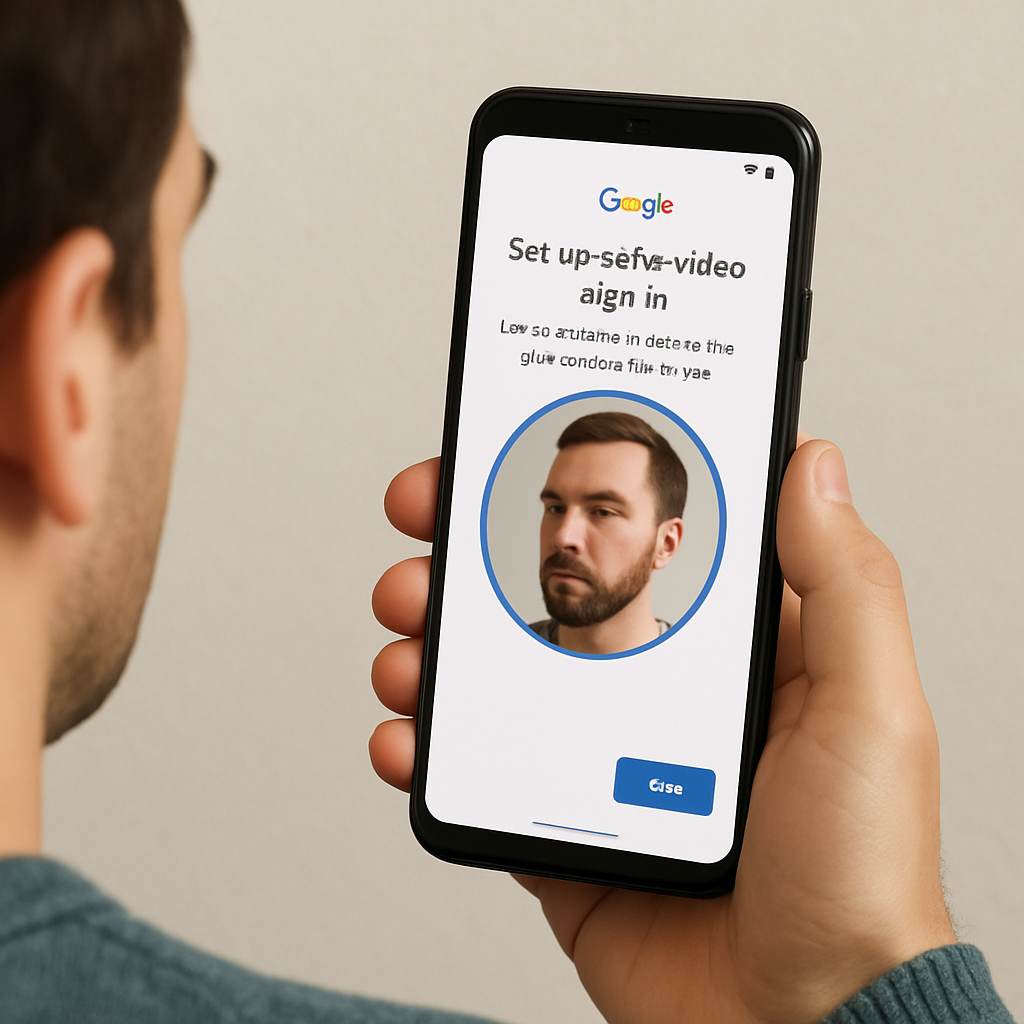
Google has unveiled a new ‘selfie video’ sign-in method for its accounts, providing users with an additional option for account recovery, especially in situations where traditional methods are inaccessible.
To set up this feature, users are guided to look into their device’s camera and perform a series of head movements, capturing their face from multiple angles. This process is compatible with both mobile devices and desktops. For users whose PCs lack cameras, authentication can be completed using their smartphones.
In the event of being locked out of their Google Account, users can record a new selfie video. Google will then compare this video against the previously saved one, requiring simple movements to confirm the video is live and authentic.
To enhance security, Google has implemented multiple layers of protection to prevent fraudulent activities, such as the use of fake photos or deepfake videos. Additionally, the system is designed to detect and respond to suspicious sign-in attempts.
Users have the option to delete their stored selfie video at any time. By default, these videos are used solely for sign-in purposes. However, users can opt-in to allow their data to be used for improving verification methods. Importantly, all selfie videos are encrypted at rest, ensuring they are securely stored even when not in active use.
This selfie video sign-in method is particularly useful for scenarios where users do not have access to their usual phone or computer. It complements existing recovery options like passkeys and recovery contacts. Google recommends setting up multiple recovery methods to ensure seamless access to accounts.
Eligible users can check their account’s eligibility and set up the selfie video feature by visiting g.co/signin-selfie.
Integrating biometric verification methods like selfie videos into account recovery processes reflects a broader trend towards enhancing digital security and user convenience. As cyber threats become more sophisticated, such multi-factor authentication methods provide an added layer of protection, ensuring that users can regain access to their accounts securely and efficiently.