The 2026 FIFA World Cup not only captivated audiences worldwide but also led to significant fluctuations in global internet traffic patterns. These variations were closely linked to match schedules, local kickoff times, and the popularity of specific teams, providing valuable insights into how major live events influence online behavior.
Cloudflare, a leading web performance and security company, analyzed data from its extensive global network, which spans 330 locations. By comparing each minute of tournament traffic to the median of the preceding four weeks, they identified notable deviations in internet usage across different countries. This approach allowed for a relative measurement of activity, accounting for varying baseline internet usage levels.
Key Findings on Internet Traffic Variations
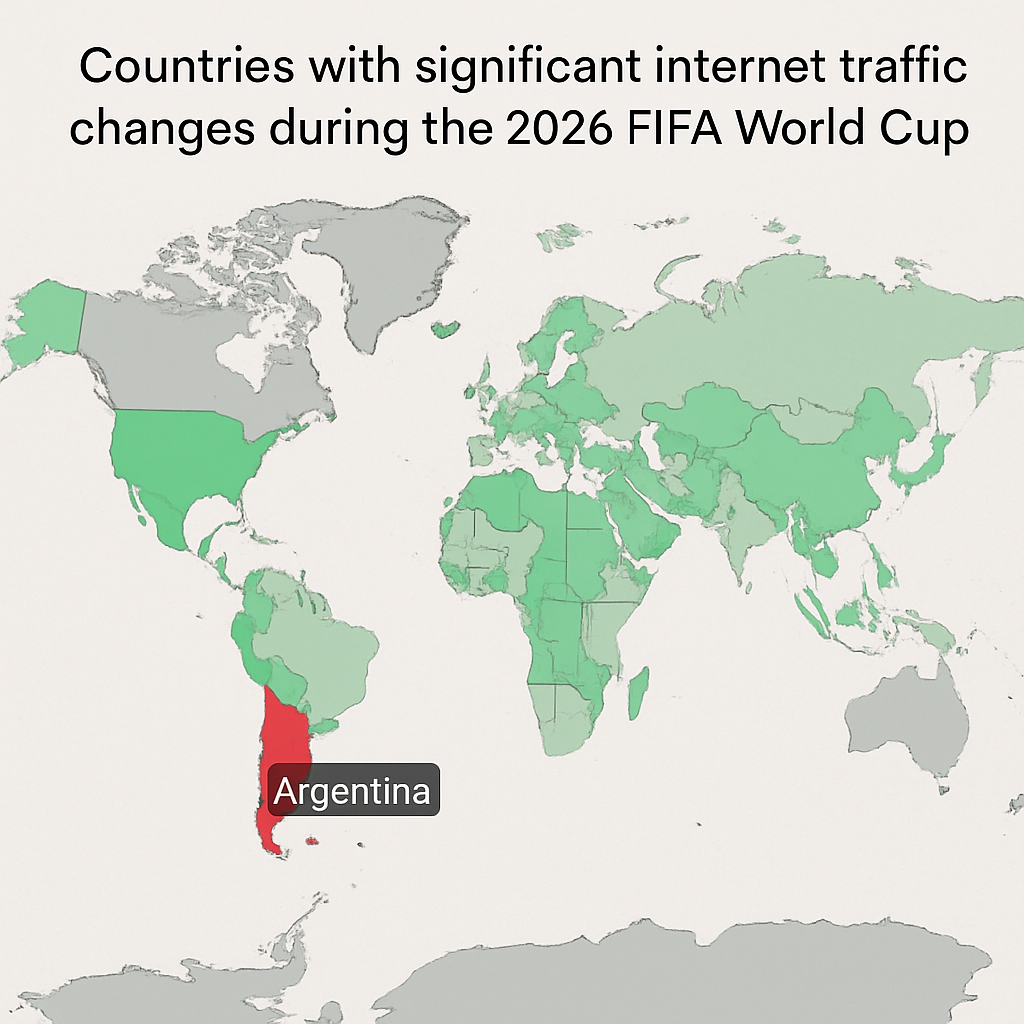
Argentina emerged as the team with the most substantial impact on global internet traffic. Matches involving the Argentine team resulted in a median worldwide traffic deviation of 1.17 times the normal levels. Other teams that significantly influenced internet usage included France, Brazil, Portugal, Morocco, Spain, and Norway. Notably, countries like Haiti and Iraq experienced pronounced changes in traffic patterns when their teams faced more prominent opponents, highlighting the global reach and engagement of the tournament.
The match between Argentina and Switzerland on July 11, a quarterfinal that Argentina won 3-1, had the most significant global impact, with internet traffic deviating approximately 1.26 times from the norm. This was followed by the France versus Spain semifinal, which saw a deviation of 1.21 times. Interestingly, a quarterfinal match, rather than the final, produced the largest worldwide deviation, underscoring the intense interest in specific matchups.
Influence of Local Kickoff Times
Local kickoff times played a crucial role in these traffic variations. Matches scheduled between midnight and 8 a.m. local time often led to traffic surges, as fans stayed awake or woke early to watch the games, sometimes more than doubling typical demand. In contrast, daytime fixtures resulted in smaller changes, as many viewers were already online, while evening matches caused modest increases as regular daily usage declined.
A clear example of this time-zone effect was observed during Brazil’s Round of 32 match against Japan. In Japan, where the game occurred overnight, internet traffic was roughly double its normal level. Conversely, in Brazil, where the match took place during regular waking hours, traffic fell below normal levels. Such differences are crucial for network capacity planning and understanding regional engagement with global events.
These insights underscore the importance of considering live events when analyzing internet traffic patterns. For network operators and cybersecurity professionals, recognizing the impact of such events is vital for capacity planning and distinguishing between legitimate traffic surges and potential cyber threats. The World Cup serves as a prime example of how global events can reshape online behavior, emphasizing the need for adaptive strategies in managing digital infrastructure.