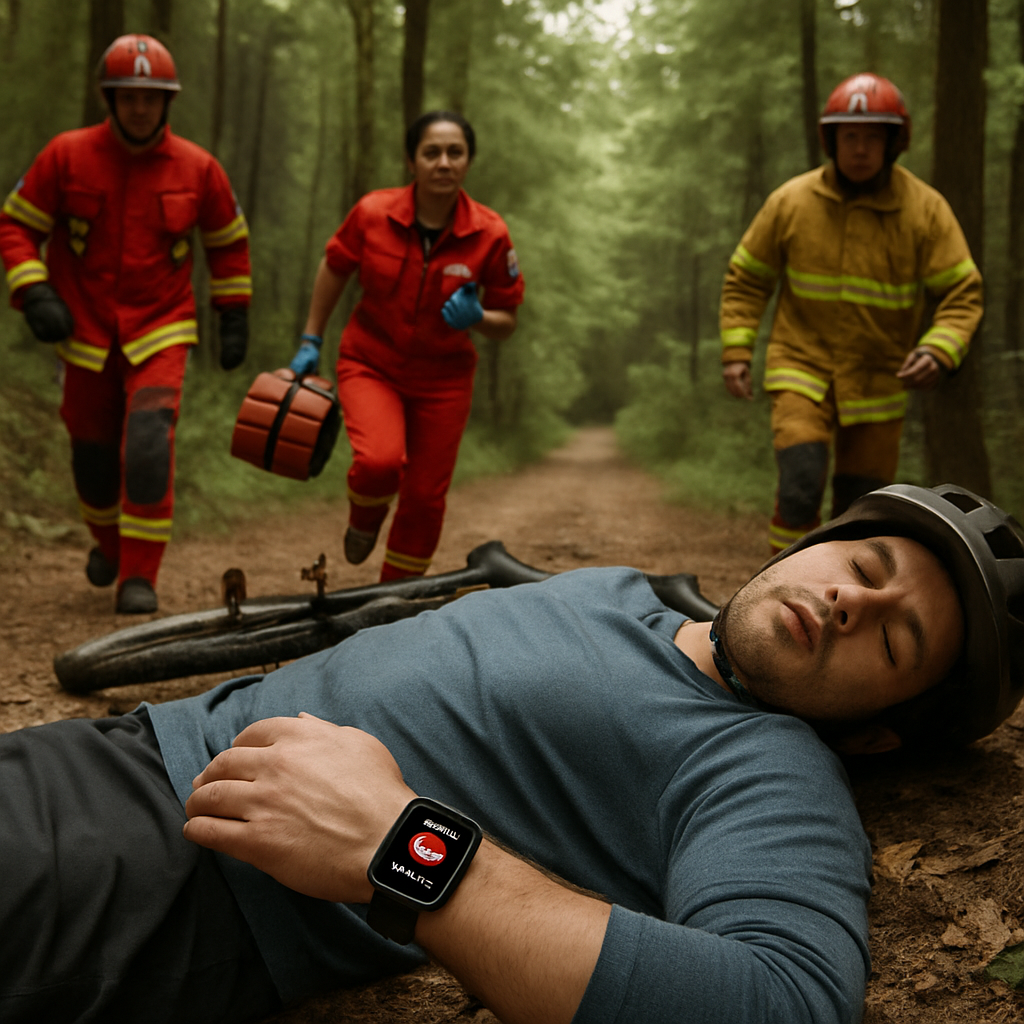
Apple has recently showcased the life-saving capabilities of the Apple Watch’s Emergency SOS feature through a compelling video. The spotlight is on Phil, an avid mountain biker who experienced a severe accident while riding with his two young children.
During the ride, Phil suffered a crash that rendered him unconscious. Fortunately, his Apple Watch detected the hard fall and automatically initiated a call to emergency services. Simultaneously, it sent notifications to his wife, informing her of the incident and his precise location.
As a result of the accident, Phil sustained a broken collarbone and seven fractured ribs. Thanks to the prompt response facilitated by the Apple Watch, emergency personnel were able to locate and assist him swiftly. He was hospitalized for a week and, reflecting on the incident, expressed his gratitude for wearing the device, stating, “Just really glad that I had my Apple Watch on.”
The Apple Watch’s Emergency SOS feature is designed to detect significant falls and vehicle crashes. When such events occur, the watch automatically contacts local emergency services and alerts the user’s designated emergency contacts. This functionality is particularly crucial in situations where the wearer is incapacitated or unable to seek help independently.
Since its introduction, the Emergency SOS feature has been credited with numerous life-saving interventions. For instance, in 2025, Apple highlighted the rescue of an Australian man who was swept out to sea. Utilizing his Apple Watch, he was able to call for help and guide rescuers to his location, ultimately being saved by a helicopter team.
These real-life accounts underscore the Apple Watch’s role not just as a fitness and communication tool, but as a vital safety device. Its ability to detect emergencies and facilitate rapid responses can make a significant difference in critical situations.
As wearable technology continues to evolve, the integration of health and safety features becomes increasingly important. The Apple Watch’s Emergency SOS function exemplifies how technology can be harnessed to enhance personal safety, providing users and their families with peace of mind during both everyday activities and adventurous pursuits.