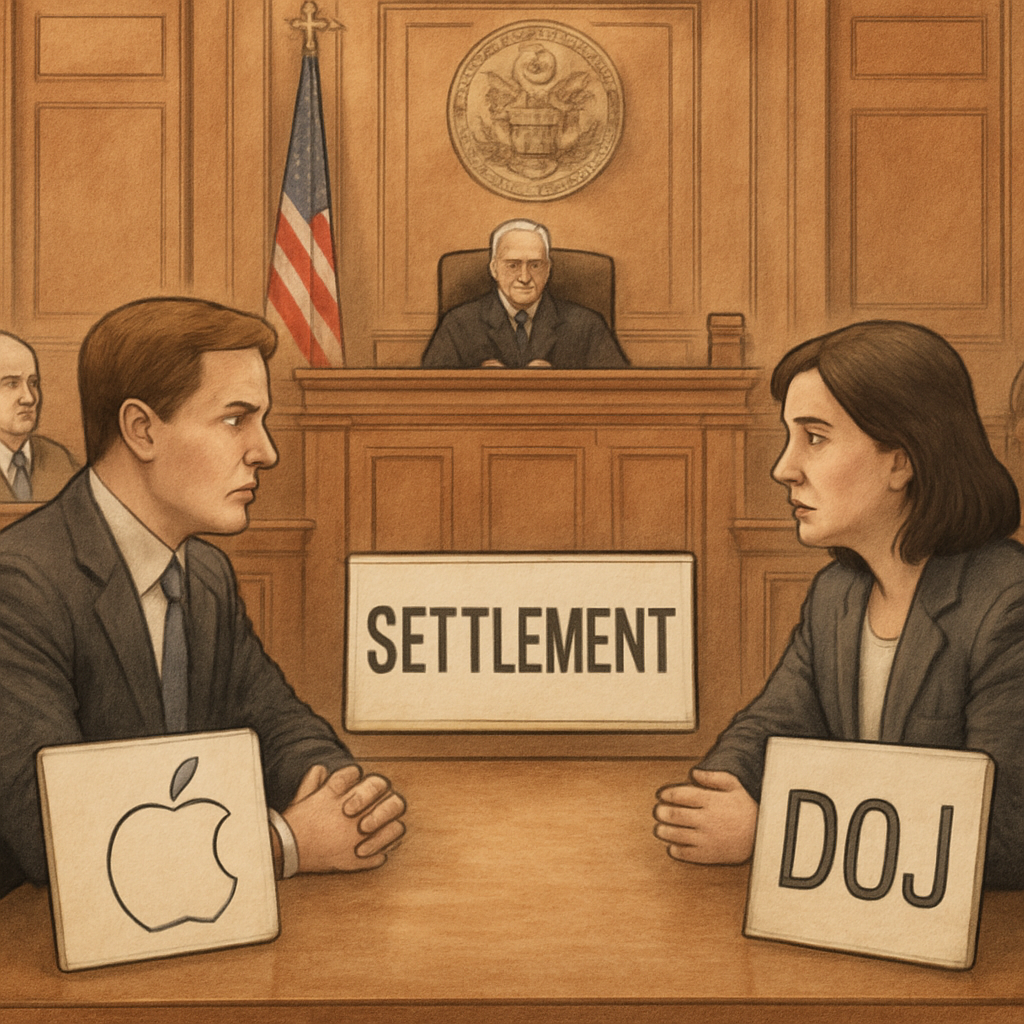
Apple and the U.S. Department of Justice (DOJ) are reportedly engaged in preliminary discussions to settle the antitrust lawsuit filed against the tech giant in March 2024. This lawsuit, initiated by the DOJ alongside 16 state attorneys general, alleges that Apple has maintained an illegal monopoly over the smartphone market by imposing restrictive practices that hinder competition.
The lawsuit accuses Apple of several anti-competitive behaviors, including blocking “super apps” that host mini-applications within them, suppressing mobile cloud streaming services, limiting cross-platform messaging apps, restricting third-party digital wallets, and constraining competition in the smartwatch market. These practices are said to have harmed competitors, software developers, and consumers by stifling innovation and maintaining high prices.
In June 2025, Apple’s attempt to dismiss the case was denied by a federal judge, allowing the lawsuit to proceed. Since then, both parties have been involved in extensive legal proceedings, including disputes over discovery obligations. In May 2026, Apple accused the DOJ and 14 federal agencies of attempting to avoid their discovery responsibilities, emphasizing the need for relevant materials from these agencies to build its defense.
Despite these contentious exchanges, recent reports indicate that Apple has made multiple settlement offers to the DOJ this year. While these discussions are active, there is no guarantee that they will result in an agreement. Notably, no trial date has been set for the case, leaving room for a potential resolution outside the courtroom.
Historically, the DOJ has pursued settlements in antitrust cases to expedite relief for consumers and reduce litigation costs. This approach aligns with the current discussions between Apple and the DOJ, suggesting a mutual interest in resolving the dispute efficiently.
Apple has addressed some of the DOJ’s concerns by implementing changes such as introducing a mini-apps program for developers, opening its Messages app to the RCS messaging system led by Alphabet Inc., permitting cloud-streaming apps, and allowing third-party apps access to the iPhone’s payment chip. These actions may influence the settlement discussions by demonstrating Apple’s willingness to adapt its practices.
As these negotiations unfold, the outcome could have significant implications for the tech industry, particularly concerning how major companies manage their ecosystems and interact with competitors. A settlement may lead to more open platforms and increased competition, benefiting consumers through greater choice and innovation. However, the specifics of any agreement will determine the extent of these changes and their impact on the market.