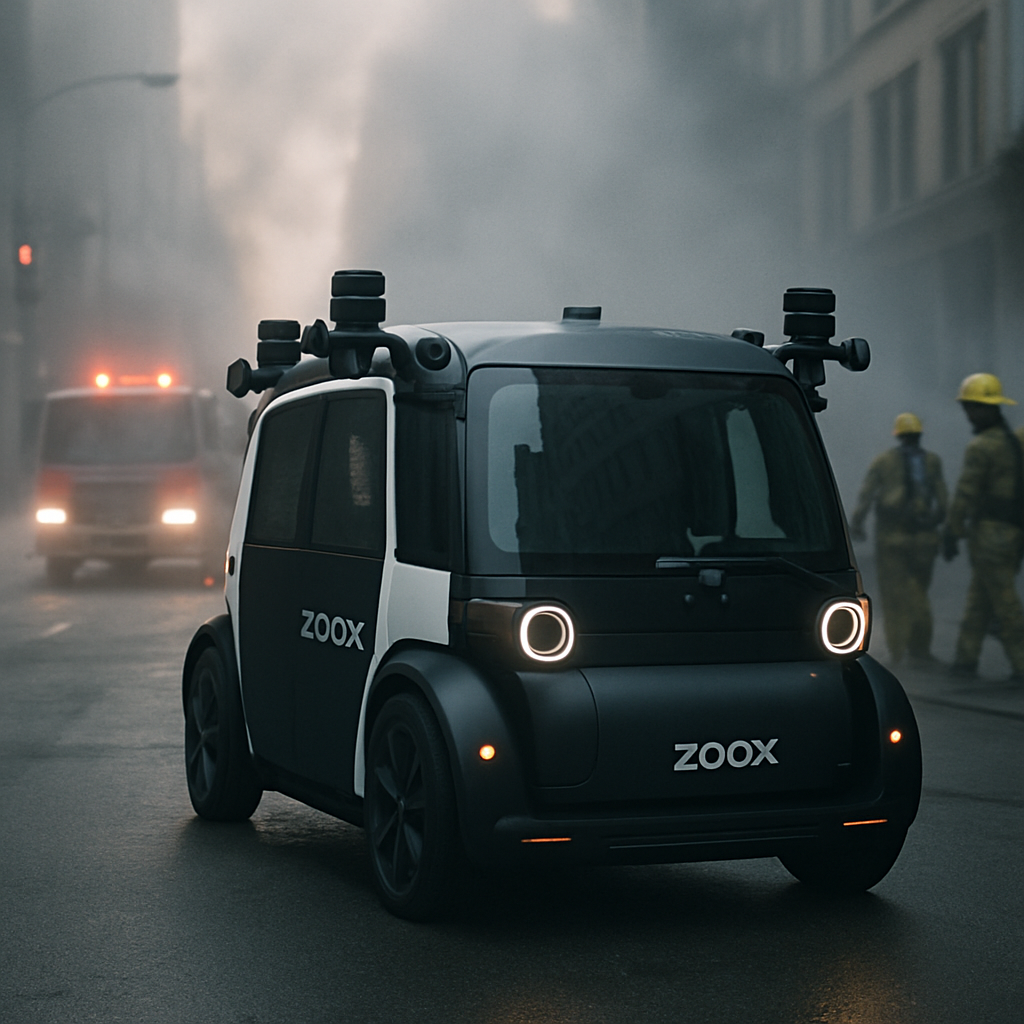
Amazon-owned autonomous vehicle company Zoox has initiated a software recall following an incident in June where one of its robotaxis encountered difficulties navigating through a smoke-filled emergency scene. The company has deployed a software update to its fleet of 105 vehicles to enhance their ability to detect and respond to heavy smoke in certain situations.
During the June 20 incident, a Zoox robotaxi, operating without passengers, encountered dense smoke obscuring an active fire scene that lacked traffic cones. The vehicle executed a hard brake while attempting to steer away before coming to a stop. A remote operator then guided the vehicle in reverse, allowing first responders to place traffic cones and manage the scene effectively. Zoox reported no injuries associated with this event.
This recall aligns with recent directives from the National Highway Traffic Safety Administration (NHTSA). On July 8, NHTSA Administrator Jonathan Morrison issued a letter to autonomous vehicle developers, emphasizing the importance of ensuring that self-driving systems can detect and appropriately respond to emergency situations. Morrison highlighted that emergency scenes are common occurrences and that the inability to handle such scenarios indicates a significant functional deficiency.
Zoox’s proactive approach to addressing this issue reflects its commitment to safety and regulatory compliance. The company has been expanding its testing operations, offering free rides in Las Vegas and San Francisco, as it prepares for a commercial launch. This forthcoming service is contingent upon receiving exemptions from certain Federal Motor Vehicle Safety Standards, given that Zoox’s robotaxis are designed without traditional controls like steering wheels and pedals.
In the broader context of autonomous vehicle development, this recall underscores the challenges that self-driving technology faces in handling complex and unpredictable real-world scenarios. Ensuring that autonomous systems can effectively navigate emergency situations is crucial for gaining public trust and achieving widespread adoption. As the industry progresses, continuous refinement of these systems will be essential to address such challenges and enhance overall safety.