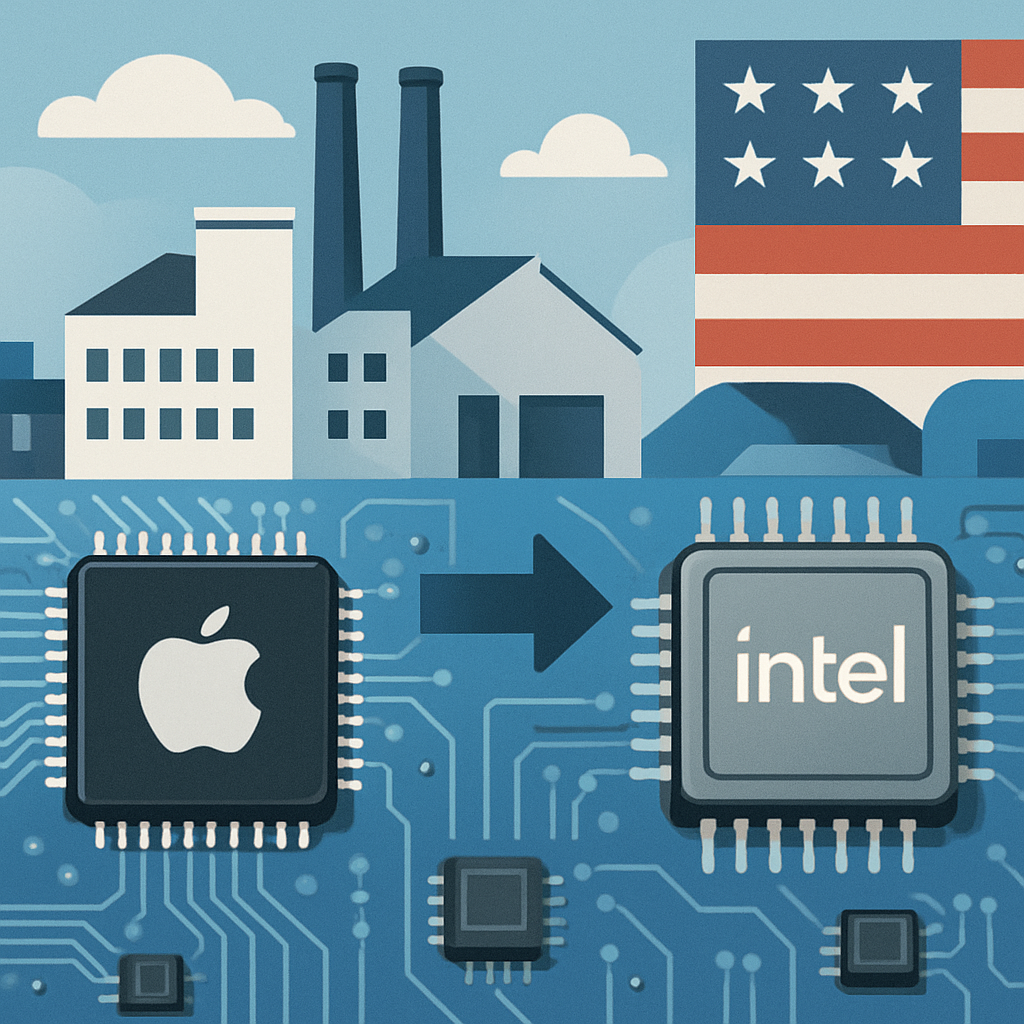
In August 2025, the U.S. administration announced a 100% tariff on imported semiconductors, aiming to bolster domestic manufacturing. Companies investing in U.S. production were offered exemptions from these tariffs. Apple, facing potential cost increases, committed to a substantial investment in U.S. manufacturing, securing an exemption from the impending tariffs.
Recent developments suggest that Apple’s exemption may be tied to a collaboration with Intel. Reports indicate that Apple has agreed to have Intel manufacture some of its chips within the United States. This partnership aligns with the administration’s objectives to enhance domestic semiconductor production and may have influenced the decision to grant Apple a tariff exemption.
While neither Apple nor Intel has publicly confirmed the specifics of this arrangement, the move reflects a strategic effort by Apple to mitigate the impact of tariffs and strengthen its supply chain resilience. By partnering with Intel, Apple not only supports U.S. manufacturing but also diversifies its chip production sources, potentially reducing reliance on overseas suppliers.
This development underscores the broader trend of tech companies reevaluating their supply chains in response to geopolitical pressures and trade policies. As the semiconductor industry continues to evolve, collaborations like that between Apple and Intel may become more common, highlighting the importance of strategic partnerships in navigating complex global trade environments.