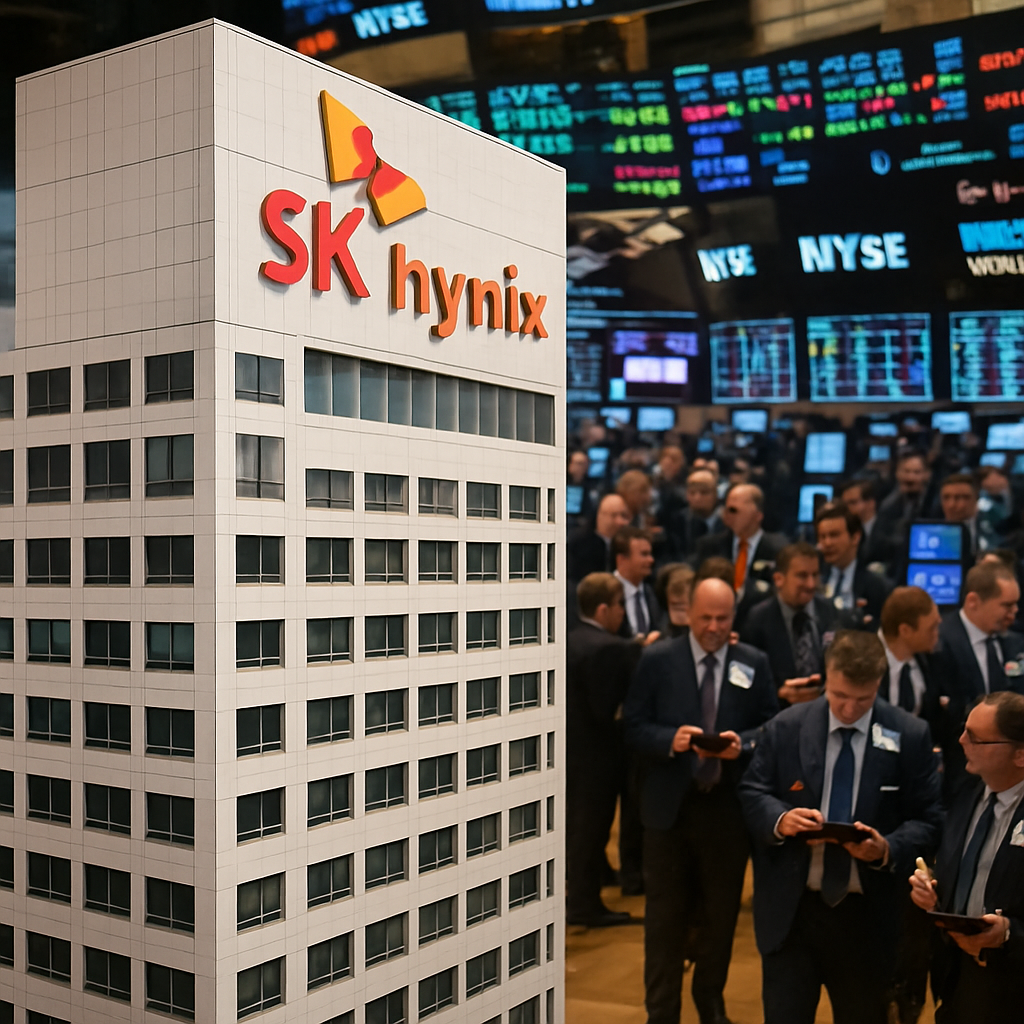
South Korean memory chip manufacturer SK Hynix has achieved a significant milestone by raising $26.5 billion through its initial public offering (IPO) in the United States. This event marks the largest-ever U.S. debut by a non-American company, surpassing the previous record set by Alibaba’s $25 billion IPO in 2014.
The company sold 177.9 million American Depositary Shares (ADS) at $149 each. These ADSs are structured to allow U.S. investors to purchase shares at approximately one-tenth of the cost of a full share listed in Seoul. Trading commenced on the Nasdaq under the temporary ticker SKHYV, with plans to transition to the permanent ticker SKHY on July 13.
Investor enthusiasm was evident, as the stock opened 14% above its IPO price and continued to rise during early trading. The offering was reportedly more than seven times oversubscribed, highlighting strong demand for SK Hynix’s shares.
SK Hynix is a leading supplier of high-bandwidth memory (HBM) chips, which are essential components for advanced processors used in artificial intelligence (AI) systems. The company plans to allocate the funds raised from the IPO towards constructing a new fabrication plant and packaging facility in South Korea, as well as investing in extreme ultraviolet (EUV) scanners to produce next-generation chips.
In light of the global semiconductor shortage and the strategic importance of chip manufacturing, U.S. Commerce Secretary Howard Lutnick has engaged in discussions with SK Hynix and other major chipmakers about establishing new manufacturing facilities in the United States. This initiative aims to diversify the semiconductor supply chain and reduce reliance on foreign production.
SK Hynix’s successful IPO underscores the growing investor interest in companies integral to AI infrastructure and the broader technology sector. As the demand for advanced memory chips continues to surge, the company’s strategic investments position it to play a pivotal role in meeting the needs of the evolving tech landscape.