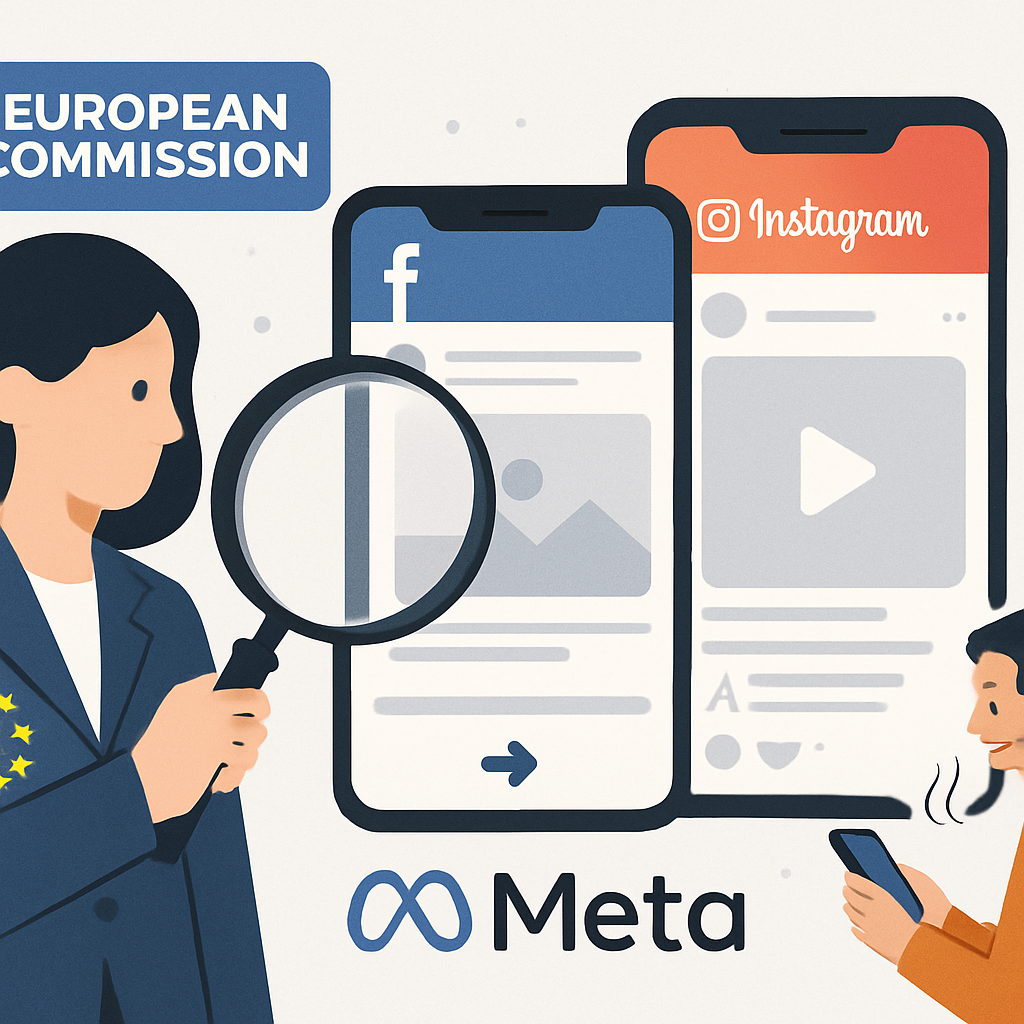
The European Commission has formally accused Meta Platforms of breaching the Digital Services Act (DSA) by incorporating design elements in Facebook and Instagram that promote addictive behaviors among users. Features such as infinite scrolling and autoplay have been identified as potentially harmful, particularly to minors and vulnerable adults.
According to the Commission’s preliminary findings, Meta failed to adequately assess the risks these design choices pose to users’ physical and mental well-being. The investigation highlighted that such features encourage continuous engagement, leading to unhealthy usage patterns and compulsive behavior. Additionally, the Commission criticized Meta’s parental control tools, noting that they are overly complex and easily bypassed, rendering them ineffective in managing screen time for younger users.
In response to these concerns, the Commission has proposed several remedial actions for Meta. These include disabling autoplay and infinite scroll by default, implementing effective screen time breaks, and modifying content recommendation algorithms to reduce their focus on maximizing user engagement. These measures aim to mitigate the addictive nature of the platforms and promote healthier usage habits.
Meta has contested the Commission’s findings, asserting that they do not accurately reflect the company’s efforts to protect teenage users. The company emphasized recent initiatives, such as the introduction of Teen Accounts, which offer parental controls over access and screen time limits. Despite these measures, the Commission remains unconvinced of their effectiveness.
This development is part of an ongoing investigation initiated in 2024, which also found that Meta inadequately prevented and policed underage users under 13 on its platforms. If the Commission’s provisional conclusions are upheld, Meta could face a fine of up to 6% of its global annual revenue.
The Digital Services Act, which came into force in May 2023, aims to create a safer digital environment by holding large online platforms accountable for the content they host and the design choices they implement. This case underscores the EU’s commitment to enforcing these regulations and ensuring that digital services prioritize user well-being over engagement metrics.
As the digital landscape continues to evolve, this situation highlights the growing tension between platform design choices aimed at maximizing user engagement and regulatory efforts to protect consumers from potential harm. The outcome of this case could set a significant precedent for how digital platforms operate within the EU and beyond.