Threat intelligence feeds have become a standard component in security budgets, yet many Security Operations Centers (SOCs) struggle to translate this data into actionable measures. The challenge lies not in the availability of data but in its effective utilization.
Often, SOC teams receive a continuous influx of indicators—such as IP addresses, domains, and URLs—that are integrated into Security Information and Event Management (SIEM) systems or threat intelligence platforms. However, these indicators frequently remain dormant, failing to inform detection rules, analyst workflows, or response strategies in a timely and structured manner. This disconnect is known as the operationalization gap, and addressing it is crucial for enhancing a SOC’s effectiveness.
Challenges in Utilizing Threat Intelligence
The primary issue is not the lack of data but the absence of structure and context within that data. When threat intelligence feeds arrive as undifferentiated bulk exports, analysts face several challenges:
- Overwhelming Volume: The sheer quantity of data makes manual triage impractical.
- Lack of Context: Indicators without associated information—such as threat actor details, related campaigns, or recent activity—offer limited utility.
- Unclear Confidence Levels: Without clear confidence scores, it’s difficult to prioritize threats effectively.
- Manual Integration: Incorporating intelligence into enforcement points like firewalls, Endpoint Detection and Response (EDR) platforms, and SIEMs often involves manual processes or batch cycles, introducing delays.
Consequently, intelligence arrives too slowly, requires excessive analyst effort to act upon, and lacks the necessary context to prioritize it over other alerts.
Defining Operationalized Threat Intelligence
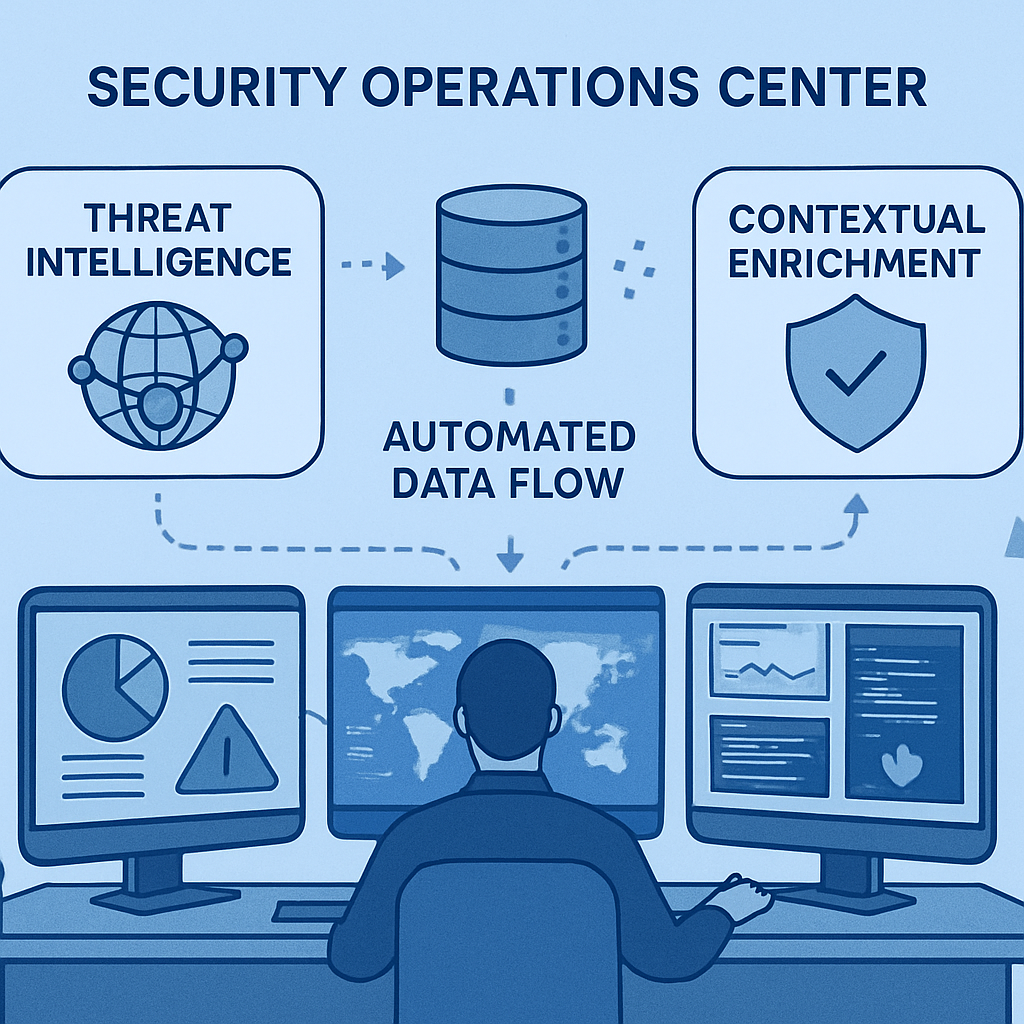
Operationalized threat intelligence seamlessly flows from collection through enrichment to detection and response, minimizing friction at each stage. Key characteristics include:
- Automated Ingestion: Feeds connect directly to SIEMs, Security Orchestration, Automation, and Response (SOAR) platforms, or Threat Intelligence Platforms (TIPs) via standardized formats (e.g., STIX/TAXII, MISP, CSV/JSON) or native integrations, eliminating manual import processes.
- Contextual Enrichment: Each indicator is accompanied by metadata—such as associated malware families, threat actor attribution, timestamps, confidence scores, and relevant MITRE ATT&CK technique mappings—providing analysts with immediate context.
- Timely Updates: Threat actor infrastructures can change rapidly. Feeds that update continuously ensure that blocking and alerting mechanisms reflect the current threat landscape.
- Bidirectional Integration: Intelligence feeds inform detection rules, while alerts generated by these rules feed back into the intelligence workflow, refining existing indicators and generating new ones. This creates a dynamic intelligence cycle where the SOC actively contributes to and benefits from the intelligence process.
By operationalizing threat intelligence, organizations can enhance their security posture, reduce response times, and improve overall resilience against cyber threats.
Integrating threat intelligence effectively into SOC workflows is not merely about data collection; it’s about transforming that data into actionable insights that drive proactive defense strategies. As cyber threats continue to evolve, the ability to operationalize threat intelligence will be a defining factor in an organization’s cybersecurity success.