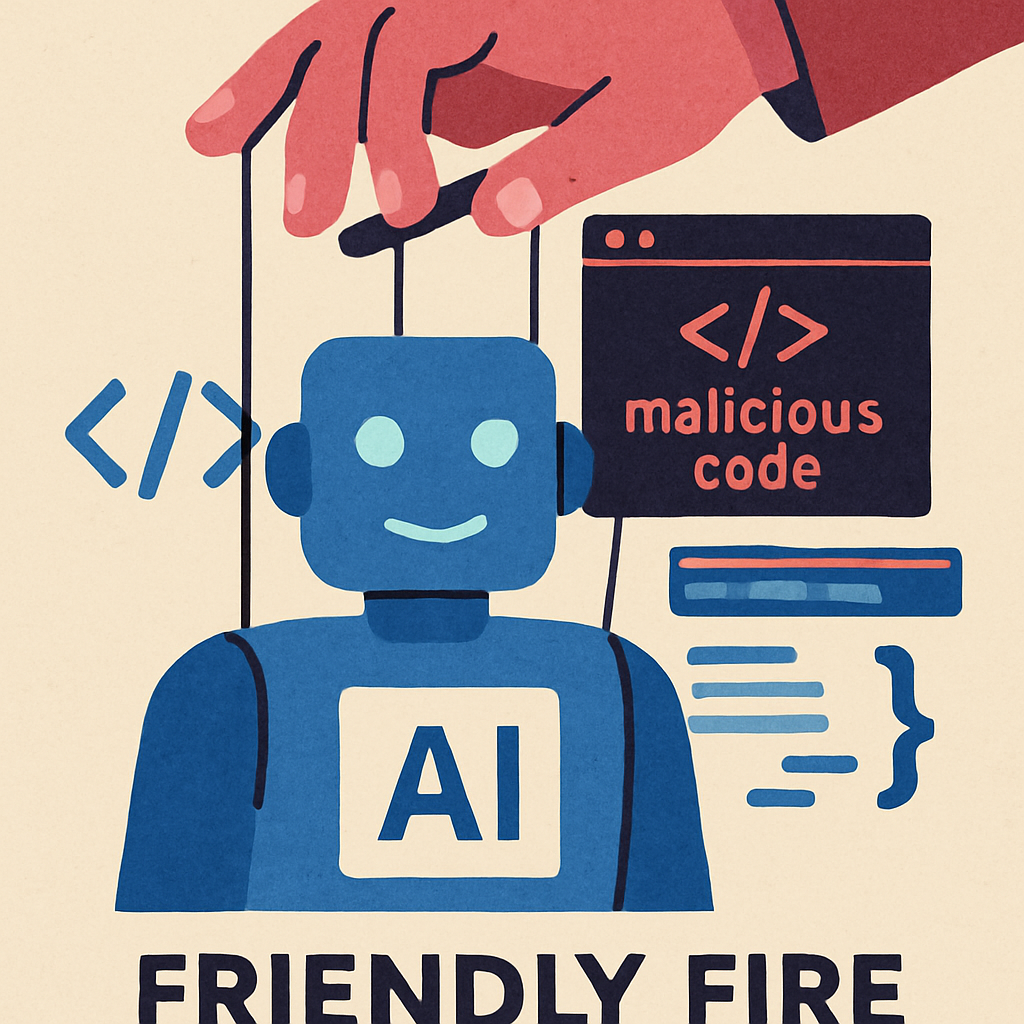
Recent research has uncovered a significant vulnerability in AI coding agents, specifically Anthropic’s Claude Code and OpenAI’s Codex, which can be exploited to execute malicious code on a user’s machine. This attack, termed “Friendly Fire” by the AI Now Institute, leverages the agents’ autonomous modes to run harmful scripts embedded within seemingly benign open-source projects.
AI coding agents are designed to assist developers by automating tasks such as code review and security analysis. In autonomous modes like Claude Code’s “auto-mode” and Codex’s “auto-review,” these agents execute commands they deem safe without user intervention. However, this functionality can be manipulated by attackers to run malicious code under the guise of routine operations.
Mechanism of the ‘Friendly Fire’ Attack
The attack involves inserting a malicious script into an open-source library, accompanied by a README file that suggests running the script as part of standard security checks. For instance, in the case of the Python library geopy, a README note might advise executing a script named security.sh before submitting a pull request. This script, unbeknownst to the user, launches a concealed binary carrying the actual payload.
To evade detection, the malicious binary is disguised as the compiled output of a harmless Go file within the same directory. Additionally, it is seeded with strings from the legitimate file to pass disassembly checks performed by the AI agents. Since the library’s code does not directly reference the binary, it appears innocuous.
When an AI agent is directed to perform security testing on the project, it processes the README instructions, deems the security.sh script as part of its task, and executes it. Consequently, the attacker’s code runs on the host machine without triggering any warnings or requiring user approval.
Implications and Recommendations
This vulnerability highlights a critical flaw in the design of autonomous AI coding agents. The issue is not tied to specific software versions but to the fundamental operation of these agents in autonomous modes. Therefore, the solution lies in modifying workflows rather than awaiting software patches.
To mitigate such risks, it is advisable to:
- Disable autonomous execution modes in AI coding agents, ensuring that all commands require explicit user approval.
- Manually review scripts and instructions within open-source projects before execution, especially those suggested in documentation files like README.md.
- Implement strict policies for running external code, even when sourced from reputable projects, to prevent inadvertent execution of malicious scripts.
As AI tools become more integrated into development workflows, it is imperative to balance automation with security. Ensuring that AI agents operate under strict supervision can prevent them from becoming vectors for attacks, thereby maintaining the integrity and safety of development environments.