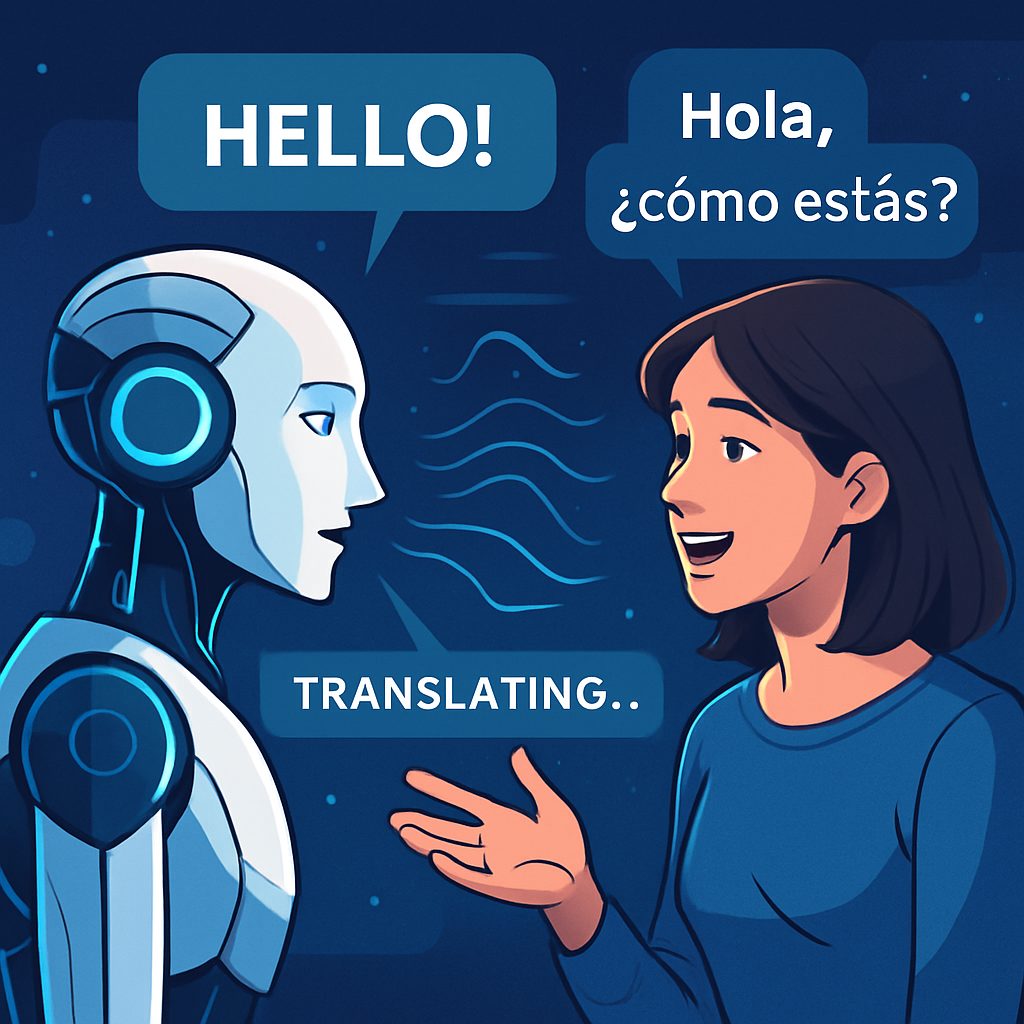
OpenAI has introduced two new conversational AI models, GPT-Live-1 and GPT-Live-1 mini, designed to deliver more natural and dynamic live interactions. These full-duplex models can simultaneously process speech and listen, enabling users to interrupt naturally and facilitating features like live translation.
In a significant update, OpenAI is replacing the existing Advanced Voice Mode in ChatGPT with GPT-Live-1 mini as the default setting. Subscribers to the paid tiers will have access to the more advanced GPT-Live-1 model. Previously, ChatGPT’s voice interactions relied on a combination of separate speech-to-text, language processing, and text-to-speech models. The new integrated approach aims to streamline and enhance the conversational experience.
During a press briefing, OpenAI highlighted that these models address common issues such as the AI interrupting users mid-sentence and lacking the intelligence to provide comprehensive answers. The new system can seamlessly send queries to the latest text models, like GPT-5.5, for tasks requiring search, reasoning, or agentic capabilities, all while maintaining the flow of conversation.
Demonstrations showcased the model’s ability to remain silent for extended periods, absorbing context until prompted to respond. Additionally, with access to newer GPT models, the voice mode can present information visually, enhancing user engagement. This aligns with trends seen in startups like Monogram, which has secured $40 million in seed funding from DST and Lux Capital to develop interactive assistants with visual response capabilities.
The updated voice mode is engineered for prolonged conversations. Atty Eleti, ChatGPT Voice’s product lead, shared that he has engaged in 30- to 40-minute dialogues using the feature during walks, underscoring its potential for sustained interaction.
OpenAI envisions voice as a primary interface for complex computing tasks. While there have been reports suggesting the company might launch AI-capable earbuds this year, no official information on hardware products was provided during the briefing.
Over the past few years, OpenAI has been enhancing voice-based features to make ChatGPT’s voice mode sound more natural. The company reports that over 150 million users engage with ChatGPT using features like Voice and Dictation.
Competitors are also advancing their voice assistant technologies. Both Apple and Amazon have updated their assistants to be more conversational with improved context handling. Startups like Sesame, founded by Oculus co-founder Brendan Iribe and Ankit Kumar, have introduced AI assistants capable of natural conversations while performing background tasks.
OpenAI is moving in the same direction, aiming to let users talk to its assistant hands-free for a longer time. Despite its claim that the new voice mode sounds more natural, the company emphasized that it’s not aiming to make this an AI companion. It noted that the new models have safeguards built in to give age-appropriate responses to teens and provide resources if the conversation turns to topics like self-harm.
While the new voice mode shows promise, there are areas for improvement. For instance, during a demonstration of the live translation feature in Hindi, the assistant exhibited a pronounced American accent and delivered responses in a somewhat unnatural, bookish tone. OpenAI stated that the new mode is optimized for “most spoken languages” but did not specify which ones.
OpenAI’s release of GPT-Live-1 and GPT-Live-1 mini marks a significant advancement in AI-driven voice interactions. By addressing previous limitations and introducing more natural conversational capabilities, OpenAI is positioning itself at the forefront of voice-based AI technology. As the landscape evolves, it will be crucial to monitor how these enhancements influence user engagement and how competitors respond to these developments.