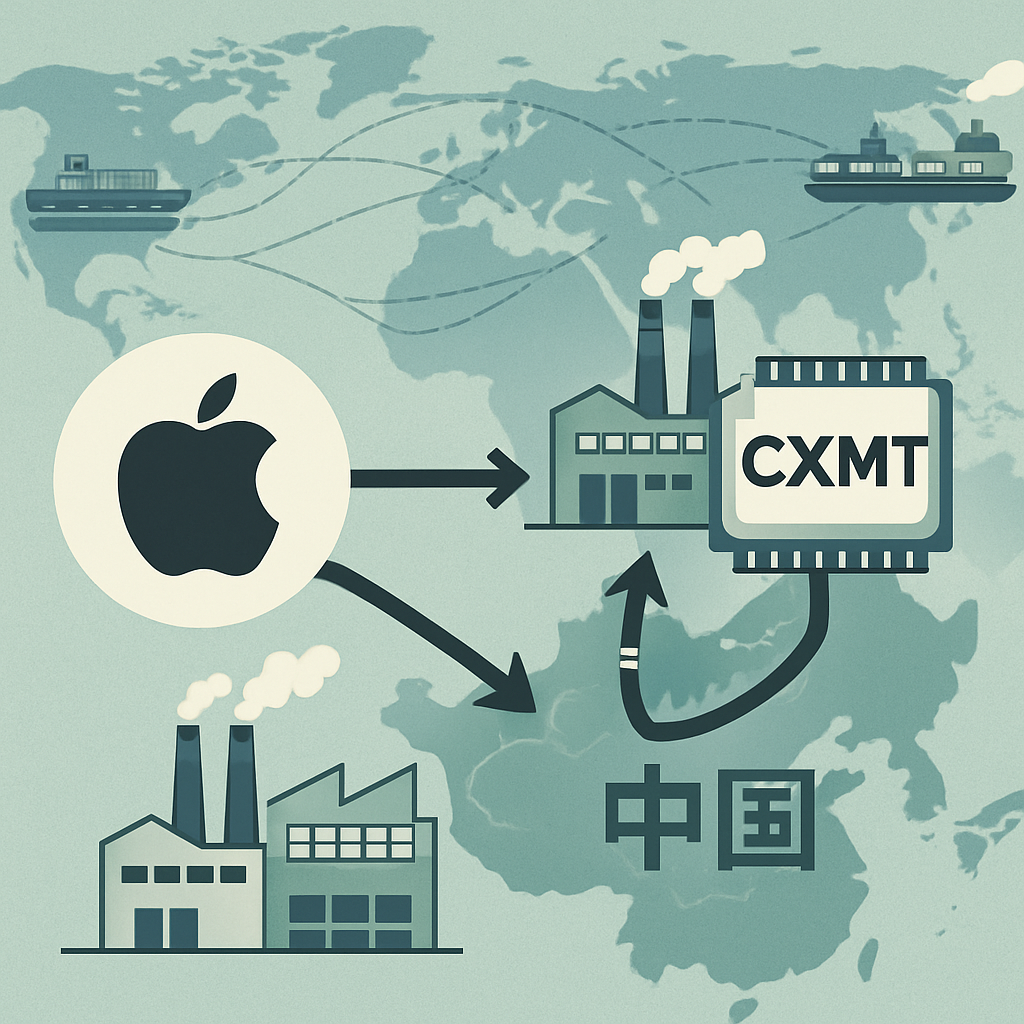
Apple is currently evaluating dynamic random-access memory (DRAM) chips produced by China’s state-backed ChangXin Memory Technologies (CXMT) for potential use in devices sold within the Chinese market. This development follows earlier reports indicating that Apple was in discussions with CXMT and Yangtze Memory Technologies (YMTC) to diversify its memory supply chain.
By testing CXMT’s DRAM chips, Apple aims to qualify the supplier for future production needs. This qualification process is crucial, as it would enable Apple to integrate CXMT’s memory into its products promptly once regulatory approvals are secured. Notably, Apple has not yet committed to using CXMT’s chips commercially and continues to lobby U.S. authorities for permission to incorporate these components more broadly.
CXMT has rapidly ascended to become the world’s fourth-largest DRAM producer, trailing only industry leaders Samsung Electronics, SK Hynix, and Micron Technology. In 2025, CXMT accounted for approximately 11% of global DRAM wafer capacity, with projections suggesting an increase to 15% by 2028 as new production facilities in Hefei, Shanghai, and Beijing become operational.
The global memory market has experienced significant volatility, with standard DRAM contract prices surging by an estimated 55% to 60% in early 2026. This spike is largely attributed to the growing demand for AI servers, which has diverted capacity away from consumer devices. Consequently, Apple recently raised prices across nearly its entire product lineup. Establishing a relationship with CXMT could provide Apple with additional leverage in negotiations with existing suppliers and serve as a buffer against future price fluctuations, particularly for products destined for the Chinese market.
However, CXMT’s inclusion on the Pentagon’s 1260H list, which identifies companies linked to the Chinese military, adds a layer of complexity. While this designation primarily restricts Defense Department contracts and does not outright prohibit commercial transactions, it signals potential geopolitical risks. In contrast, YMTC’s placement on the Commerce Department’s Entity List imposes stricter limitations, requiring U.S. companies to obtain export licenses for any dealings. Apple is reportedly seeking assurances from U.S. authorities that CXMT will not be added to the Entity List, which would effectively sever the supply chain.
Apple’s exploration of Chinese memory suppliers underscores the intricate balance between supply chain diversification and navigating geopolitical tensions. As the company strives to mitigate the impact of global memory shortages and rising costs, its decisions will likely influence broader industry dynamics and the competitive landscape of the memory chip market.