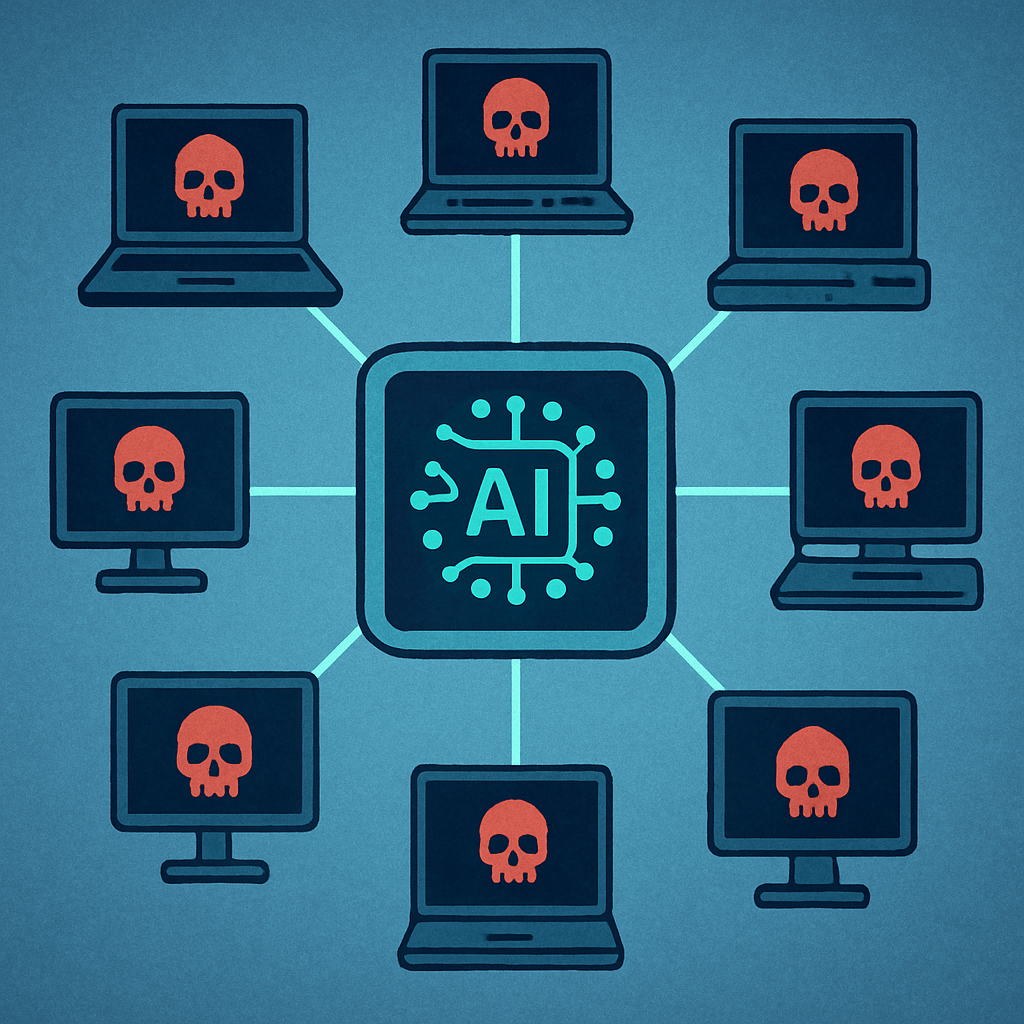
A recent development in cybercrime has surfaced with the introduction of the Mycelium framework, a botnet marketed as an AI-as-a-Service platform. This tool enables cybercriminals to exploit compromised systems not only for traditional malicious activities but also to harness their computing power for artificial intelligence tasks.
Mycelium is a cross-platform program written in C++, capable of operating on both Windows and Linux systems. Its modular design allows operators to integrate various plugins, such as browser data theft, network scanning, and exploit modules, without the need to rebuild the malware. Communication between infected devices and the botnet operator is secured through an encrypted channel based on Internet Relay Chat (IRC) technology, facilitating the management of a large network of compromised machines while evading detection.
The framework includes a comprehensive suite of exploits targeting widely used business software, including email servers, virtual infrastructure tools, and web application platforms. This indicates a strategic focus on infiltrating corporate networks, thereby amplifying the potential impact on enterprise security.
Upon compromising a system, Mycelium assesses the device’s capabilities, such as processing power, graphics hardware, stored credentials, and active AI accounts. Devices with premium AI accounts are prioritized for high-value tasks, while others may be utilized for generating phishing content or spam. Notably, the framework features a social engineering engine that analyzes a victim’s communication style to craft convincing fraudulent messages, enhancing the effectiveness of phishing campaigns.
Security researchers at Flare have identified this as the first instance of a botnet being marketed explicitly as an AI-as-a-Service platform. While the individual techniques employed by Mycelium are not novel, their integration into a cohesive and automated system represents a significant evolution in cybercriminal operations.
The emergence of Mycelium underscores the growing sophistication of cyber threats, particularly the fusion of traditional botnet functionalities with artificial intelligence capabilities. This development highlights the urgent need for organizations to bolster their cybersecurity measures, including regular system updates, robust network monitoring, and comprehensive employee training to recognize and respond to advanced phishing tactics.