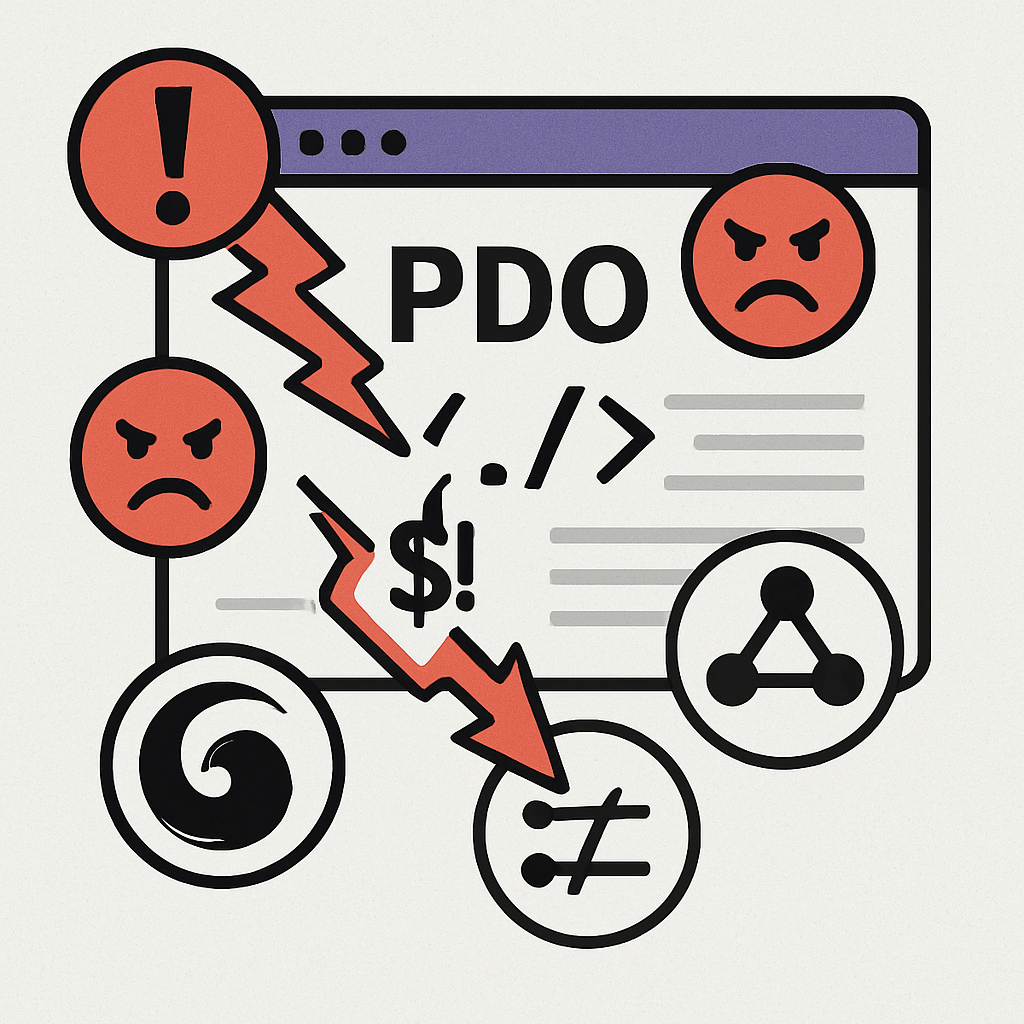
Recent discoveries have unveiled significant vulnerabilities within PHP’s PDO (PHP Data Objects) drivers, specifically affecting the Firebird and PostgreSQL database interfaces. These flaws could allow attackers to execute SQL injection attacks and cause denial-of-service (DoS) conditions, posing substantial risks to web applications relying on these drivers.
SQL Injection Vulnerability in PDO Firebird Driver
The first vulnerability, identified as CVE-2025-14179, is a high-severity SQL injection flaw within the PDO Firebird driver. This issue arises from improper handling of NUL bytes during the preparation of SQL queries. In affected versions of PHP—specifically 8.2.* before 8.2.31, 8.3.* before 8.3.31, 8.4.* before 8.4.21, and 8.5.* before 8.5.6—the driver utilizes the strncat() function to copy string tokens. This function terminates at the first NUL byte, inadvertently dropping the closing quote and causing subsequent SQL tokens to be misinterpreted as part of the string literal. Consequently, when attacker-controlled values are quoted via PDO::quote() and embedded in SQL statements, this flaw enables SQL injection attacks. The vulnerability has been assigned a CVSS score of 7.4, indicating a high severity level. Immediate patching is essential to prevent potential exploitation. ([sentinelone.com](https://www.sentinelone.com/vulnerability-database/cve-2025-14179/?utm_source=openai))
Denial-of-Service Vulnerability in PDO PostgreSQL Driver
In addition to the Firebird driver issue, a separate vulnerability has been identified in the PDO PostgreSQL driver. This flaw can lead to application crashes, resulting in denial-of-service conditions. The vulnerability stems from improper handling of certain input sequences, which can cause the application to terminate unexpectedly. Details regarding the specific CVE identifier and affected versions are currently limited, but it is crucial for developers and system administrators to stay vigilant and apply updates as they become available.
These vulnerabilities underscore the importance of rigorous security practices in web application development. Developers should ensure that all components, including database drivers, are regularly updated to mitigate potential risks. Additionally, implementing robust input validation and employing prepared statements can further enhance the security posture of applications. As the landscape of cyber threats continues to evolve, staying informed and proactive is essential in safeguarding sensitive data and maintaining the integrity of web services.