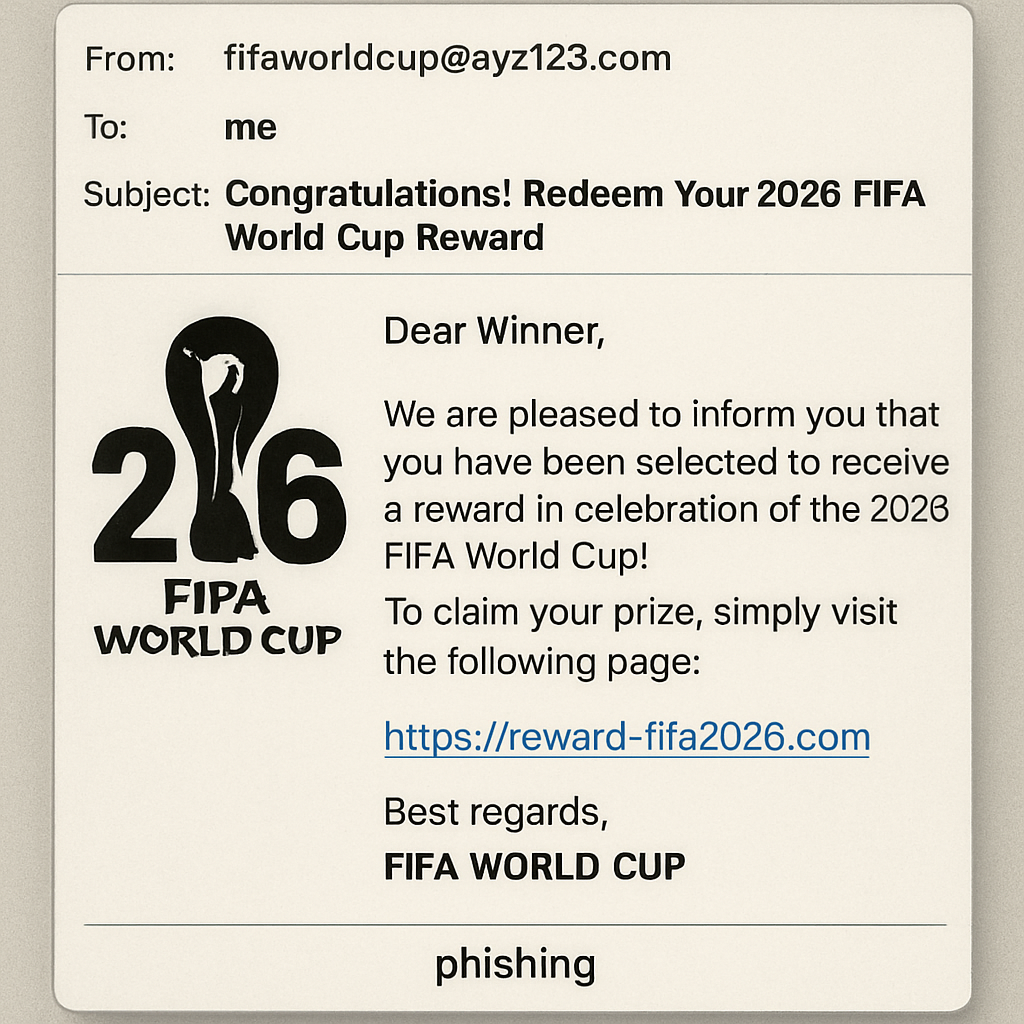
As excitement builds for the 2026 FIFA World Cup, cybercriminals are seizing the opportunity to exploit fans’ enthusiasm through sophisticated phishing campaigns. These schemes are designed to harvest personal information and payment card details by masquerading as legitimate World Cup-related promotions.
The attack typically begins with an email that appears authentic, often passing standard authentication checks to evade spam filters. These emails entice recipients with promises of free rewards or exclusive offers related to the World Cup, encouraging them to click on embedded links.
Upon clicking, victims are subjected to a series of redirects. This multi-step process is a deliberate tactic to bypass automated security scanners and delay detection. Each redirect adds a layer of separation between the initial email and the final fraudulent webpage, making it challenging for security systems to trace the malicious intent.
Security researchers have identified that the final destination in this redirect chain often employs geo-cloaking techniques. This means the content displayed varies based on the visitor’s geographic location. Users from targeted regions, where World Cup interest is high, are directed to the scam page, while others may see benign content. This selective targeting helps the campaign remain under the radar of global security researchers and automated detection systems.
Once on the deceptive webpage, victims are prompted to enter personal information, including their name, home address, and full payment card details, under the guise of claiming a prize or reward. Unbeknownst to them, this information is transmitted directly to the attackers, leading to potential financial loss and identity theft.
The sophistication of this phishing campaign underscores the evolving tactics of cybercriminals. By leveraging current events and employing advanced evasion techniques, they increase the likelihood of deceiving even cautious individuals. Fans are advised to exercise heightened vigilance, especially when receiving unsolicited emails offering World Cup-related rewards. It’s crucial to verify the authenticity of such communications through official channels and avoid providing sensitive information unless absolutely certain of the recipient’s legitimacy.
As major global events like the FIFA World Cup approach, the frequency and complexity of such cyber threats are expected to rise. Staying informed about these tactics and adopting robust cybersecurity practices are essential steps in safeguarding personal and financial information against exploitation.