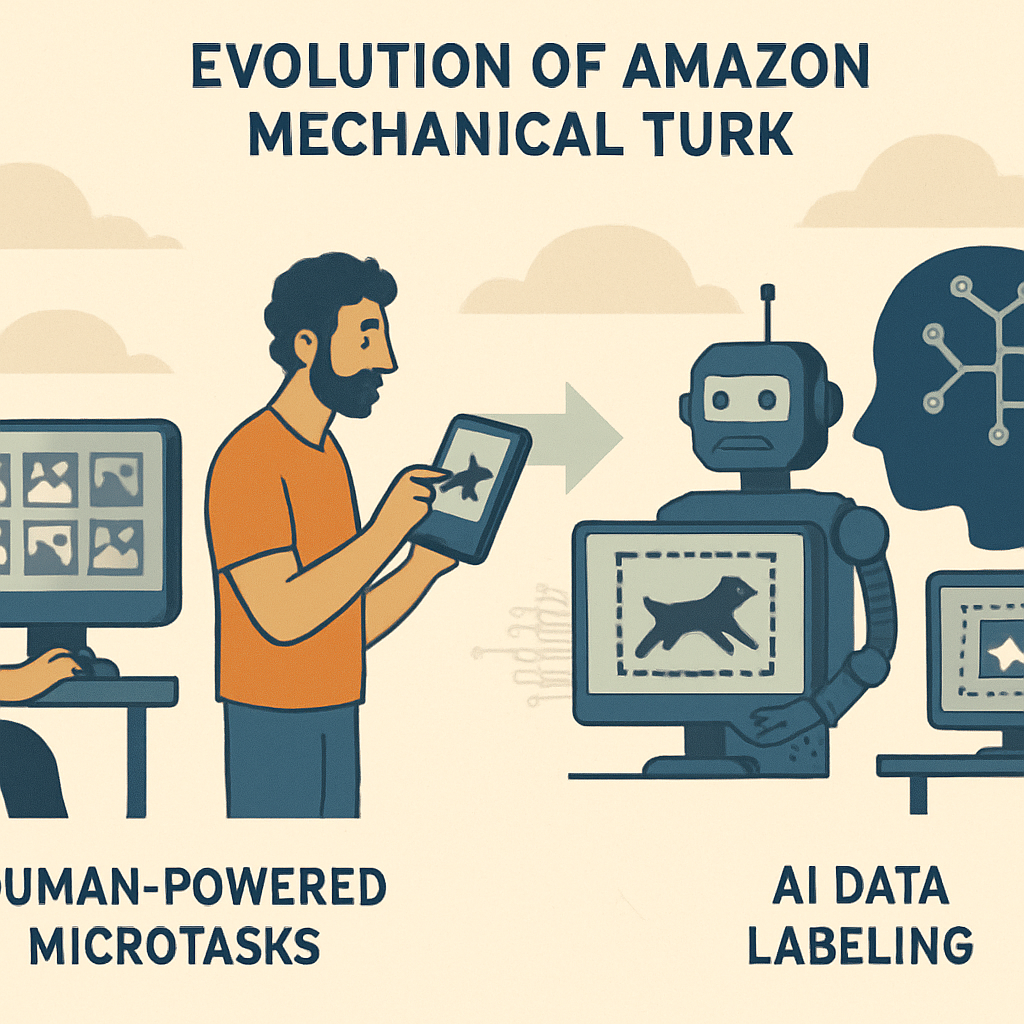
Amazon Web Services (AWS) has announced that its crowdsourcing platform, Mechanical Turk, will cease accepting new customers starting July 30, 2026. Existing users will not be affected by this change and can continue utilizing the service as usual. AWS has indicated that while it will maintain the platform’s security and availability, no new features are planned for the future.
Launched in 2005, Mechanical Turk was a pioneering marketplace that enabled businesses to outsource microtasks to a distributed workforce. These tasks often included data annotation, content moderation, and survey participation, which were essential for various applications, including training machine learning models. The platform’s name pays homage to an 18th-century hoax involving a chess-playing automaton that was secretly operated by a human, reflecting the service’s role in providing human intelligence for tasks that machines couldn’t perform autonomously.
Over the years, Mechanical Turk became integral to numerous research projects and AI development initiatives. However, the platform has faced criticism regarding low compensation rates for workers and concerns about data quality. Studies have highlighted issues such as significant levels of inattentiveness among workers, even those classified as ‘Master’ with high approval rates. Additionally, reports have surfaced about AWS suspending worker accounts without clear explanations, leading to disruptions for those relying on the platform for income.
In recent years, AWS has introduced alternative services like SageMaker GroundTruth, which offers more advanced data labeling capabilities for machine learning. This shift suggests a strategic move towards more sophisticated and integrated solutions, potentially rendering Mechanical Turk less relevant in the evolving landscape of AI and crowdsourcing.
The decision to halt new customer sign-ups for Mechanical Turk marks a significant transition in AWS’s approach to crowdsourcing and data annotation services. While existing users can continue their operations, the lack of new features and the cessation of new customer registrations indicate that the platform may be gradually phased out. Organizations and researchers relying on Mechanical Turk should consider exploring alternative platforms and services to meet their crowdsourcing needs in the future.