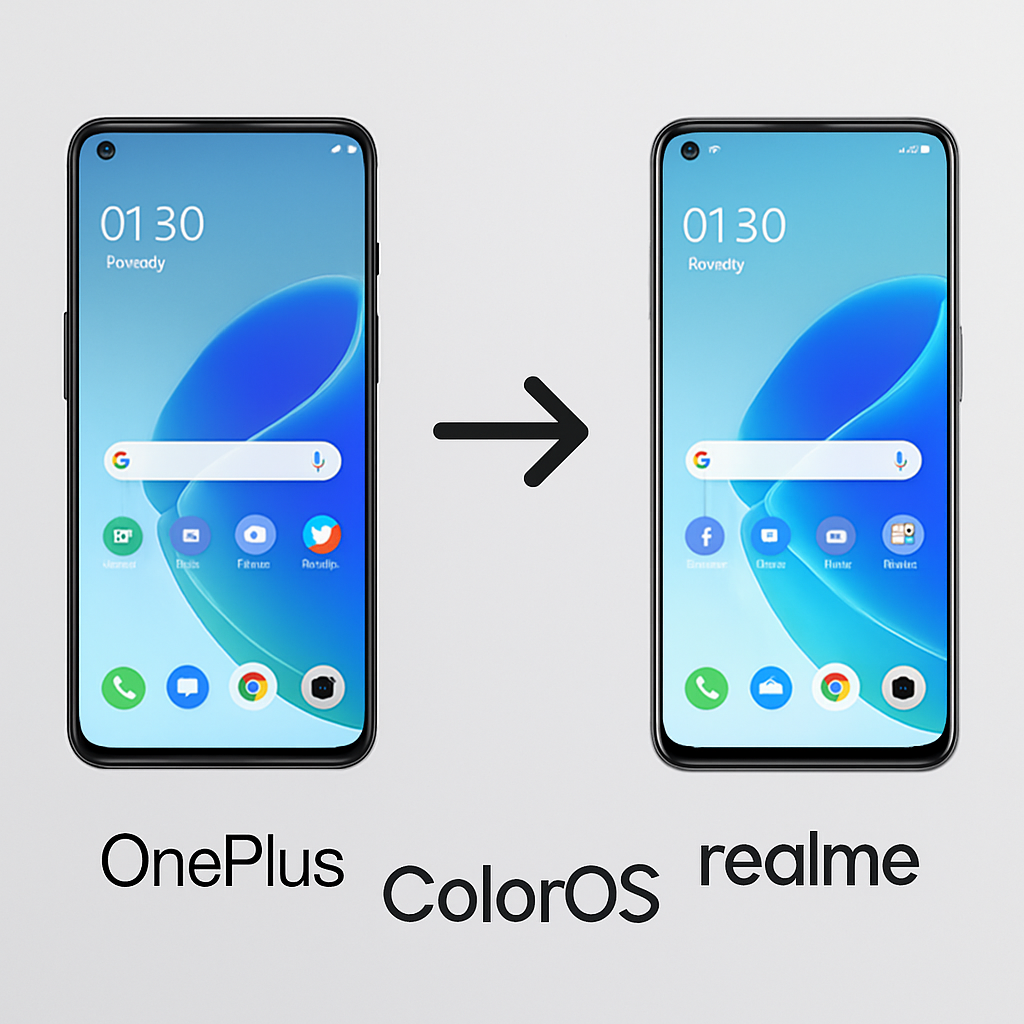
Recent reports indicate that OnePlus’s OxygenOS and Realme’s Realme UI are set to be discontinued, with both brands transitioning to OPPO’s ColorOS for future devices. This strategic move is part of OPPO’s broader initiative to unify its software platforms across its associated brands.
Historically, OxygenOS was celebrated for its clean, near-stock Android experience, distinguishing OnePlus devices in the competitive smartphone market. Similarly, Realme UI offered a tailored user interface that resonated with its user base. However, over time, both operating systems have increasingly shared codebases and features with ColorOS, OPPO’s proprietary software. This convergence has blurred the distinctions between the interfaces, making the transition to a single platform a logical progression.
According to industry insiders, this consolidation aims to streamline development processes and reduce research and development expenditures. By focusing on a unified software ecosystem, OPPO intends to enhance operational efficiency and deliver consistent user experiences across its device lineup.
In terms of market strategy, OnePlus is reportedly narrowing its focus to key markets such as India and China. Concurrently, Realme is shifting its attention away from the Chinese market to concentrate on international territories. This realignment reflects a strategic effort to optimize brand presence and resource allocation in regions with the highest growth potential.
For existing users of OnePlus and Realme devices, the transition to ColorOS raises questions about the migration process and the continuity of support for current devices. While the underlying software similarities may ease the shift, clear communication from the brands will be essential to ensure a smooth transition and maintain user trust.
This development underscores a broader trend in the smartphone industry towards consolidation and standardization. As brands seek to optimize resources and deliver cohesive user experiences, the lines between distinct software identities are becoming increasingly blurred. For consumers, this means that brand loyalty may become more closely tied to hardware innovations and service quality rather than unique software offerings.