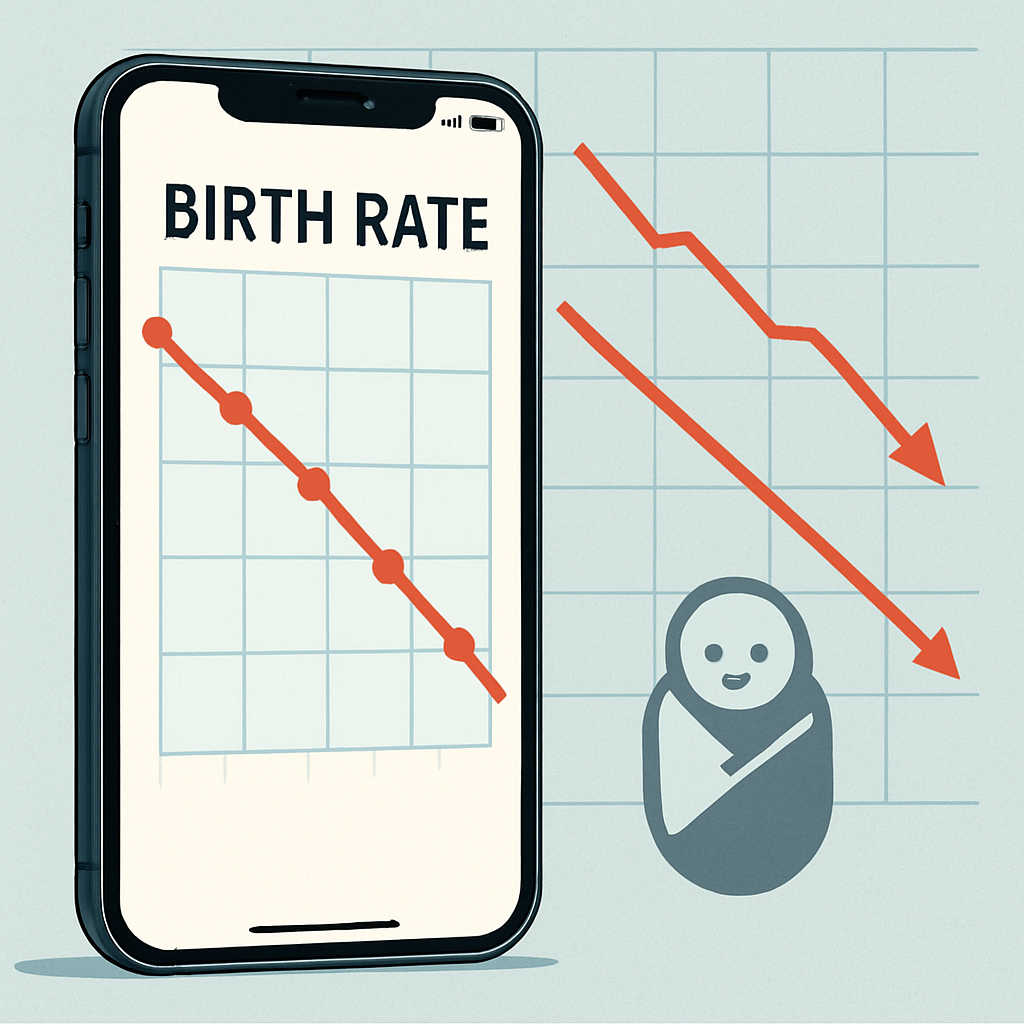
A recent study suggests that the introduction of the iPhone in 2007 may have significantly contributed to a decline in unintended pregnancies and overall birth rates in the United States. Conducted by the National Bureau of Economic Research, the analysis found a strong correlation between regions with higher iPhone adoption and lower birth rates.
During the initial years following the iPhone’s release, AT&T was its exclusive carrier. Researchers leveraged this exclusivity to compare birth rates in areas with a predominant AT&T customer base against regions where other carriers, such as Verizon, were more prevalent. The findings indicated that areas with higher iPhone penetration experienced more substantial declines in birth rates.
The study posits that the widespread adoption of smartphones, exemplified by the iPhone, led to decreased in-person social interactions and sexual activity, while increasing the consumption of digital content like pornography. These behavioral shifts were observed across various age groups, suggesting that the impact of smartphone usage on fertility rates extends beyond younger demographics.
It’s important to note that the researchers do not claim the iPhone was the sole factor in the post-2007 decline in birth rates. However, their estimates imply that the advent of modern smartphones played a significant role during the 2008–2011 period.
While the study presents an intriguing correlation, it’s essential to consider other factors that may influence birth rates, such as socioeconomic status, education levels, and access to healthcare. The demographic profile of early iPhone adopters—typically higher-income and better-educated individuals—also aligns with groups that historically have lower birth rates. Therefore, while the iPhone’s introduction may have played a role, it is likely one of several contributing factors to the observed decline in fertility rates.