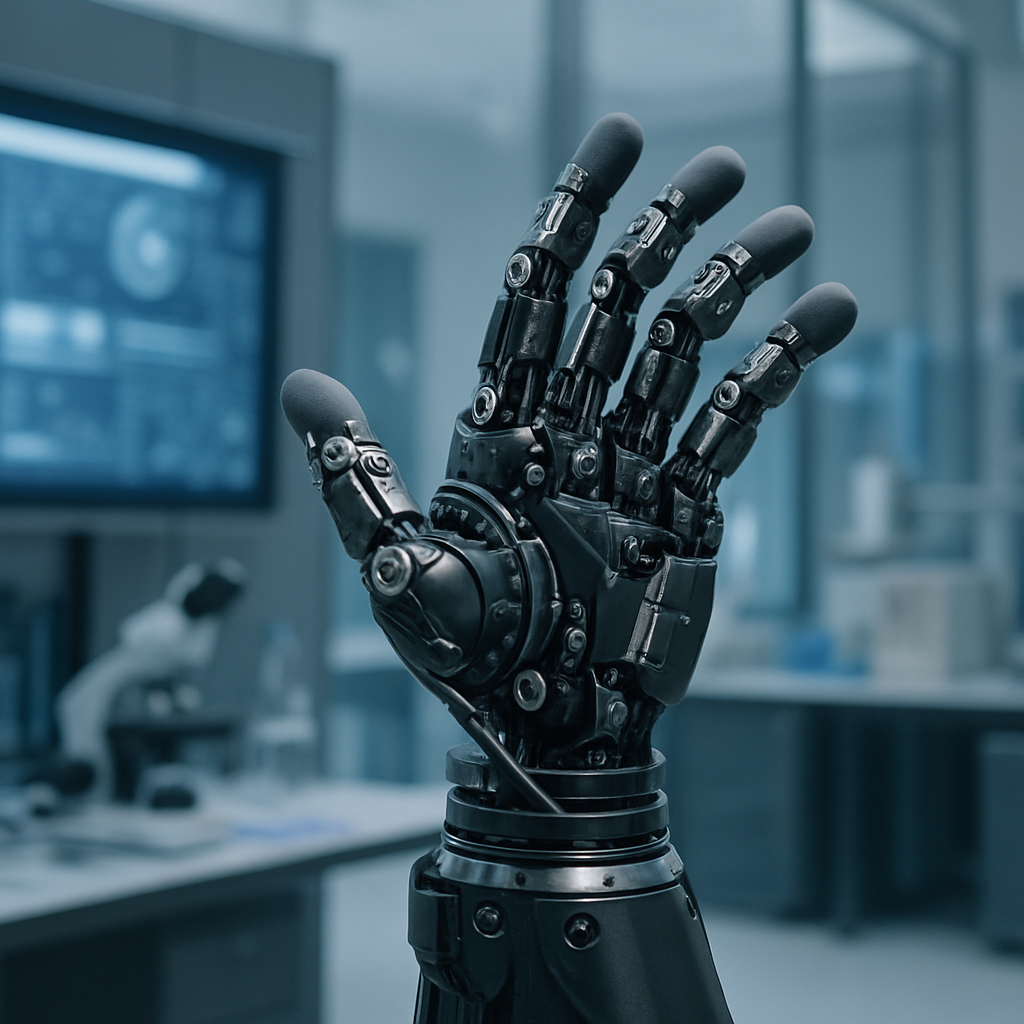
Proception, a startup specializing in advanced robotic hands, has recently settled a legal dispute with Tesla and announced an $11 million seed funding round. The company, founded by Jay Li—a former technical lead on Tesla’s Optimus humanoid robot program—aims to revolutionize robotic dexterity.
In 2025, Tesla filed a lawsuit against Li, alleging that he misappropriated trade secrets related to robotic hand sensors to establish Proception. After months of legal proceedings, the two parties reached a settlement earlier this month, leading to the dismissal of the lawsuit. Tesla has not provided any comments on the matter.
With the legal challenges behind them, Proception is focusing on developing robotic hands that closely mimic human functionality. The company has secured an $11 million seed investment led by First Round Capital, with participation from Y Combinator and BoxGroup. This funding will support the production and distribution of Proception’s high-dexterity robotic hands to researchers and robotics companies, positioning the startup as a leading supplier in the field of dexterous manipulation.
Despite significant investments in robotics, achieving human-like dexterity in robotic hands remains a formidable challenge. Industry leaders, including Tesla CEO Elon Musk, have identified this as a critical engineering hurdle. Experts like Kevin Lynch, director of Northwestern University’s Center for Robotics and Biosystems, estimate that it could take a decade for robotic hands to perform tasks comparable to those of humans.
Proception believes it can expedite this timeline through innovative data collection methods. Traditional approaches involve teleoperators using virtual reality to control robots, which limits the feedback received from object interactions and is constrained by the number of available robots. Proception’s approach utilizes sensor-equipped gloves worn by human testers, allowing for the collection of detailed hand interaction data without the need for a robot in the loop. This data is instrumental in training robotic hands to perform complex, human-like tasks.
The company’s robotic hand features 22 degrees of freedom and multiple joints per finger, enabling a wide range of dexterous motions. By combining advanced hardware with scalable data collection, Proception aims to address the challenges of dexterous manipulation more effectively than existing methods.
First Round Capital partner Bill Trenchard, who led the investment, expressed confidence in Proception’s potential, highlighting the importance of dexterous manipulation in advancing humanoid robotics. He also commended Li’s leadership and resilience during the legal dispute with Tesla.
Li remains optimistic about future collaborations, suggesting that Tesla might seek Proception’s expertise as the startup continues to grow.
Proception’s progress underscores the critical role of dexterous manipulation in the evolution of humanoid robots. By addressing this complex challenge, the company contributes to the broader goal of integrating robots into various industries, potentially transforming manufacturing, healthcare, and service sectors.