A recently disclosed injection technique has unveiled a method by which attackers can execute malicious code within another process on Windows systems, all while evading detection. This approach leverages the Windows graphical subsystem, specifically targeting the win32k.sys component, and utilizes legitimate kernel-to-user callback paths integral to the operating system’s normal operations.
Central to this technique is the KernelCallbackTable, a structure present in every GUI-enabled Windows process. This table contains function pointers that facilitate the transition of graphical tasks from the kernel to user-mode routines. By understanding the mechanics of this table, attackers can locate it within a process’s memory and identify active callbacks, thereby finding an execution path without directly modifying the table—a method that would typically trigger security alerts.
Security researcher n0qword has documented this technique, providing a comprehensive implementation along with a proof of concept available on GitHub. The research emphasizes that this method avoids the more detectable approach of directly overwriting entries in the callback table. Instead, it takes an indirect route, circumventing integrity checks that would flag structural changes, thus offering a stealth advantage over traditional injection methods.
Unlike conventional process injection techniques that involve creating new remote threads or utilizing Windows asynchronous procedure calls, this method discreetly redirects an existing callback function at the precise moment the system invokes it. This results in an execution path that seamlessly integrates into normal Windows activity, making it less conspicuous to process-level monitoring tools.
While the research has been shared for educational and defensive purposes, the underlying mechanics present a genuine risk if adopted by malicious actors. Security teams must comprehend how callback-based methods function to effectively detect or mitigate such threats. As n0qword noted in a report shared with Cyber Security News, this technique “can provide a stealthier alternative to more conventional primitives such as remote thread creation or APC-based injection.”
Exploiting the WM_COPYDATA Callback Path
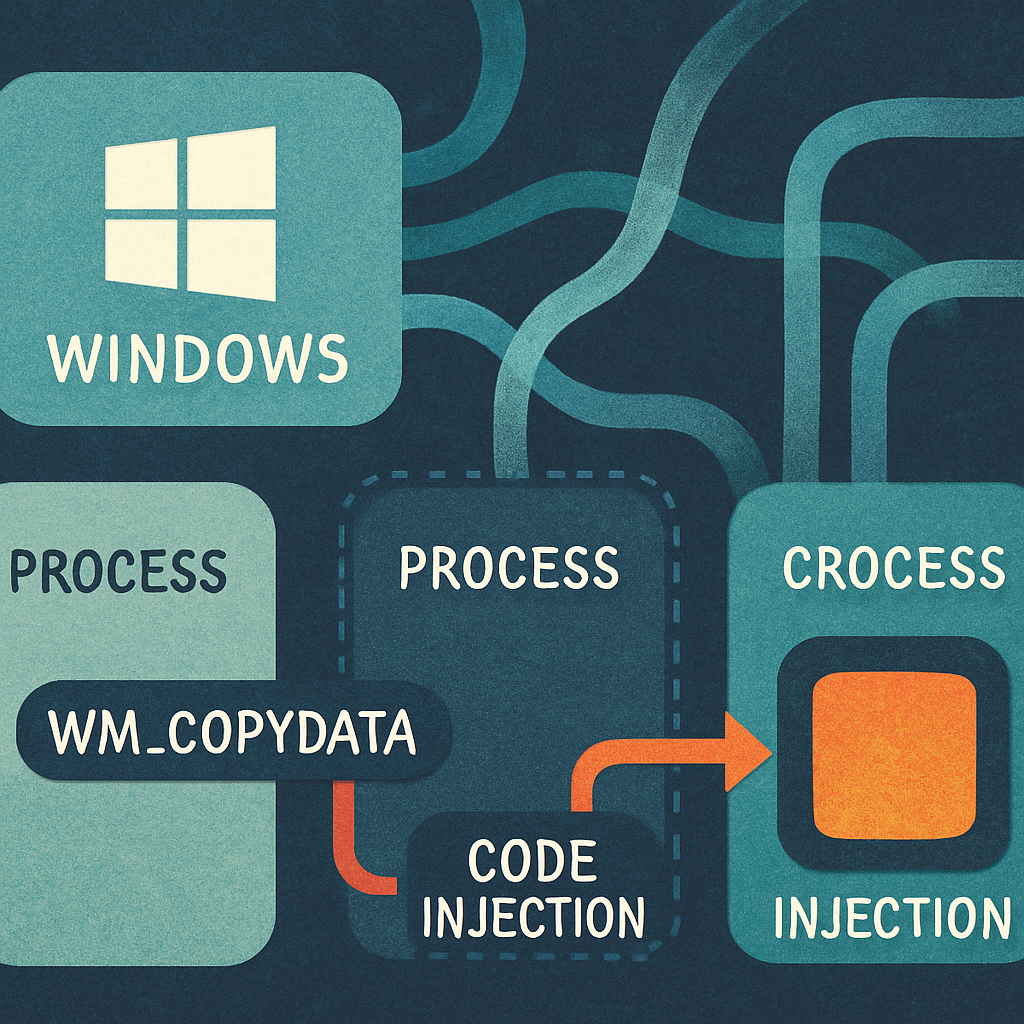
The specific callback entry exploited in this technique is __fnCOPYDATA, associated with the WM_COPYDATA Windows message type. This entry is particularly appealing to attackers because it can be externally and predictably triggered by sending a WM_COPYDATA message to a target window using the standard SendMessage function. This reliability makes it a potent execution primitive that requires no complex setup or unusual process conditions.
The attack sequence involves reading the target process’s memory to locate its KernelCallbackTable and resolving the address of the __fnCOPYDATA routine. Shellcode is then written into the remote process using allocated executable memory, and a small inline hook is placed at the beginning of the __fnCOPYDATA function. This hook redirects execution to the injected shellcode when the WM_COPYDATA message is processed, allowing the attacker to execute arbitrary code within the context of the target process.
By exploiting this callback path, attackers can achieve code execution without the need for creating new threads or modifying existing ones, thereby reducing the likelihood of detection by security mechanisms that monitor for such activities. This method underscores the importance of monitoring and securing inter-process communication channels, as they can be leveraged for stealthy code injection techniques.
In light of this development, it is imperative for security professionals to enhance their understanding of such advanced injection methods. Traditional detection mechanisms may not be sufficient to identify these sophisticated techniques, necessitating the adoption of more comprehensive monitoring and analysis tools. Organizations should prioritize the implementation of security measures that can detect anomalies in process behavior and inter-process communications to mitigate the risks associated with such stealthy injection methods.