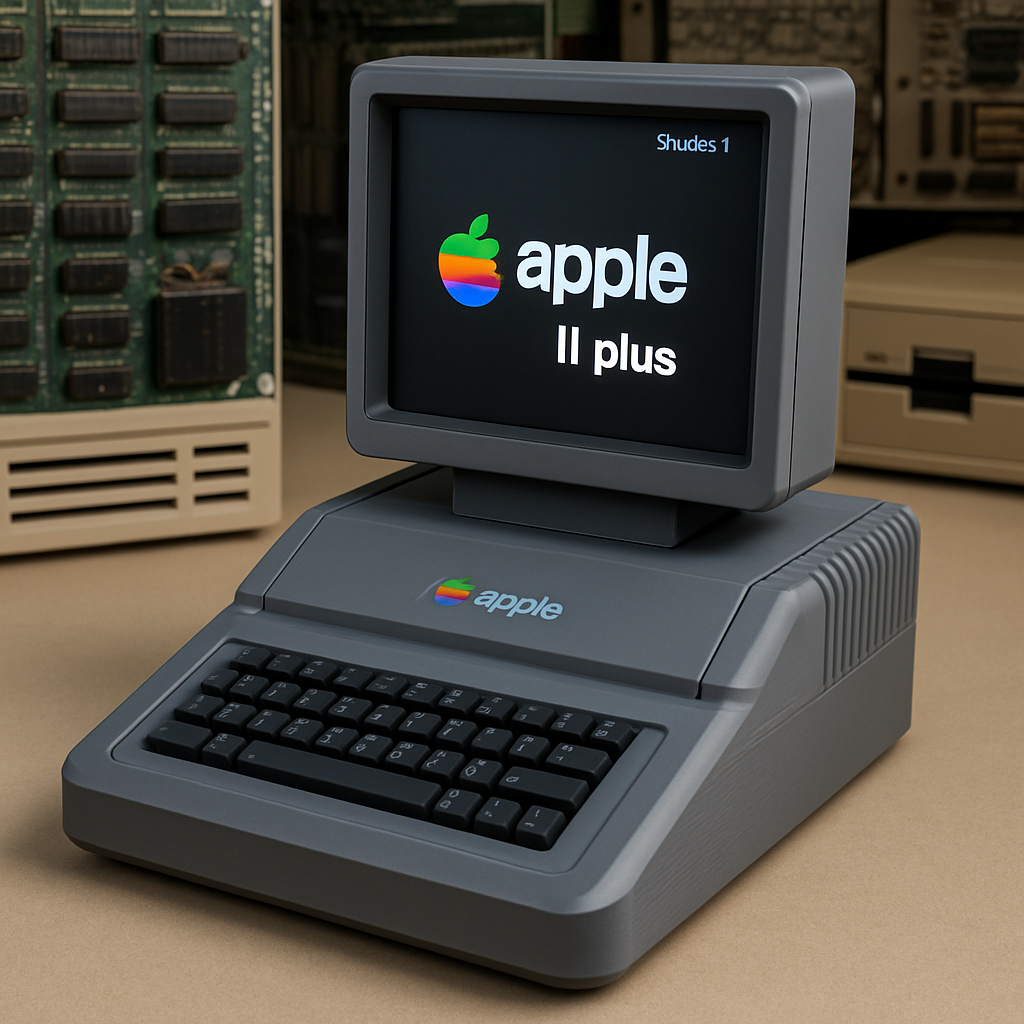
In an era where software emulation is the go-to method for reviving classic computing experiences, one enthusiast has taken a different path by reconstructing the Apple II Plus entirely through hardware. Simon Boak’s project, the SB Mini II, is a modern reimagining of Apple’s iconic computer, built from the ground up using contemporary components.
Boak’s journey began with the realization that many of the original logic chips, including the 6502 CPU, are still accessible today. Armed with circuit diagrams from the original Apple II manual and a wealth of related literature, he meticulously planned and sourced the necessary parts to bring his vision to life.
Modern Enhancements
While staying true to the original design, Boak introduced several modern enhancements to improve performance and simplify the build process. One significant change was replacing the original dynamic RAM (DRAM) with static RAM (SRAM). The original Apple II utilized DRAM to reduce costs, but with SRAM now being more affordable, Boak opted for one and a half 32K SRAM chips to achieve the required 48K memory. This substitution eliminated the need for DRAM refresh circuitry, streamlining the overall design.
Another notable upgrade involved the video output. The original Apple II generated a composite video signal through complex circuitry. Boak simplified this by incorporating an Apple II VGA card, resulting in sharper video output and removing the need for the original video generation logic. This modification effectively rendered the clone “headless” when used without the VGA card.
Clock and timing signals also saw improvements. Boak employed a 4.096 MHz crystal oscillator, divided down to 1.024 MHz, closely matching the original machine’s 1.023 MHz. This adjustment ensured compatibility with software designed for the original Apple II Plus.
Innovative Input Solutions
To bridge the gap between vintage hardware and modern peripherals, Boak integrated a Raspberry Pi Pico to connect a USB keyboard to the Apple II clone. The Pico emulates the parallel data signals of the original keyboard, eliminating the need for voltage level shifters and maintaining the authentic user experience.
The project culminated in a custom-designed case, 3D printed in sections, then assembled and painted. Inspired by the Apple ProFile hard drive, the enclosure features additional vents and a rear panel for easy access to connections. True to the original’s design philosophy, the case’s lid clips shut, allowing tool-free access to the internals.
Complementing the clone, Boak also designed a matching Studio II LCD monitor, further enhancing the nostalgic aesthetic.
This endeavor is not Boak’s first foray into recreating classic Apple hardware. In June 2024, he developed an Apple I clone with a printer that utilized an SD card for storage, showcasing his dedication to preserving and modernizing vintage computing experiences.
Boak’s hardware-based approach offers a tangible connection to computing history, providing enthusiasts with an authentic experience that software emulation often lacks. This project underscores the enduring appeal of the Apple II and highlights the innovative spirit of the retro computing community.