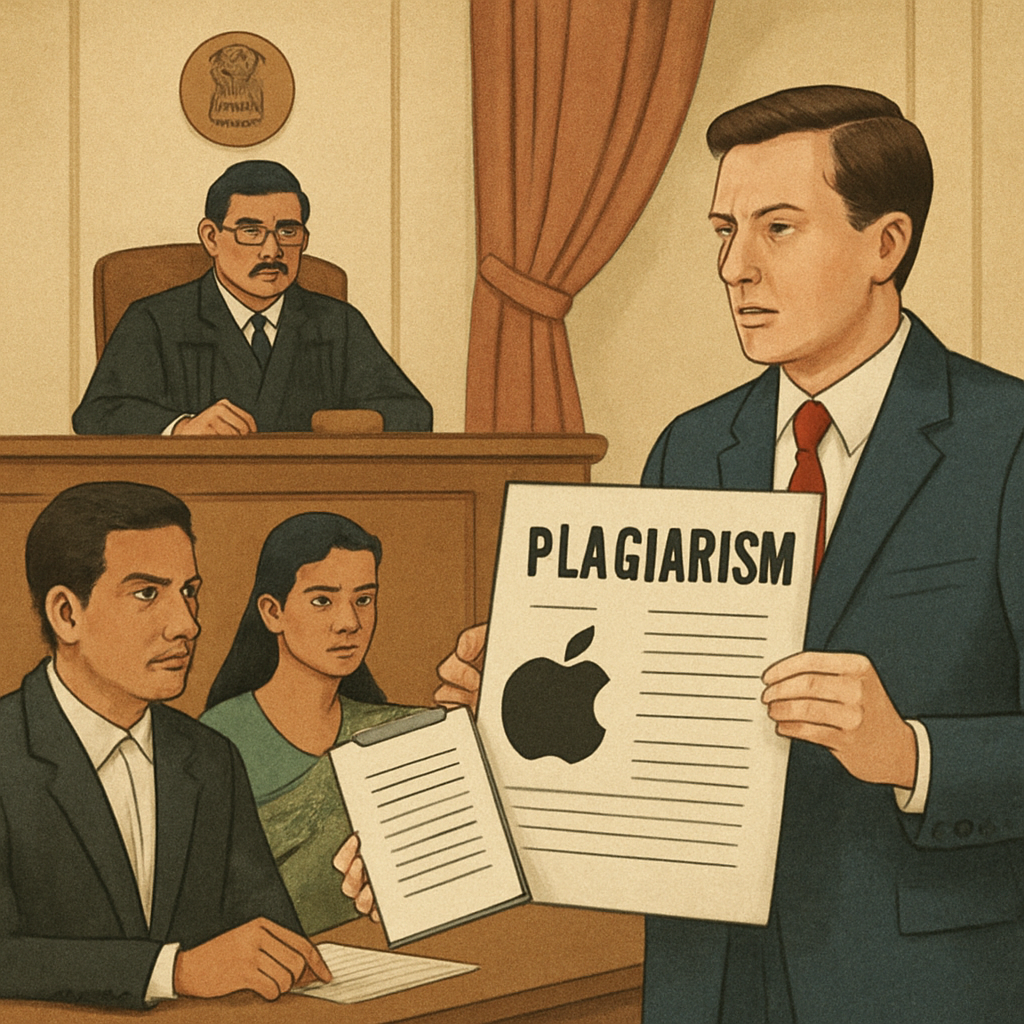
Apple has intensified its legal battle against the Competition Commission of India (CCI), alleging that the antitrust investigation into its App Store practices is fundamentally flawed due to plagiarism. The tech giant contends that the CCI’s findings are not the result of an independent inquiry but rather a verbatim replication of claims made by its competitors.
The dispute traces back to 2021 when the CCI initiated an investigation into Apple’s App Store fees following complaints from various entities, including Tinder-owner Match Group and several Indian startups. In 2024, the CCI concluded that Apple had engaged in antitrust practices by mandating the use of its proprietary in-app purchase system, thereby restricting competition.
In a submission dated June 25, 2026, Apple asserts that the CCI’s investigative arm, the Director General (DG), failed to conduct an independent analysis. Instead, Apple claims the DG “blindly replicated” a consumer spending graphic from a European Union ruling and echoed statements from rival companies without verification. The company emphasizes that it was not afforded a single opportunity to present oral evidence during the three-year investigation, a stark contrast to the multiple opportunities provided to Google in a similar case.
Apple’s grievances are further compounded by the potential financial repercussions. The CCI has the authority to impose fines based on a company’s global turnover, a provision introduced in 2024. For Apple, this could translate to a staggering $38 billion penalty. The company has challenged the applicability of this law, arguing that it should not retroactively cover the period from 2022 to 2024.
Despite initial resistance, Apple agreed in early June 2026 to cooperate with the CCI by providing local financial records. However, the company has now shifted its strategy by questioning the integrity of the CCI’s investigative process, aiming to have the findings dismissed entirely.
This development underscores the complexities multinational corporations face when navigating regulatory landscapes in emerging markets. Apple’s allegations of procedural lapses and lack of due process highlight the challenges in ensuring fair competition assessments. As the July 21, 2026, closed-door hearing approaches, the outcome could set a significant precedent for how antitrust investigations are conducted in India and potentially influence global regulatory practices.