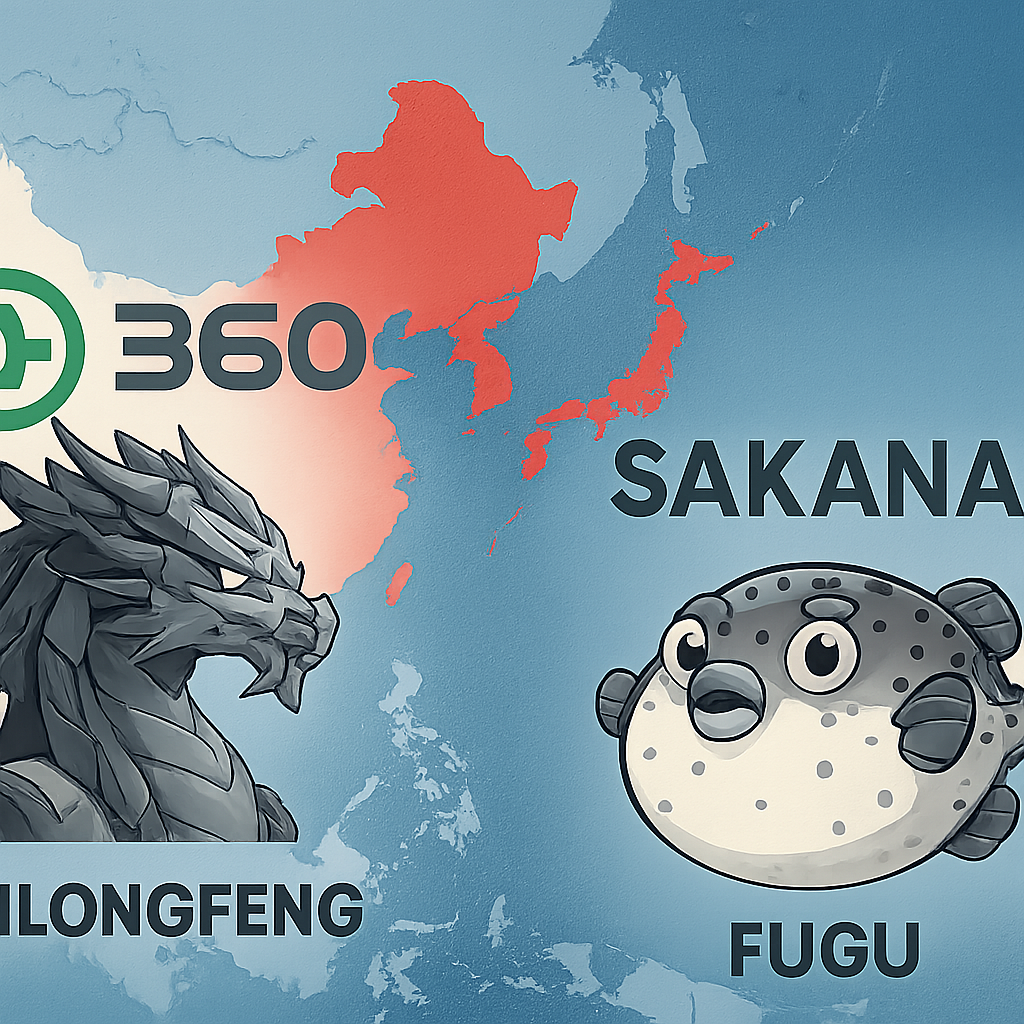
In the wake of the U.S. government’s export restrictions on Anthropic’s advanced AI models, Asian technology firms are stepping up to fill the void. Chinese cybersecurity company 360 has introduced Tulongfeng, an AI tool positioned as a direct competitor to Anthropic’s Mythos. Similarly, Tokyo-based startup Sakana AI has launched Fugu, a frontier AI model designed to rival leading models like Anthropic’s Fable 5 and Mythos Preview.
The U.S. government’s directive, issued two weeks ago, prohibits Anthropic from providing global access to its Mythos and Fable models, citing national security concerns. This move has created an opportunity for Asian companies to develop and promote their own advanced AI solutions.
Sakana AI’s Fugu model is tailored for agent-based applications, capable of orchestrating access to other models through their APIs. The company emphasizes that the release of Fugu was planned independently of the export ban, stating that the timing was coincidental. However, Sakana AI acknowledges the increased attention due to the current restrictions on U.S. AI models.
Founded in 2023 by former Google researchers Ren Ito, Llion Jones, and David Ha, Sakana AI focuses on creating cost-effective generative AI models optimized for the Japanese language and culture. The company aims to serve Japanese businesses and government agencies seeking to mitigate risks associated with tightening export controls.
Despite the emergence of these Asian-developed models, Sakana AI maintains that U.S. AI models continue to play a significant role in the Asian market. Co-founder Ren Ito recently emphasized the importance of preserving access to American AI technologies for close allies, advocating for collaborative development rather than technological hoarding.
The introduction of Tulongfeng and Fugu highlights the dynamic nature of the global AI landscape. As geopolitical factors influence technology access, regional players are rapidly advancing to meet the demand for cutting-edge AI solutions. This shift underscores the importance of fostering international collaboration to ensure the responsible and equitable development of AI technologies.